WBBSE Class 9 Life Science Solutions Chapter 1.1 Basic Properties of Life

Detailed explanations in West Bengal Board Class 9 Life Science Book Solutions Chapter 1.1 Basic Properties of Life offer valuable context and analysis.

WBBSE Class 9 Science Chapter 1.1 Question Answer – Basic Properties of Life

Very Short Questions and Answers : (1 mark for each question)

Question 1
Mention five common signs of life.
Answer:
Reproduction, growth, metabolism, response to stimuli and adaptability are the five common signs of life.

Question 2.
What does reproduction mean?
Answer:
Reproduction is the biological process by which new individuals or offsprings are produced from their parents.

WBBSE Class 9 Life Science Solutions Chapter 1.1 Basic Properties of Life

Question 3.
Define excitability.
Answer:
Excitability is defined as a response of a living organism to any external and internal stimulus.

Question 4.
What is meant by response?
Answer:
The reaction shown by a living organism towards any impulse, is called response.

Question 5.
What does metabolism mean?
Answer:
A set of complex physiological and chemical processes necessary for sustaining life, involving formation and breakdown of various nutrients within the body is called metabolism.

Question 6.
What is growth?
Answer:
Growth is the irreversible increase in dry mass and size of a living body.

WBBSE Class 9 Life Science Solutions Chapter 1.1 Basic Properties of Life

Question 7.
What is meant by biopoiesis?
Answer:
Biopoiesis is the concept of the origin of living organisms from non-living matters.

Question 8.
Who first suggested that living organisms originated from non-living matters?
Answer:
Philosopher Aristotle first suggested that living organisms originated from non-living matters.

Question 9.
From where did primary organic micromolecules originate from inorganic compounds?
Answer:
Primary organic micromolecules originated in the primitive atmosphere from simple inorganic compounds.

Question 10.
How was the atmosphere on earth before the origin of life?
Answer:
Before the origin of life, earth’s atmosphere was reducing in nature.

Question 11.
Why the atmosphere of primitive earth was reducing in nature?
Answer:
The atmosphere of primitive earth was reducing in nature because there was no free oxygen in the atmosphere.

WBBSE Class 9 Life Science Solutions Chapter 1.1 Basic Properties of Life

Question 12.
Name the two scientists who suggested that organic micromolecules originated on earth by chemical reactions amongst simple inorganic compounds.
Answer:
Scientists Alexander Oparin and JBS Haldane, first suggested that organic micromolecules originated on earth by chemical reactions amongst simple inorganic compounds.

Question 13.
How did primary organic micromolecules reach the earth’s surface?
Answer:
Primary organic micromolecules reached the earth’s surface through rainwater.

Question 14.
Who coined the term ‘primordial soup’?
Answer:
Scientist A1 Oparin coined the term ‘primordial soup’ to denote the primitive oceanic water rich in organic matter.

Question 15.
Which term was used by Haldane to indicate the boiling hot oceanic water of the primitive earth rich in organic matter?
Answer:
Haldane denoted the organic matter-rich boiling hot oceanic water of the primitive earth as ‘hot dilute soup’.

Question 16.
What are proteinoids?
Answer:
Proteinoids are tiny clusters of protein molecules formed abiotically from amino acids by cross-linkage.

WBBSE Class 9 Life Science Solutions Chapter 1.1 Basic Properties of Life

Question 17.
What are microspheres?
Answer:
Microspheres are spherical clusters of proteinoids, covered with thin film of phospholipids.

Question 18.
Name two primitive forms, which are considered as predecessors of living organisms on earth.
Answer:
Microspheres and coacervates are two primitive forms, which are considered as predecessors of living organisms on earth.

Question 19.
Which organic matters constitute a protobiont?
Answer:
A protobiont is constituted of organic matters like nucleic acids, lipids and various protein molecules.

Question 20.
What is meant by alpha (α) diversity?
Answer:
Alpha (α) diversity indicates the richness of species in a specific area or an ecosystem.

Question 21.
What is meant by beta (β) diversity?
Answer:
Beta (β) diversity is the measure of the comparative turnover of species in two different habitats of an ecosystem.

Question 22.
What is meant by gamma (γ) diversity?
Answer:
Gamma (γ) diversity is the overall biodiversity of a large geographical realm, consisting of many typical habitats and ecosystems.

Question 23.
What are the two main causes of biodiversity on earth?
Answer:
Genetic variation and natural selection are the two main causes of biodiversity on earth.

Question 24.
Which class of animals shows the highest level of diversity in India?
Answer:
In India, birds show the highest level of diversity, where about 12.6% of global bird species are found.

Question 25.
What is meant by biodiversity hotspot?
Answer:
Biodiversity hotspot is a geographical area that provides shelter to a very rich variety of endemic species that are facing the threat of extinction.

WBBSE Class 9 Life Science Solutions Chapter 1.1 Basic Properties of Life

Question 26.
How many biodiversity hotspots are there in India?
Answer:
In India there are three biodiversity hotspots-the Western Ghats, the Himalayas and the Indo-Burma regions.

Question 27.
How many biodiversity hotspots are there in the World?
Answer:
According to Conservation International (2004), there are 34 hotspots in the world.

Question 28.
Which type of diversity is also known as turnover diversity?
Answer:
Beta diversity is also known as turnover diversity.

Short Questions and Answers : (2 marks for each question)

Question 1.
What is life?
Answer:
Life is the condition that establishes the existence of a living organism on the basis of various characteristics such as growth, reproduction, metabolic activities, response to stimuli, adaptability, ageing, death etc.

Question 2.
What are non-living objects?
Answer:
Those objects which do not show any of the signs of life, such as growth, reproduction, metabolic activities, response to stimuli, ageing and senescence etc., are called non-living objects.
WBBSE Class 9 Life Science Solutions Chapter 1.1 Basic Properties of Life 1

WBBSE Class 9 Life Science Solutions Chapter 1.1 Basic Properties of Life

Question 3.
What is meant by life cycle?
Answer:
The cyclic course of events undergone by an organism, starting from its birth followed by growth, maturity, reproduction, ageing and finally death, is known as its life cycle.
WBBSE Class 9 Life Science Solutions Chapter 1.1 Basic Properties of Life 2

Question 4.
Define heredity.
Answer:
Heredity is the process of transfer of different characteristics from parents to their offsprings.

Question 5.
What is evolution?
Answer:
Evolution is the slow, steady and continuous emergence of advanced and complex forms of life from primitive and simpler forms. It also involves change in heritable characters of biological population from one generation to the next.

Question 6.
What is meant by mutation? What is mutability?
Answer:

  • Mutation: Mutation is a sudden, permanent and inheritable transformation in living organisms, caused due to any change in chromosome or gene either naturally or by any external factor.
  • Mutability: The capacity of a living organism to undergo mutation is called mutability.

Question 7.
What is meant by variation?
Answer:
The dissimilarities in external or internal features or behaviours found amongst the different members of a species in a population, is called variation.

WBBSE Class 9 Life Science Solutions Chapter 1.1 Basic Properties of Life

Question 8.
Give an example of response to stimuli shown by plant.
Answer:
The leaves of ‘touch me not’ (Mimosa pudica) plant droop when touched. This is an example of response to stimuli shown by a plant.
WBBSE Class 9 Life Science Solutions Chapter 1.1 Basic Properties of Life 3

Question 9.
What is meant by senescence?
Answer:
Senescence is the process of gradual and irreversible deterioration in the structural components of the body and decrease in the ability of a matured organism to deal with the stress of the environment.

Question 10.
what is meant by ageing? What is death?
Answer:

  • Ageing: Ageing is the process of growing older with time, that is genetically determined and environmentally modulated.
  • Death: Death is the ultimate disappearance of all signs of life from a living organism.

Question 11.
What does the ‘Ghemogeny of life’ mean?
Answer:
Chemogeny or chemosynthesis of life is the most modern concept, used to explain the biochemical origin of life on the earth. According to this concept, life originated naturally and spontaneously from simpler inorganic matters on earth, through various physical and chemical processes.

Question 12.
What is meant by ‘hoi dilute soup’?
Answer:
According to the theory of chemosynthesis, several organic molecules accumulated in the hot boiling water of the primitive ocean before the origin of life. Haldane denoted this hot broth of organic matter as ‘hot dilute soup!

Question 13.
What are coacervates?
Answer:
Coacervates are minute (1-100μ in diameter), spherical, bubble-shaped, colloidal matters, composed of a thin layer of organic molecules rich in lipids. Oparin (1924) first suggested this structure and named it coacervate.
WBBSE Class 9 Life Science Solutions Chapter 1.1 Basic Properties of Life 4

WBBSE Class 9 Life Science Solutions Chapter 1.1 Basic Properties of Life

Question 14.
Mention the living features of microspheres.
Answer:
The living features of microspheres are as follows —

  • They are surrounded by a double-layered membrane
  • They show osmotic activity.
  • Certain protein molecules present in the microspheres, have enzymatic activity
  • Microspheres may divide through a process similar to binary fission.

Question 15.
What are proiocells?
Answer:
In the primitive sea, nucleic acid molecules entered into protein coacervates to take the shape of primitive cells. These primitive structures are known as protocells, in which the first sign of life was noticed.

Question 16.
What are naked genes?
Answer:
According to the chemosynthetic theory, during the last phase of ceil formation, purines, pyrimidines and pentose sugars united to form nucleic acids. These nucleic acid molecules were capable of seif-replication. They were devoid of histone and other proteins and as they were not surrounded by nuclear membrane. They were called naked genes.

Question 17.
What is meant by biodiversity?
Answer:
Biodiversity refers to the variety of different types of living organisms on the basis of structure, shape and behaviour found on earth, that are inhabiting different habitats of various ecosystems.

Question 18.
What is meant by genetic diversity?
Answer:
The different types of variations and combinations in the genetic composition among the individuals of a species is considered as genetic diversity. Due to genetic diversity, different individuals of same species look and behave differently.

Question 19.
What is meant by species diversity?
Answer:
The diversity in number, richness and evenness in distribution of various species in a biotic community is regarded as species diversity. This is estimaed by determining the number of variety of a species and the number of species Inhabiting a specified area.

Question 20.
What is meant by ecological diversity?
Answer:
The variation of several ecosystems in a large geograpical area or throughout the planet. is known as ecological diversity. The diversity of organisms from a microhabitat to a huge hiome is included under ecological diversity.

Question 21.
What is meant by species?
Answer:
Species is a group of closeI related individuals, which are capable of naturally interbreeding to produce fertile offsprings. They remain reproductively isolated from other groups.

Question 22.
How do variation occur In a population?
Answer:
Almost every individual of any sexually reproducing population is slightly different from one another. There are three main reasons behind —

  • Formatilin of different types of ganletes I due to crossing over,
  • Random union of gametes and
  • Change in the genetic material.

WBBSE Class 9 Life Science Solutions Chapter 1.1 Basic Properties of Life

Question 23.
Give a brief note on the biodiversity of India.
Answer:
The biological diversity of India includes a huge variety of plant and animal species, their genetic variability and the organisation of species into different ecosystems. India is one of the seventeen megadiverse countries on earth. In global perspective, India houses about 7.6% of all mammals, 12.6% of all birds, 6.2% of all reptiles, 4.4% of all amphibians, 11.7% of all fishes and 6.0% of all flora.

Question 24.
What are the reasons for the loss of biodiversity?
Answer:
The main reasons for the loss of biodiversity are-

  • Deforestation,
  • Habitat fragmentation,
  • Environmental pollution,
  • Over exploitation of resources by Illegal hunting and poaching,
  • Natural calamities,
  • Alteration of natural environment due to green house effect, ozone layer depletion etc.,
  • Genetic incompatibility,
  • Introduction of exotic species etc.

Question 25.
What are the contributing factors of biodiversity?
Answer:
The contributing factors of biodiversity are-

  • Variation
  • Mutation
  • Speciation
  • Adaptation
  • Geographical isolation
  • Change in climatic condition
  • Change in habitat etc.

Question 26.
Compare between coacervate and microsphere.
Answer:

features Coacervate Microsphere
1. Definition These are minute spherical, bubble-shapped structures originating in the ‘hot dilute soup’ These are spherical clusters of proteinoids covered by a thin film of lipid bilayer
2. Function Plays an important role as the precursor of protocell Plays an Important role as the precursor of the early or primitive cell
3. Structural component Structure is composed of protein, fat, carbohydrate and nucleic acid Structure is composed mainly of proteins formed from proteinoids


Long Questions and Answers : (5 marks for each question)

Question 1.
Explain the basic properties of lite.
Answer:
Basic properties of life
From biological point of view, there are five basic properties of life. They are —

(1) Reproduction: Reproduction is a biological process by which living organisms give birth to offsprings in their lifetime, in order to protect their races from becoming extinct.

WBBSE Class 9 Life Science Solutions Chapter 1.1 Basic Properties of Life

(2) Growth: Growth is the irreversible increase in dry mass and size of a living body. A living organism must exhibit growth and development in due course of time.

(3) Metabolism: Metabolism is a set of life sustaining chemical reactions involving formation and breakdown of various nutrients within the body. Different metabolic activities like nutrition, respiration, excretion etc. take place in a living organism.

(4) Response to stimuli: Response to external and internal stimulus is an important character of a living organism. For example, if a moving millipede is touched, it coils around.

(5) Adaptability: Adaptability is a property of life where any living organism tries to adjust itself, either structurally or behaviourally, according to the changing environment.

Question 2.
Mention the differences between living beings and non-living objects.
Answer:
Differences between living beings and non-living objects

Features Living beings Non-living objects
1. Reproduction Living beings maintain their race by reproduction Non-living objects do not reproduce
2. Response to stimuli Living beings respond to external or internal stimuli Sensitivity to stimulus is absent in non-living objects
3. Growth Living beings grow gradually with time Non-living objects never show any growth
4. Metabolism Living beings perform various metabolic activities like photosynthesis, nutrition, respiration etc. Non-living objects never perform any metabolic function
5. Life span Ali living forms have a definite life span Non-living objects do not have any specific duration of existence
6. Movement and locomotion Living beings spontaneously exhibit movement and locomotion Movement occurs as a result of external influence
7. Protoplasm Cells of living organisms have active protoplasm Protoplasm is absent
8. Adaptability Living organisms can adapt themselves according to changing environment Non-living objects do not show any adaptation
9. Life cycle Living organisms have life cycle Non living objects do not have life cycle
10. Senescence and death Living organisms show signs of senescence and death Non-living objects do not show signs of senescence and death

Question 3.
Briefly describe the origin of earth and gradual changes in the primitive atmosphere according to the theory of chemosynthesis of life.
Answer:
Origin of earth and gradual changes in the primitive atmosphere
According to the theory of chemosynthesis of life or the theory of abiogenesis about 5-6 billion years ago, the earth originated from a huge explosion known as the Big Bang in the cosmos. At that time, the earth was a mass of burning gas. It took several million years to cool down and condense.

The temperature of primitive earth was around 5000°C — 6000°C. At that high temperature, it was difficult for certain gases such as hydrogen, nitrogen and oxygen etc. to exist independently in the atmosphere. As a result, they were present in the form of metallic or non-metallic compounds.

Therefore, the primitive atmosphere was reducing in nature due to the absence of free oxygen. With gradual decrease in temperature, water vapour condensed to form huge clouds, which came down on the earth in the form of rain. Gradually, the earth started to cool down further and condensed to form solid matters. The rainwater accumulated in the lowlands to form the primitive ocean.

WBBSE Class 9 Life Science Solutions Chapter 1.1 Basic Properties of Life

Question 4.
Briefly describe chemogeny of life.
Answer:
Chemogeny of life
The process of synthesis of various organic compounds essential for the origin of life on the earth, was denoted as chemogeny by scientists Oparin and Haldane. This involves 3 steps. The steps of chemogeny are discussed below.

1. Origin of simple organic compounds: With gradual decrease in atmospheric tempertaure, the chemical components like hydrogen, methane, ammonia, water vapour etc., started reacting with each other to form simple organic molecules such as amino acids, simple sugars, fatty acids etc. The energy required to carry out these reactions was provided by lighting, ultraviolet ray and different cosmic rays. Through downpour, these compounds precipitated on earth and mixed in the primitive ocean.

2. Formation of complex organic compounds: The simple organic molecules condensed in the primitive ocean to form complex organic compounds such as proteins, carbohydrates, lipids, purines, pyrimidines etc. The boiling hot water of the primitive ocean containing the complex organic compounds was denoted as hot dilute soup by Haldane. Oparin termed the same as primordial soup.

3. Formation of coacervates: In the hot dilute soup, the organic matters, especially lipids, clustered to form a self-organised colloidal matter. Oparin named this bubble-shaped structures as coacervates. American scientist Sidney Fox (1957), denoted a similar substance as microsphere, which, according to him, was formed by unification of several globoid duster of proteins, called proteinoids, surrounded by a double-layered lipid membrane.

Question 5.
Explain biogeny or organic evolution of life.
Answer:
Biogeny or organic evolution of life:
According to Oparin, as the temperature of the atmosphere gradually started to cool down and simple organic compounds reacted with each other to form complex organic compounds by chemosynthesis, the boiling hot water of primitive ocean acted as the site of formation of lipid clusters, called coacervates. These coacervates absorbed nucleic acids and proteins from the primordial soup and transformed into a structure, capable of performing few metabolic activities which were named as protobionts.

WBBSE Class 9 Life Science Solutions Chapter 1.1 Basic Properties of Life

The protobionts were capable of synthesising some organic matters within it through various chemical reactions. Later, these protobionts transformed into self-replicating organic matters, which the scientists denoted as eubionts. These were the first living entity on earth. Later, cytoplasm formed within them and thus the earliest prokaryotic cells came into being.

WBBSE Class 9 Life Science Solutions Chapter 1.1 Basic Properties of Life 5

Question 6.
Classify different levels of biodiversity.
Answer:
Levels of biodiversity : Biodiversity has been classified into three levels-

  • Genetic diversity,
  • Species diversity and
  • Ecological diversity,

1. Genetic diversity: The various types of variations and combinations in the genetic composition among the individuals of a species is considered as genetic diversity, Due to genetic diversity, individuals of same species look and behave differently. Example -The diversity in the genes of different varieties of paddy, wheat, dogs, etc.

2. Species divesity : The diversity in number, richness and evenness in distribution of various species in a biotic community is regarded us species diversity. This is estimated by determining the number of variety of a species and the number of species inhabiting a specified area. Example –The diversity of species inhabiting the mangrove forest of Sundarban.

3. Ecological diversity: The variation of several ecosystems in a large geographical area is known as ecological diversity. The diversity of organisms from a microhabitat to a huge biome is included under ecological diversity. American ecologist Whittaker (1965), classified ecological diversity into three different sub-types. They are—

  • α diversity: α diversity indicates the richness of species in a specific area or an ecosystem.
  • β diversity: β diversity is the measure of comparative turnover of species in two different habitats of an ecosystem.
  • γ diversity: γ diversity is the overall biodiversity of a large geographical realm, consisting of many typical habitats and ecosystems.

WBBSE Class 9 Life Science Solutions Chapter 1.1 Basic Properties of Life

Question 7.
Describe the different types of variation along with their examples and significance.
Answer:
Types of variation
Variation is broadly classified into two types—

  • Continuous variation and
  • Discontinuous variation.

Continuous variation: Any characteristic of a species that changes gradually over a range of values is considered to exhibit continuous variation. It is represented by a line graph. Example — Variation in human height, skin colour and weight

Significance — Continuous ‘variation creates diversity amongst the members of same species. The characteristic features which undergo natural selection are ultimately transferred to the next generation.

Discontinuous variation: Any characteristic of a species having only a limited number of possible values is considered to exhibit discontinuous variation. It is represented by a bar graph. Example — Variation in human blood group and human eye colour.

Significance — Mutation is the prime reason behind discontinuous variation. Mutation leads to the development of new species at a comparatively faster rate. Discontinuous variation leads to species diversity.

WBBSE Class 9 Life Science Solutions Chapter 1.1 Basic Properties of Life 6
Question 8.
What are the important features of biodiversity?
Answer:
Important features of biodiversity
The important features of biodiversity are as follows –

  • Comparatively high level of biodiversity has been noticed in tropical and subtropical region than temperate region.
  • Rate of biodiversity is very high in tropical rain forests in terrestrial ecosystem and coral reefs in aquatic ecosystem.
  • Insects are the diverse of all living organisms (56.4% of total species).
  • Reduction of genetic diversity of a species gradually leads to its extinction.
  • Biodiversity is not evenly distributed in all parts of the world.

WBBSE Class 10 Physical Science Notes Chapter 8.6 Organic Chemistry

Comprehensive WBBSE Class 10 Physical Science Notes Chapter 8.6 Organic Chemistry can help students make connections between concepts.

Organic Chemistry Class 10 WBBSE Notes

Organic Chemistry : All carbon containing compounds except oxides of carbon, metal carbonates, bicarbonate, hydrogen cyanide and metallic cyanides are organic compounds and the chemistry of organic compounds is known as organic chemistry.

Organic compounds is a separate branch because organic compounds:

  • are large in number
  • show isomerism
  • are soluble in non-polar solvents
  • have complex structures
  • are bad conductors
  • show catenation
  • are made from small number of elements.

WBBSE Class 10 Physical Science Notes Chapter 8.6 Organic Chemistry

Role of organic compounds in life process : Organic compounds are intemately related to our daily life. In order to maintain the life process of our body the following process are required.

  • Intake of nutritional food for the growth the living body.
  • For repairing the depreciation of health.
  • Mobility
  • Reproduction

All these are fulfilled almost by all organic materials.

(i) The main ingredients in our food chart are classified of three types : carbohydrates (e.g. rice, wheat, sugar etc.), proteins (e.g. milk, fish, egg etc.) and fats (e.g. milk, oil, butter etc.)

(ii) These food materials are ultimately converted to single organic compounds in different metabolic process with the help of enzymes in our body.

(iii) Vitamin, an organic compound plays indirectly a very important role for maintaining the growth of our health.

(iv) For the translation and mobility of the animals, energy which is required is stored in our body. This energy is associated in an organic compound. This is known as ATP (adenosine triphosphate).

(v) Haemoglobin which is an organic compound an oxygen carrier supplies oxygen in the body.

Biomoleculcs: The molecules of compounds like carbohydrates, amino acids, proteins, vitamins, fats, RNA, DNA etc. which are essential for the continuation of life processes of biological species like plants and animals (including human beings) are known as biomolecules.

WBBSE Class 10 Physical Science Notes Chapter 8.6 Organic Chemistry

Some essential biomolecules are :

(i) Carbohydrates : These molecules are composed of carbon, hydrogen and oxygen. General formula of it is Cn(H2O)n. Carbohydrates. are the class of compounds that include polyhydric aldehydes, polyhydric ketones and large polymeric molecules that can be broken down to polyhydric aldehydes and ketones.

Carbohydrates which contain aldehyde groups are called aldose and the carbohydrate containing keto groups are called ketose.

Carbohydrates are mainly of three types :

(a) Monosaccharides : These are the simplest form and are not hydrolysed, e.g. glucose, fructose etc.

(b) Oligosaccharides: During hydrolysis they form fixed number (2-10) of more saccharides.
WBBSE Class 10 Physical Science Notes Chapter 8.5 Metallurgy 18

(c) Polysaccharides: These are the natural polymer of large number of mono saccharides. It has general formula (C6H10O5)n. e.g. starch, cellulose etc.
WBBSE Class 10 Physical Science Notes Chapter 8.5 Metallurgy 19

(ii) Proteins: Another class of compounds essential for living being are proteins. They contain carbon, hydrogen, oxygen and nitrogen. Proteins are consumed daily from our diet. During hydrolysis of proteins by acid, base or enzyme amino acids are produced.WBBSE Class 10 Physical Science Notes Chapter 8.5 Metallurgy 20
Proteins are of three types :
(a) Simple protein
(b) Conjugated protein
(c) Derived protein.

WBBSE Class 10 Physical Science Notes Chapter 8.6 Organic Chemistry

(a) Types of simple protein :

  • Albumin: This type of protein can be isolated from egg, milk, wheat, serum etc.
  • Globulin: Proteins that are isolated from egg yolk, tissues, belong to this class of protein.
  • Glutemin: This type of protein is present in wheat, rice etc.
  • Protamin: This type of protein is present in wheat, barli etc.

(b) Conjugated protein : Examples of this type of protein are : nucleo protein, chromoprotein, glycoprotein, phosphoprotein, lipoprotein, metalloprotein.

(c) Derived protein : This type of proteins are available by the partial hydrolysis of protein of very high molecular weight by acid, base or enzyme to simpler protein.

(ii) Fats: Fats are composed of carbon, hydrogen and oxygen. These are made of glycerol and fatty aids. Fats may be of animal or vegetable origin.

Animal fats are found in : milk, cheese, butter, eggs, meat and oily fish.

Vegetable fats are found in : walnut, almonds, groundnut and coconut, mustard seeds, seasame seed etc.

Fat is a concentrated source of energy.

(iv) Vitamins: Vitamins are organic compounds containing carbon, hydrogen, oxygen and sometimes nitrogen and sulphur. Vitamins are necessary to carry out many vital processes. Their absence or deficiency causes many ailments and impairs the healthy living oi human being.

(v) Amino acids: Proteins are made of amino acids. These are the essential for living beings. Amino acids are the class of compounds containing amino group and carboxylic acid group. 1

WBBSE Class 10 Physical Science Notes Chapter 8.6 Organic Chemistry

Amino acids are of three types :

Neutral amino acids : Amino acids containing the same number of amino and carboxylic acid groups are called neutral amino acids. These have one -NH2 group and one -COOH group. Total number  of amino acids in this group is 19. e.g. glycine (NH2CH2COOH), alanin [CH3CH(NH2)COOH] etc.

  • Basic amino acids : This type of amino acids have two -NH2 groups and one-COOH group, e.g. lysine, histidine etc.
  • Acidic amino acids : This type of amino acids have two -COOH groups ’• and one -NHZ group, e.g. aspartic acid, glutamic acid.

The essential amino acids are :

  • Valine
  • Lucine
  • Iso-lucine
  • Phenylalanine
  • Threonine
  • Methionine
  • Argenine
  • Lysine
  • Histidine
  • Tryptophan.                                                                                                              1

DNA (Deoxyribo nucleic acids): It is found in nucleus, mitochondria and chloroplast of the body cells. James Watson and Francis Crick were able to establish the structure of DNA in 1953. DNA molecule is double helical in nature. It contains three different chemical compositions.

  • Phosphoric acid
  • Deoxy ribose
  • Pyridine like base adenine and guanine, pyrimidine like base thymine and cytonine.

DNA has two strands of polynucleotides coiled around each other by hydrogen; bond in the form of double helix.

Function of DNA :

  • Transmission of herediatary characteristics.
  • Biosynthesis of proteins.

The genetic information for the cell is preserved in the sequence of this base in the DNA molecule. When a cell divides, DNA molecules replicate and make exact copies of themselves so that daughter cell will have identical DNA to that of parent cell.

RNA (Ribonucleic acid): RNA molecule is single stranded, containing 1 ribose, phosphoric acid and uracil as the nitrogenenous base. RNA plays a very Vital role in life process. RNA carries the message of DNA and acts accordingly.

WBBSE Class 10 Physical Science Notes Chapter 8.6 Organic Chemistry

Type of RNA : (a) mRNA (b) tRNA (c) rRNA. RNA(tRNA, mRNA) helps synthesis of polypeptides, the intermediates of proteins.

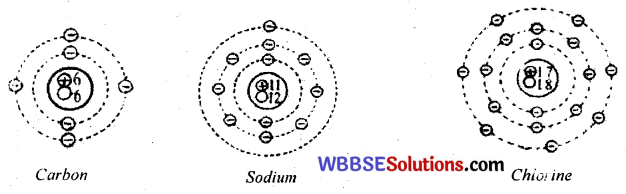
Bonding In organic compounds Electronic configuration of carbon shows that the number of electrons available in the outermost orbit is 4. The outermost electrons can only be capable to form covalent bond by sharing and pairing of its electrons with that of other element. So, valency of carbon becomes 4.

Catenation : The property by virtue of which carbon forms covalent linkage amongst them to form stable carbon chains is knoun as catenation. Catenation is an unique property of carbon. As a result of catenation, carbon can form innumerable chemical species with the supplement in various ways by the necessary addition of other elements like H, O, N, P, S, halogens etc.

Difference between organic and inorganic compounds :

Organic Compounds Inorganic Compounds
(i) Catenation property of carbon atoms and its effect : The catenation property of carbon atoms among themselves and other atoms gives rise to limitless number of organic compounds with strain chains and rings of carbon atoms. (i) Due to absence of catenetion property of its atoms, the number of inorganic compounds formed by the rest erf the elements in not so large.
(ii) Class similarity : Organic compounds can be easily classified into different groups with certain similar characteristic properties. (ii) In organic compounds cannot generally be classified into such groups with similar characteristics.
(iii) Thermal stability : Organic
compounds are in general, thermally unstable and decompose at higher temperature.
(iii) These are more or less thermally stable., These can tolerate comparatively higher temperatures without decomposition.
(iv) Bonding: Organic compounds are formed through covalent bonding in their molecules. (iv) These compounds are generally formed by eledrovalent or ionic bonding in their molecules.
(v) Melting and boiling points: As these compounds are covalent in nature, so they have comparatively lower melting and boiling points. (v) As these compounds are ionic in nature, so they have high melting and boiling points.
(vi) Solubility: These are soluble in organic solvents like alcohol, ether, benzene etc. but generally insoluble in water. (vi) These are soluble in ionising solvents like water but are generally insoluble in organic solvents.
(vii) Structural characteristics: They have widely varying structural forms, from simple chain structure to complex ring. (vii) They have mostly simple structure.
(viii) Isomerism: Different types of isomerism often occur in organic compounds. (viii) Isomerism is practically unknown in inorganic compounds.
(ix) Electrolytic character: These are generally non-electrolytes (ix) Inorganic compounds are general electrolytes.

Classification of organic compounds :
WBBSE Class 10 Physical Science Notes Chapter 8.6 Organic Chemistry 3

WBBSE Class 10 Physical Science Notes Chapter 8.6 Organic Chemistry

Functional group : The groups which are responsible to characterise the compounds are Known as functional group.

WBBSE Class 10 Physical Science Notes Chapter 8.6 Organic Chemistry 2

Homologous series : It is a group of compounds in which the various members have similar chemical properties, possess the same functional group and can be represented by the same general formula. The different members of a homologous series are called homologous and the phenomenon is called homology.

Constitutional or Structural Isomerism : The phenomenon in which two or more different compounds obviously having different physical and chemical properties possess the same molecular formula but different molecular structures due to the arrangements of the constitutional or structural isomerism.

Types of structural isomerism : Three types

(a) Chain isomerism; The compounds of the same class, with the same molecular formula, have chain isomerism due chain carbon atoms.

WBBSE Class 10 Physical Science Notes Chapter 8.6 Organic Chemistry 4

(b) Position isonierism : The compounds of the same dass, with the same molecular formula, have position isomerism due to the position of functional groups.

WBBSE Class 10 Physical Science Notes Chapter 8.6 Organic Chemistry 5

(c) Functional group isomerism : The compounds of the same class, with the same molecular formula, have functional group isomerism due to different functional groups.
WBBSE Class 10 Physical Science Notes Chapter 8.6 Organic Chemistry 6

Hydrocarbons : Hydrocarbons are organic compounds containing only carbon and hydrogen atoms in their molecules.

WBBSE Class 10 Physical Science Notes Chapter 8.6 Organic Chemistry

Types of hydrocarbons: Hydrocarbons are divided into two classes, namely

  • Saturated hydrocarbons
  • Unsaturated hydrocarbons.

Alkane : Open chain saturated hydrocarbons are known as alkanes. General formula of these compounds are : CnH2n+2 (n = integers)

Carbon atoms of these compounds are linked by single covalent bonds. Hy­drogen atoms of these compounds are also linked to one or more carbon atoms by a single covalent bonds.

Saturated hydrocarbon molecules do not contain any formal functional group and as such exhibit very little chemical activity. These are therefore known as paraffins.

Methane: Methane is the first member of the hydrocarbons of the alkane series. It is a colourless gas with molecular formula CH4.

Source:
WBBSE Class 10 Physical Science Notes Chapter 8.6 Organic Chemistry 7

(ii) Main source of methane is the natural gas. It is formed in nature in bio­logical decay of plants of swamps and marshes. Methane is called marsh gas. A little phosphine (PH3) and phosphorous dihydride (P2H4) accompany the methane gas and make it spontaneously inflammable. So, it often burns with flashes of flame over marshes. This is well known as ‘will-O-the-wisp’. It is just a natural phenomenon.

Chemical properties:
(i) Burning of methane: It burns in air or oxygen when ignited, and is oxidised to carbon dioxide and water with the evalution of heat.
CH4+2O2 = CO2 + H2O + 213 kcal/ molecule.

(ii) Substitution reaction : It undergoes substitution reaction. The first step of the reaction is :
WBBSE Class 10 Physical Science Notes Chapter 8.6 Organic Chemistry 8

Methane: A green house gas: Like carbon dioxide, water vapour etc. methane is known as a green house gas (contribution 19%) because it is capable to absorb visible light from sun-rays and keep the earth surface and its surrounding warm.

WBBSE Class 10 Physical Science Notes Chapter 8.6 Organic Chemistry

Uses of methane:

  • It is used as a domestic and industrial fuel by burning in gas-stoves. Almost 40% by volume of methane is present in coal gas.
  • It is used in the large-scale production of carbon black which is largely
    used for making printers’ ink, paints, typewriter, ribbon, motor tyres etc.
  • It is now used as a source of hydrogen for the synthesis of NH3.
  • It is used for the manufacture of methanol, chloromethane, chloroform etc.

Alkene: An alkene is an unsaturated aliphatic hydrocarbon with a double bond in-between two adjacent carbon atoms of its molecule.

General formula of alkene : CnH4 (where n is an integer)

Ethylene [or, Ethene]
The molecular formula of ethylene is C2H4 which can be written as CH2 = CH2.
It i colourless gas.

Source :
(i)
WBBSE Class 10 Physical Science Notes Chapter 8.6 Organic Chemistry 9
(ii) It is present in very small amount in coal gas.
(iii) Natural gas rich in methane when ignited at 1400°C — 1500°C at normal pressure, acetylene is obtained after cooling.
WBBSE Class 10 Physical Science Notes Chapter 8.6 Organic Chemistry 10

Chemical reaction :
(i) Addition reaction with hydrogen:
WBBSE Class 10 Physical Science Notes Chapter 8.6 Organic Chemistry 11
(ii) Addition reaction with bromine :
WBBSE Class 10 Physical Science Notes Chapter 8.6 Organic Chemistry 12
Uses of acetylene :

  • As an illuminant acetylene is used in acetylene lamp.
  • It is used as an oxyacetylene flame 2700°C, for cutting and welding iron plates and sheets.
  • It is used for the preparation of acetaldehyde, acetic acid, ethyl alcohol, acetone etc.
  • Acetylene is used for the preparation of weston, a solvent used in industry.
  • It is used for the preparation of synthetic rubber and plastics.
  • It is used as an anaesthatic agent.

Polymer : There are some organic molecules of low molecular weight, a large number of which join with one another repeatedly to produce a very big molecule of high molecular weight. The small molecules are known as monomers and the resulting large molecules are known as p tymers.

WBBSE Class 10 Physical Science Notes Chapter 8.6 Organic Chemistry

Some common polymers :
WBBSE Class 10 Physical Science Notes Chapter 8.6 Organic Chemistry 13

Hazards of using polymer materials in our environment :

  • Polythene, PVC, synthetic rubber after use are left anywhere else. Tyre used in the wheel of a vehicles are also thrown in the dustbin or these are burnt out. These materials have no natural decay in the soil by bacteria.
  • As a result there is a dumping of plastic materials and creates an environ­ment pollution.
  • It destroys the soils where it is dumping.
  • The plastic materials left in hills and mountain, is the cause of landslide.
  • Tyre prepared from synthetic rubber when left in air produces free radicals in presence of sunlight which is cancer producer.

Possible alternatives to avoid the hazards :

  • To get relief from these, limited uses are desirable
  • Now-a-day some reagents are added to plastic materials so that they would not create any problem or hazard to mankind.
  • Bags made to cloth, paper, jute should be used instead of polythene bags.

IUPAC (International Union of Pure and Applied Chemistry, 1957) nomenclature simple organic compounds :

WBBSE Class 10 Physical Science Notes Chapter 8.6 Organic Chemistry 14
WBBSE Class 10 Physical Science Notes Chapter 8.6 Organic Chemistry 15
Polymerisation: The process or technique through which monomer units combine to give a polymer is known as polymerisation.

WBBSE Class 10 Physical Science Notes Chapter 8.6 Organic Chemistry

Biodegradable polymers : The polymers that can be dissociated into small segments enzymes (produced by microorganisms) are called biodegradable polymers.

Example :
(i) PHBV (poly β-hydroxy butyrate co-β-hydroxy-valerate)
WBBSE Class 10 Physical Science Notes Chapter 8.6 Organic Chemistry 16

LPG (Liquified Petroleum Gas) : In refinning the crude petroleum, the gaseous products thus obtained the hydrocarbons of lower molecular weight after purification of these gaseous mixtures if there are cooled at hith pressure and low temperature, these are all condensed to liquidand. The liquid is known as Liquified Petroleum Gas (LPG).

Types of LPG :

  • Heavier grade LPG (80-90%) : C4-hydrocarbon (Butane, Isobutane, butene)
  • Lighter grade LPG (90%) : C3 hydrocarbon (Propane and propene, 10% C4-hydrocarbon (Butane and butene) 2% Ethane and ethylene.

Calorific value : Amount of heat energy produced by the complete com­bustion of one gram of the fuel is known as its calorific value.
Calorific value of LPG ; 29500 kcal/m3

CNG (Compressed Natural Gas):
It is compressed natural gas. It contains mainly methane. It has calorific value 21300 Btu/Ib

Uses of Ethanol:

  • Ethanol (C2H5OH) is used for drinking purpose.
  • Ethanol is widely used as a solvent.
  • Ethanol burns of give carbon dioxide and water and thus can be used as fuel.
  • Ethanol is used as antifreeze.

WBBSE Class 10 Physical Science Notes Chapter 8.6 Organic Chemistry

Physical properties of Ethanol :

  • It is colourless liquid having a sweet smell.
  • It is highly soluble in water.
  • It is volatile and inflammable.
  • It is neutral and it does not change the colour of litmus solution.

Reaction of Ethanol :

(i) Reaction with sodium (active metal): Ethanol reacts with sodium, to form sodium ethoxide and hydrogen.
2C2H5OH + 2Na → 2C2H5ONa + H2

(ii) Reaction of ethanol with cone. H2SO4 for dehydration :
Ethanol reacts with cone. H2SO4 at about 170°C to form ethylene.
WBBSE Class 10 Physical Science Notes Chapter 8.6 Organic Chemistry 18

Uses of acetic acid (CH3COOH)

  • It is used as an aid in cooking and for making pickles as also a preservative of fish, meat, vegetable etc. as vinegar (6-8% water solution of acetic acid)
  • It is used to prepare white paint.
  • It is used to concentrate the latex of leather.

Reactions of acetic acid :

(i) Reaction of acetic acid with NaHCO3 : During reaction of acetic acid with NaHCO3, sodium acetate, carbon dioxide and water are produced.
CH3COOH + NaHCO3 → CH3COONa + CO2↑+ H2O

(ii) Reaction of acetic acid with NaOH : Acetic acid reacts with NaOH to form sodium acetate and water.
CH3COOH + NaOH → CH3COONa + H2O

(iii) Reaction of acetic acid with C2H5OH : This reaction is called esterifi­cation. During this reaction ethyl acetate and water are produced.
WBBSE Class 10 Physical Science Notes Chapter 8.6 Organic Chemistry 17

Toxicity of Methanol : Methanol has a high toxicity in human. If as little as 10 mL of pure methanol is ingested, for example, it can break down into formic acid, which can cause permanent blindness by destruction of the opti nerve and 30 mL is potentially fatal, although the median lethal dose is typically 100 mL. Toxic effects take hours to start and effective antidotes can often prevent permanent damage.

WBBSE Class 10 Physical Science Notes Chapter 8.6 Organic Chemistry

Methanol is toxic by two mechanisms. First methanol (whether it enters the body by ingestion, inhalation or absorption through the skin) can be fatal due to its CNS depressant properties in the same manner as ethanol poisoing. Second, in a process of toxication, it is metabolized to formic acid (which is present as the formate ion) via formaldehyde in a process initiated by the enzyme alcohol dehydrogenase in the liver.

Methanol is converted to formal­dehyde via alcohol dehydrogenase (ADH) and formaldehyde is converted to formic acid (formate) via aldehyde dehydrogenase (ALDH). The conversion to formate via ALDH proceeds completely, with no detectable formaldehyde remaining.

Formate is toxic because it inhibits mitochondrial cytochrome C oxides, causing the symptoms of hypoxia at the cellular level, and also caus­ing metabolic acidosis, among a variety of other metabolic disturbances. So methanol is highly toxic and causes blindness insanity and even death. Ethanol is non-toxic but when drunk, it produces physiological effect and disturbs the brain activities.

Denatured spirit : Alcohol used for making beverages is highly taxed but the ethyl alcohol supplied to the chemical laboratories and industries is very cheap.

To make it unfit for drinking purposes, industrial alcohol is mixed with poisonous substance like methanol, pyridine etc. The process is known as denaturing and the product is called denatured alcohol. The ethylalcohol mixed with the methanol is called methylated spirit.

WBBSE Class 10 Physical Science Notes Chapter 8.5 Metallurgy

Comprehensive WBBSE Class 10 Physical Science Notes Chapter 8.5 Metallurgy can help students make connections between concepts.

Metallurgy Class 10 WBBSE Notes

Occurrence of metals : A few metals particularly noble metals (Au, Pt, Ag etc.) having least electropositive charader occur in free state. About 75% of the known elements are metals. Most of the metals are found in the combined state in nature as their compounds.

Minerals : The natural materials containing metals and their compounds associated with earthy and other impurities found under earth’s crust are called minarals.

WBBSE Class 10 Physical Science Notes Chapter 8.5 Metallurgy

Ores : The minerals from which the metals can be extracted conveniently and profitably. All ores are minerals but all minerals are not ores.

Metallurgy : It is a process of extracting metals from their ores.

Gangue or Matrix: They are the rocky and earthy impurities associated with the minerals.

Concentration of ore : It is the process of removal of gangue from the ore.

Flux: It is the substance which combines with gangue to form light and easiÍilusible material called slag.

WBBSE Class 10 Physical Science Notes Chapter 8.5 Metallurgy 1

WBBSE Class 10 Physical Science Notes Chapter 8.5 Metallurgy 2

Slag : It is the light and fusible material obtained by the combination of flux with gangue.

Calcination : It is the process of heating an ore in a limited supply of air or in absence of air at a temperature just below its melting point.

Roasting : It is the process of heating an ore in a limited supply of air or in absence of air at a temperature just below its melting point.

WBBSE Class 10 Physical Science Notes Chapter 8.5 Metallurgy

Extraction of metal : Different processes that are used for the extraction of pure metals from ores are called extraction of meials;

Alumimium (AI)

Symbol: Al; Valency : 3;
Atomic weight: 26-78
Atomic Number: 13,

Position in Periodic Table:
Period: 3, Group IIIA (13);
Electronic configuration : ls22s22p63s23p1

Occurrence: Aluminium is not found in pure state. It occurs to the extent of 8% in earth’s crust in many silicate rocks and clays. It is the third most abundant element in the earth’s crust.

Important aluminium minerals are :
WBBSE Class 10 Physical Science Notes Chapter 8.5 Metallurgy 3

  • Chief ore of aluminium : Chief ore of aluminium is bauxite (Al2O3-2H2O).
  • Mines : In India, large quantities of bauxite are available in Bihar, Jharkhand, Orissa, Andhra Pradesh, Madhya Pradesh, Rajasthan, Tamilnadu, Gujarat and Jammu-Kashmir. But large deposit of quality grade bauxite are found in Andhra Pradesh.
  • Extraction of aluminium : Initially alumina is prepared from bauxite then after mixing with cryolite and fluosper aluminium is extracted by electrolysis at about 950°C
  • The ore of aluminium (bauxite) is purified by Baeyer’s process, Hall’s process or Serpeck’s process depending upon the type of impurities present in it. Baeyer’s process or Hall’s process is used for ores containing oxides of iron as main impurity while Serpeck’s process is used for ores containing silica as main impurity.

WBBSE Class 10 Physical Science Notes Chapter 8.5 Metallurgy

Physical properties of Aluminium :

  • It is silvery white metal and is very light, (sp.gr. = 21)
  • It melts at 660°C and boils at 2270°C.
  • It is a good conductor of heat and electricity.
  • It is malleable and ductile.
  • Atomic radius of aluminium is 125 pm.
  • The ionisation enthalpies of Aluminium are 600 KJ mol-1, 2427 KJ mol-1 and 3568 KJ mol-1
  • Sum of the first three ionisation enthalpies being very high, aluminium forms covalent compounds.

Chemical Properties :

(i) Action on

  • Dry air has no action on aluminium. In moist air, it forms a thin film of oxide on its surface.
  • When heated strongly, it burns with a brilliant white light, producing aluminium oxide and little nitride.

WBBSE Class 10 Physical Science Notes Chapter 8.5 Metallurgy 4

(ii) Action of water : Pure water has no effect on the metal due to the presence film on the surface. Amalgamation with mercury prevents the protective oxide film. Amalgamated metal, therefore, can decompose even cold water. Commercial aluminium can be readily attacked by sea water. It decomposes boiling water, liberating hydrogen. 2Al + 6H2O = 2Al(OH)3 + 3H2

(iii) Action of chlorine : when aluminium is heated gently with chlorine, it forms aluminium chloride.
2Al + 3Cl2 = 2AlCl3
A mixture of aluminium powder and iodine catches fire when a drop of water is added on it.

(iv) Action of acids: (a) With dilute sulphuric acid, hydrogen gas is evolved at a slow rate. In hot concentrated sulphuric acid, metal dissolves with the evolution of
2Al + 3H2SO4 (dilute) = Al2(SO4)3 + 3H2
2Al + 6H2SO4 (cone) = Al2(SO4)3 + 3SO2 + 6H2O

(b) With dilute nitric acid, aluminium nitrate and ammonium nitrate are produced.
Action with carbon Sulphur :
8Al + 3OHNO3 = 8Al(NO3)3 + 9H2O + 3NH4NO3

WBBSE Class 10 Physical Science Notes Chapter 8.5 Metallurgy

(v) Action with carbon and sulphur :
Aluminium reacts with boiling caustic soda or caustic potash forming sodium aluminate or potassium aluminate respectively with the evolution of hydrogen gas.
WBBSE Class 10 Physical Science Notes Chapter 8.5 Metallurgy 6

(vi) Action of alkalls: Aluminium reacts with boiling caustic soda or caustic potash forming sodium aluminate or potassium aluminate respectively with the evolution of hydrogen gas.
2Al + 2NaOH + 2H2O = 2NaAlO2 + 3H2
2M + 2KOH + 2H2O = 2KAlO2 + 3H2
That is why, caustic soda is not boiled in aluminium pot.

(vii) Displacement reactions: Aluminium is strongly electropositve. Hence, it readily displaces less electropositive metals, such as-murcury, silver, gold etc.
2Al + 3HgCl2 = 2AlCl3 + 3Hg.

(viii) Peducing property: Due to its strong affinity of oxgen it acts as a strong reducing agent. It readily reduces certain metallic oxides to the metal.
WBBSE Class 10 Physical Science Notes Chapter 8.5 Metallurgy 5
These reactions are highly exothermic and they can be utlised for welding (Thermite welding) of metals.

Uses of Aluminium:
At present, use of aluminium is just after iron.

  • Being a light material as also stable and resistance to water vapour it is used to prepare external structures of air-ships and motor cars.
  • It is used in electric wire and electric equipments as it is a very good conductor of electricity.
  • It forms many useful alloys used for different purposes. Alloys like dural­umin, magnelium bronze etc. and also in flash bub used in photography aluminium metals are used.
  • Aluminium is used in thermit process. Due to its strong affinity for oxygen, it is used for the extraction of metals like Cr and Mn from their ores.
  • Mixed with linseed oil, powdered aluminium is used as paint.
  • Ammonal, a mixture of ammonium nitrate and aluminium powder, is used in explosive bombs.
  • Aluminium power has the use in fireworks.
  • Aluminum is used in the preparation of different utensils, chair, table and the packing over a cigarette, coffee, chocolate etc.

Artificial gem are produced by dropping powdered alumina mixed with little of other metallic oxides to obtain desired colour (e.g. 2-5% chromic oxide for artificial ruby). Sapphire is similary produced from alumina with addition of a little magnetic iron oxide and titanium oxide.

WBBSE Class 10 Physical Science Notes Chapter 8.5 Metallurgy

Foods having sour taste should not be preserved in aluminium foil, since fatty acid present in those types of foods react with aluminium foil producing salts which are very harmful to health.

Magnesium (Mg)

Symbol: Mg ; Valency: 2 ; Atomic weight: 24
Atomic Number: 12 :
Position in Periodic Table :
Period: 3; Group: IIA (2) :
Electronic Configuration : Is22s22p63s2
Occurrence: Magnesium is not found in free state in nature.

Important magnesium minerals are :

Nature Minerals
1. As carbonates Magnesite : MgCO3
Dolomite : MgCO, CaCO
2. As chloride Carnallite : MgCl2 . KCl . 6H2O
3. As sulphate Kieserte : MgSO4 . H2O
Kainite : MgSO4 – KCl- 3H2O
Epsom Salt : MgSO4– 7H2O
4. As silicate Asbestos: CaMg3 (SiO3)4

Chief ore: Magnesium is extracted from the ores magnesite and carnallite. Magnesium metal is also found in sea-water, chlorophyll and also in sping.

Mines : The chief ore of magnesium is carnallite. But carnallite is not available in India. It is imported from Germany, where it exists as deposits at stassfurt. Other important ores of magnesium are magnesite and dolomite which are abundantly available in Tamilnadu, Karnataka and in many parts of Bihar, Jharkhand, Orissa, West Bengal and Sikkim.

Extraction: Magnesium is prepared by:

  • Electrolytic reduction of the fused magnesium chloride.
  • Chemical reduction of MgO by carbon or ferro-silicon.

Physical properties of magnesium:

  • Magnesium is a light, white metal with a bright lustre which tarnishes in moist air due to the deposition of a film of oxide.
  • Soft, malleable, and ductile, it can be readily drawn into a wire of ribbon.

Chemical properties:
(i) Action with air: Mg does not react with dry air. If magnesium metal is left in moist air it gradually becomes dull and pale due to the formation of a layer of MgO. Magnesium metal when heated in presence of air it burns with bright white flame. Magnesium oxide and magnesium nitride are thus formed.
2Mg + O2 = 2MgO ; 3Mg + N2 = Mg3N2

(ii) Reaction with water (a) At ordinary temperature Mg metal does not react with water, (b) Heated Mg burns in presence of water vapour magnesium oxide and hydrogen are formed.
Mg + H2O = MgO + H2

WBBSE Class 10 Physical Science Notes Chapter 8.5 Metallurgy

(iii) Reaction with dilute nitric acid: It dissolves in dilute nitric acid, liberating hydrogen, but not in alkalis.
Mg + 2HNO3 = Mg(NO3)2 + H2

(iv) Mg acts as reducing agent. It is a powerful reducing agent; the heated metal reduces such stable oxides as silica, sodium oxide and potassium oxide. Ignited magnesium continues to burn in CO2 depositing carbon.
WBBSE Class 10 Physical Science Notes Chapter 8.5 Metallurgy 7

(v) Reaction with chlorine Heated magnesium burns in chlorine and form magnesium chloride.
Mg + Cl2 = MgCl2

Uses of magnesium : It is used

  • In flash light powders (magnesium powder mixed with potassium chlorate or barium peroxide) for photography, in military star shell, in light signals and in fire works.
  • for the preparation of Grignerd reagent in organic chemistry and for reducing agent.
  • In the production of light alloys, such as-duralumin, magnelium in the construction of airships and motor cars.
  • In incendiary explosive (goop is an incendiary containing magnesium powder).
  • In the extraction boron and silicon.

Zine (Zn)

Symbol : Zn ; Valency : 2; Atomic weight: 65.3
Atomic Number : 30;
Position in Periodic Table;
Period: 4, Group : IIB (12);
Electronic Configuration : ls22s22p63s23p63d104s2

Occurrence : Zinc does not occur free in nature. In the combined state, it occurs in the form of following minerals.

Nature Minerals
1. As sulphide Zinc blende : ZnS
2. As oxide Franklinite : ZnC Zincite : ZnO,Fe2O3
3. As carbonate Calamine : ZnCO3
4. As silicate Willemite : Zn2SiO4

Chief ore: The most important source of zinc is zinc hiende, usually containing about 6% Zn.

Mines: Zinc blende is obtained from zawar at Udaipur (Rajasthan) in India. Calamine is obtained at smithsonite in the U.S.A.

WBBSE Class 10 Physical Science Notes Chapter 8.5 Metallurgy

Extraction: Zinc is extracted mostly from zinc blende. The zinc blende which invariably contains so me galena in concentrated by oil floating process. Zinc is obtained from the zinc concentrate either. (a) by the carbon reduction process (b) by the electrolytic process.

  • Physical properties of zinc:
  • It is a bluish white solid which melts at 420°C and boils at 920°C.
  • Its density is 7-14 g/c.c.
  • It is a good conductor of electricity.

Chemical properties of zinc :

(i) Action of air: It burns in air with a green flame, if strongly heated, forming white clouds of zinc oxide which settles in wooly flocks (philosopher’s wool) 2Zn + O2 = ZnO

(ii) Action of water Pure zinc has no action of water. Impure zinc decomposes boiling water. Zn-Cu couple decomposes water producing hydrogen gas.
Zn + 2H2O = ZnO + H2

(iii) Action of chlorine and sulphur Zinc reacts with chlorine forming zinc choride with sulphur, zinc sulphide is formed.
Zn + Cl2 = ZnCl2
Zn + S = ZnS

(iv) Reactions with acids :
(a) With HCl : Zn + 2HCl (dilute) = ZnCl2 + H2
(b) With H2SO3 :
(i) Zn + H2SO4 (dilute) = ZnSO4 + H2
(ii) Zn + 2H2SO4 (cone.) = ZnSO4 + SO2 + 2H2OWBBSE Class 10 Physical Science Notes Chapter 8.5 Metallurgy 9
Action with alkalis:
Zinc dissolves in hot solutions of caustic soda and potash, yielding hydrogen and zincate.
WBBSE Class 10 Physical Science Notes Chapter 8.5 Metallurgy 8

(vi) Displacement of less electropositive metals :
When zinc is added to the salt solution of a less electropositive metal like copper, silver, the metal is displaced.
CuSO4 + Zn = ZnSO4 +Cu ↓
2AgNO3 + Zn = Zn(NO3)2 + 2Ag ↓

WBBSE Class 10 Physical Science Notes Chapter 8.5 Metallurgy

Uses of zinc : It is used:

  • For galvanisation of iron sheets because zinc is resistant to atmospheric corrosion due to the formation of basic carbonate on its surface.
  • In the extraction of silver and gold by cyanide process.
  • as a cathode in dry cells.
  • zinc is used for the preparation white paint zinc oxide (ZnO).
  • for the preparation of hydrogen in the laboratory.
  • in the preparation of alloys such as brass, german silver, etc.

Iron (Fe):

Symbol: Fe ; Valency : 2, 3; Atomic weight: 55-85
Atomic number: 26 ;
Position in Periodic Table :
Period : 4, Group VIII(8);
Electronic Configuration : 1s2 2s22p63s23p63d64s2

Occurrence : Iron is not obtained in free state. Next to aluminium, iron is the most abundant metal in the earth’s crust. Compounds of iron occur in the soil, in green plants and in haemoglobin (0-336% Fe) the red colouring matter of blood.

Meteorites sometimes consist of iron with (3 -30)% of Ni; because of its nickel content meteoric iron does not rust readily.

The chief minerals of iron are given below :

Nature Minerals
1. As oxide
Brown Haematite: Magnetite: Fe3O4
Red Haematite: Fe2O3
2Fe2O3. 3H2O (Limonite)
2. As sulphide Iron pyrites: FeS2
3. As carbonate (Siderite) Spathic iron ore: FeCO3
  • Chief ore : Iron is extracted mainly from the ore Haematite an<-’ magnetite may be used.
  • Extraction : Iron is extracted from its oxide and carbonate ores (burnt pyrites which is chiefly ferric oxide, is sometimes used) by reduction with carbon in a blast furnace.
  • Mines : Rich deposits of good quality haematite are available in many parts of India, such as in Orissa, Bihar, West Bengal, Tamilnadu, Karnataka, Andhra Pradesh and Madhya Pradesh.

WBBSE Class 10 Physical Science Notes Chapter 8.5 Metallurgy

Physical properties of iron :

  • Pure iron is silvery white lustrous metal resembling platinum in appearance. It can take high polish.
  • It is malleable and ductile and good conductor of heat and electricity.
  • It is relatively soft and possesses high tensile strength.
  • It is the most magnetic of all metals but loses this property above 760°C.
  • Iron melts at 1525°C, boils at 2450°C and its density is 7-86 g cm-3.

Chemical properties :

(i) Action of water : Iron decomposes steam to liberate hydrogen. This reaction is utilized for the manufacture of hydrogen. 3Fe + 4H2O = Fe3O4 + 4H2

(ii) Action of moisture : When exposed to moist air, iron gets covered with a reddish yellow film. This is known as rust and the phenomenon is called rusting. The composition of rust is 2Fe2O3. 32O. Rusting is formed when iron reacts with oxygen and water vapour.

(iii) Action of water : Iron decomposes steam to liberate hydrogen. This reaction is utilized for the manufacture of hydrogen. 3Fe + 4H2O = Fe3O4 + 4H2

(iv) Action of halogens and sulphur
WBBSE Class 10 Physical Science Notes Chapter 8.5 Metallurgy 17

WBBSE Class 10 Physical Science Notes Chapter 8.5 Metallurgy

(v) Displacement of less electropositive metals: It displaces less electropos­itive metals like copper from their salts. CuSO4 + Fe = FeSO4 + Cu4

(vi) Reaction with alkalis : It has no reaction with alkalis.

(vii) Action of acids :
(a) Fe + H2SO4 (dilute) = FeSO4 + H↑
(b) Fe + 2HCl (dilute) = FeCl2 + H2
(c) 4Fe + 10HNO3 (dilute) = 4Fe(NO3)2 + NH4NO3 + 3H2O
(d) (i) Fe + 2H2SO4 (cone.) = FeSO4 + SO2 + 2H2O
(ii) 2FeSO4 + 2H2SO4 (cone.) = Fe2(SO4)3 + 2H2O + SO2

(viii) Passivity of iron: Fairly strong nitric acid gives ferric nitrate and a mixture of oxides of nitrogen. However, cone., nitric acid makes iron passive i.e. it becomes chemically inert and does not react further.

Uses of iron :

  • Iron is widely used for making beams, rafters, rods for building and for con­structing ships, submarines, rails and rail-wagons.
  • It is also used for preparing nuts, bolts, screws, wires, covers of drains, rain water pipes and pipes for conveying drinking water etc.
  • It is also used to make ordinary steel and alloy-steels.

Iron is classified according to quantity of carbon present:

(i) Cast iron : (2-4)%
carbon and small amount of silica, Mn, R S etc are present in iron.
use: (t is used for the manufacture of railings, drain pipes, radiators, gutters.
(ii) Wrought iron :
Smallest quantity of carbon is present in it. Iron of this type contains (01- 015)% of carbon.
use: It is used for the manufacture of nails, chair, anchors, horse shoes.
Steel : In steel (0-15- 1-5)% and small quantities of silicon, Mn are mixed with iron.
use: It is used for the manufacture of car wheel springs razor blades, ma­chine parts, ships, opera­tion equipments, building structures and arms.

Copper (Cu)

Symbol: Cu; valency : 1, 2; Atomic weight: 63-5
Atomic number : 29 ;
Position in Periodic Table :
Period : 4, Group IB(ll) ;
Electronic Configuration : ls22s22p63s23p63d104s1

Occurrence : Copper occurs in minute quantities in plants, particularly in green peas. It is present in the haemocyanin of blood cuttlefish, which acts like haemoglobin as an oxygen carrier. Copper helps in the formation of haemoglobin in the body. Lower organisms are very sensitive to copper salts and hence their use as fungicide, copper exists in small amount in free state in nature. The chief minerals are :

Nature Minerals
(i) As oxide Cuprite : Cu2O
Malaconite : CuO
(ii) As sulphide Chalcocite (copper glance): Cu2S
Chalcopyrite (copper pyrites): Cu2SFe2S3
(iii) As carbonate Malachite : CuCO3Cu(OH)2
Azurite : 2CuCO3 Cu(OH)2
(iv) As chloride Attacamite : CuCl2 . 3Cu(OH)2

Chief ore: Copper is mainly extracted from copper pyrities.

Mines: The chief copper-producing regions are : Montana, Ariz una, Canada, Japan, Russia, Germany, Cango, Spain and Chile. India is not rich in copper ore. In India, copper pyrites is available in small amounts in Singhbhum, Bihar, Tamilnadu, Karnataka, Uttar Pradesh, Sikkim, Orissa.

Extraction of copper from copper pyrities :

  • crushing
  • concentration by froth floatation
  • roasting
  • smelting with coke and sand in a blast furnace
  • best merization of molten matte obtained from blast furnace to get blister copper.
  • purification by electrolytic process.

Physical properties of copper :

  • It is a reddish brown metal.
  • It is highly malleable and ductile.
  • Copper melts at 1083°C and boils at 2323°C
  • Copper is a quite heavy metal (density 8.94g/cc )
  • It is an extremely good conductor of heat and electricity.
  • It readily forms alloys.

WBBSE Class 10 Physical Science Notes Chapter 8.5 Metallurgy

Chemical properties of copper :

(i) Action of air: (a) Dry air has no effect on copper metal. However, when it is exposed to damp air for a long time, a green coating of basic copper carbonate. CaCO.Cu(OH)2 is formed on its surface.
WBBSE Class 10 Physical Science Notes Chapter 8.5 Metallurgy 11

(b) When heated with air, copper forms cupric and cuprous oxides.
WBBSE Class 10 Physical Science Notes Chapter 8.5 Metallurgy 12

(ii) Action of Water (and even stearia) has no action on copper. How ever, at very 1 temperatures (at white heat), it is attacked by steam when slight oxidation takes place.

(iii) Action of acids on copper:
WBBSE Class 10 Physical Science Notes Chapter 8.5 Metallurgy 13

(iv) Reaction with chlorine and sulphur:
WBBSE Class 10 Physical Science Notes Chapter 8.5 Metallurgy 14

(v) Reducing properties:
WBBSE Class 10 Physical Science Notes Chapter 8.5 Metallurgy 15

Displacement reactions: Copper displaces less electropositive metal like silver, gold, platinum and mercury from their salts.
Cu + 2AgNO3 = Cu(NO3)2 + 2Ag
3Cu + 2AuCl3 = 2Au + 3CuCl2

(vi) Action with cyanides: It also dissolves in an aqueous solution of potassium cyanide yielding the complex, [Cu(CN)4]2-

(vii) Formation of colloidal copper : On striking an ore between two copper electrodes immersed in water, a dark red colloidal solution of copper is obtained.

WBBSE Class 10 Physical Science Notes Chapter 8.5 Metallurgy

Uses of copper :

  • Due to its very high electrical conductivity it is largely used for telegraph and telephone, and also for electrical machinary.
  • Copper is not attacked by air or water. So, it can be used for making household utensils, and water pipes.
  • It is used in electroplating and electrotyping and in coinage.
  • It is used in making a number of useful alloys.
    e.g. Brass: Cu (60-80)%, Zn (40-20%); Bronze: Cu (75-90)%, Sn (25-10)%

Alloy : It is homogeneous mixture (or, sometimes, a heterogeneous combination) of two or more metals, behaving as single metal in most of its physical properties.

Alloy is formed not only combination metals alone but also many non-metals viz. C, Si, S, P are added to prepare alloys.

Amalgam : If one of the component metals of an alloy be mercury, it is termed as amalgam, e.g. sodium amalgam (Na/Hg), aluminium amalgam (Al/Hg) etc.

Advantages of using alloys over pure metals :

  • Increase of hardness: as in gold for ornaments, high speed steel etc. N.B. Pure gold is somewhat soft. It is made harder by alloying with a little amount of Cu or Ag.
  • Increase in resistance to corrosion: as in stainless steel.
  • Increase in strength: as in steel, duralumin etc.
  • Increase of resistance to electricity: as in nichrome.
  • Increase in fusibility or decrease in melting point : as in solders, fuse wires etc.
  • Betterment of appearance . as in aluminium bronze, stainless steel etc.
  • Improvement of casting property : as in type metal.
  • Change in chemical activity : as in sodium amalgam, zinc amalgam etc.

WBBSE Class 10 Physical Science Notes Chapter 8.5 Metallurgy

Some important alloys :

WBBSE Class 10 Physical Science Notes Chapter 8.5 Metallurgy 16

WBBSE Class 10 Physical Science Notes Chapter 7 Atomic Nucleus

Comprehensive WBBSE Class 10 Physical Science Notes Chapter 7 Atomic Nucleus can help students make connections between concepts.

Atomic Nucleus Class 10 WBBSE Notes

Atom and its constituents:

WBBSE Class 10 Physical Science Notes Chapter 7 Atomic Nucleus 1

Inventor Sub-atomic particles
J.J. Thomson (1897) Electron
E. Rutherford (1911) Proton
J. Chadwick (1932) Neutron
Anderson (1932) Positron
Yukawa (1935) π – meson
Name given by Fermy (1956) Neutrino

Nucleus : From Rutherford’s experiment on scattering of α-particles, it was established that the positive charge of an atom and almost whole of its mass must be concentrated in a small region (10-12 -10-13cm) & (while dimensions of atoms 10-8cm)
Atomic number: The number of protons in the nucleus is called the atomic number of atom.
Mass number: The sum of the number of protons and neutrons is called mass number.
Nucleons : The protons and neutrons are collectively known as nucleons.
Nuclear reactions : Nuclear reactions are the reactions in which nucleus of an atom undergoes a change.
Nuclear chemistry: The branch of chemistry which deals with the phenomenon of nucleus of atoms is known as nuclear chemistry.

WBBSE Class 10 Physical Science Notes Chapter 7 Atomic Nucleus

Type of species :

(i) Isotopes: The atoms of an element having same atomic number but different mass number are called isotopes.

WBBSE Class 10 Physical Science Notes Chapter 7 Atomic Nucleus 17

(ii) Isobars : The nuclides of different chemical elements having same mass number but different atomic numbers are called isobars.

WBBSE Class 10 Physical Science Notes Chapter 7 Atomic Nucleus 3

(iii) Isotones: The nuclides of different chemical elements having the same number of neutrons but different atomic numbers are called isotones.

WBBSE Class 10 Physical Science Notes Chapter 7 Atomic Nucleus 4

(iv) Nuclear isomers : The nuclear species having same atomic number and same mass number but different radioactive properties are called isomers or nuclear isomens.

Examples:
WBBSE Class 10 Physical Science Notes Chapter 7 Atomic Nucleus 5

(v) Isodiaphers : Atoms having the same isotopic number or isotopic excess (number of neutrons-number of protons) are called isodiaphers.

Examples : \(\quad{ }_{92}^{238}\) U and \({ }_{90}^{234}\) Th

(vi) Isoster : Molecules or ions with same number of atoms and also the same number of electrons are said to form isosteric group or more simply isosters.

Examples : In N2 O and CO2;
number of electrons = 22. So, they are isosters.

WBBSE Class 10 Physical Science Notes Chapter 7 Atomic Nucleus

Radioactive radiations :

WBBSE Class 10 Physical Science Notes Chapter 7 Atomic Nucleus 7

Characteristics of alpha (α), beta (β) and gamma (γ) – rays.

WBBSE Class 10 Physical Science Notes Chapter 7 Atomic Nucleus 8

Stability of Nucleus : The stability of the nucleus is decided by the following factors:

(a) Nuclear forces: The forces which held the nucleons together within the small nucleus are called nuclear forces.
These force exist among p-p, p-n and n-n.

Nuclear force has been explained by yukawa by the discovery of a new fundamental particle called π-meson
These may be denoted as π+, π and π0

WBBSE Class 10 Physical Science Notes Chapter 7 Atomic Nucleus 9

The mesons keep on exchanging among the nucleons very rapidly (about 1024 transfers per second) and hold the nucleons together.

All nuclei with 84 or more protons i.e. atomic number ≥ 84 are unstable.

(b) Mass defect : Δm, the difference between the experimental and calculated masses of the nucleus is called the mass defect.

(Experimental mass of nucleus) – (mass of proton + mass of neutron) = mass defect.

(c) Binding energy: Atomic nucleus is made of protons and neutrons closely in a small volume. Although there exist intensive repulsive forces between the component protons, the nucleus is not slit apart. This is so because the nucleons are bound to one another by very powerful forces. The energy that binds the nucleons together in the nucleus is called the nuclear binding energy.
The binding energy of a nucleus can be calculated from its mass defect by using Einstein’s equation,
Δe = Δ m × c2 or Binding energy = Δm × 931 MeV

WBBSE Class 10 Physical Science Notes Chapter 7 Atomic Nucleus

By plotting the binding energy per nuclear against the mass number, we get the graph shown in figure below.

WBBSE Class 10 Physical Science Notes Chapter 7 Atomic Nucleus 10

(d) Packing fraction : Packing fraction was proposed by Aston and defined as the difference of actual isotopic mass and the mass number.

Packing fraction =\(\frac{\text { (acutal isotopic mass-mass number) }}{\text { mass number }} 10^4\)

The value of packing fraction may be negative, positive or zero. A negative packing fraction indicates less stability of nucleus. In general, for lower packing fraction the binding energy will be greater and the nucleus will be more stable.

(e) Neutron-Proton ratio (N / P ratio) : The stability of a nucleus seems depend on the neutron to proton (n / p) in the nucleus.

WBBSE Class 10 Physical Science Notes Chapter 7 Atomic Nucleus 11

(i) In lower elements (upto z=20 ), the stable nuclei have about equal number of protons and neutrons i.e. \(\frac{n}{p}\) = 1
(ii) For higher elements to be stable, there must be more neutrons than protons i.e. \(\frac{n}{p}\) >1.
(iii) The shaded portion in figure represents the region or belt of stability. The elements whose n / p ratios lie inside the belt are stable.
(iv) A nucleus whose n / p lies above or below the stability belt is radioactive or unstable on account of unfavourable n / p ratio. It emits α or β-particles so as to move into the stability range.

WBBSE Class 10 Physical Science Notes Chapter 7 Atomic Nucleus

Know more :
(a) If \(\frac{n}{p}\) > 1 to 1.5 i.e. it places above the stability belt. Such nuclei emit- β particle in order to lower its \(\frac{n}{p}\) ratio

WBBSE Class 10 Physical Science Notes Chapter 7 Atomic Nucleus 12

(b) If \(\frac{n}{p}\) < 1 to 1.5 i.e. places below its stability belt, such nuclei either emit positrons or undergo electron capture.

WBBSE Class 10 Physical Science Notes Chapter 7 Atomic Nucleus 13

(c) The even odd nature of the number of protons and neutrons : The number of stable nuclides is maximum when both p and n are even number. However, the number of stable nuclides in which either the z(p) or n is odd is about one third of those where both are even.

WBBSE Class 10 Physical Science Notes Chapter 7 Atomic Nucleus 14

The magic numbers : Magic numbers are the numbers 2, 8, 20,50, 82 and 126. Nuclides having magic number of either proton or neutrons or both are more stable. Nuclides with atomic numbers equal to magic numbers have more number of stable isotopes than their neighbours. Nuclides having even number of protons and neutrons are more stable than nucli containing odd number of these particles.

Radioactivity : It is a process in which nucleus of certain elements undergo spontaneous disintegration without excitation by any external means. This phenomenon was first discovered by Henry Becquerel (1866). However, the term radioactivity was proposed by Madam Curie.

Group Displacement Law (Fajans and Soddy in 1913) : We know that an α-emission decreases the atomic number of the parent by 2 and β emission increases the atomic number by 1 .
Thus ‘In an α emission, the parent element will be displaced to a group two places to the left and in β emission, it will be displaced to a group one place to the right’.

Disintegration Series : The whole series of elements starting with the parent radioactive element to the stable end product is called a radioactive disintegration series.

WBBSE Class 10 Physical Science Notes Chapter 7 Atomic Nucleus 15

Radioactive Decay: If N be the number of undecay atoms of an isotope present in a sample of the isotope, at time t, then

\(\frac{-d N}{d t} \alpha N\)
or, \(\frac{-d N}{d t}=\lambda N\)

where, \(\frac{-d N}{d t}\) tmeans the rate of decrease in the number of radioactive atoms in the sample and λ is the proportionality constant. This is known as disintegration constant.

WBBSE Class 10 Physical Science Notes Chapter 7 Atomic Nucleus

Disintegration constant : It may be defined as the proportion of atoms of an isotope decaying per second.

Various forms of equation for radioactive decay are :

(i) Nt = N0 e-λt
(ii) λ = \(\frac{2 \cdot 303}{t}\) log \(\frac{N_0}{N_t}\)
(N0= No. of atoms initially
Nt = No. of atoms after time t)

Half-Life period : Half-life period of a radioactive isotope is the time required for one-half of the isotope of decay.

t1/2 = \(\frac{0.693}{\lambda}\)

The value of λ can be found experimentally be finding the number of disintegrations per second with the help of a Geiger-Muller Counter.

The unit of half life period : time-1

Average life : The statistical average of the lives of all atoms present at any time is called the ‘average life’.

τ = 1.44 × t1/2
(τ = Average life
τ = \(\frac{1}{\lambda}\))

Activity of a Radioactive Substance :

  • Higher is the activity of a substance, faster will be its disintegration and vice-versa.
  • The greater the half-life of the substance, lesser is its activity and vice-versa.
  • The activity of a radioactive sample is usually determined experimentally with the help of a Gieger Muller counter.

Radioactive Equilibrium : Radioactive change being an irreversible process shows equilibrium when a daughter element disintegrates at the same rate at which it is formed from parent element.

WBBSE Class 10 Physical Science Notes Chapter 7 Atomic Nucleus 16

Unit of Radioactivity :

  • Curie : If a radioactive substance disintegrates at the rate of 3.7 × 10¹⁰ disintegrations per second, its activity is said to be 1 curie.
  • Rutherford : If a radioactive substance has 106 disintegrations per second, it is said to have an activity of one Rutherford.
  • Becqurel (SI unit) : If a radioactive substance has 1 disintegration per second, it is said to have an activity of one Becquerel.

WBBSE Class 10 Physical Science Notes Chapter 7 Atomic Nucleus

Measurement of Radioactivity : The instruments used are

  • Geiger-Muller counter
  • Wilson cloud
  • Electroscope

Natural transmutation : It is a process in which elements such as radium undergoes transmutation on their own.

Artificial transmutation: It is the process in which a stable nuclei is changed into another by artificial methods i.e. by bombarding the target nuclide with projectiles such as α-particles, neutrons etc.
The first artificial transmutation was carried out by Rutherford (1919) by bombarding nitrogen with α-particles.

WBBSE Class 10 Physical Science Notes Chapter 7 Atomic Nucleus 18

Artifical radioactivity : It is the phenomenon in which artificial transmutation of a stable nucleus leads to the formation of a radioactive nuclide.

Contributions of Artificial Transmutation : The following are the important contributions of artificial transmutation :
(i) Discovery of neutron
(ii) Artificial radioactivity
(iii) Nuclear fission
(iv) Nuclear fusion

Alchemy : The process of transforming one element into other is known as alchemy and the person involved in such experiments is called alchemist.
Nuclear reaction: It is a reaction in which the number of protons in the nucleus of an element changes to form a new element.

WBBSE Class 10 Physical Science Notes Chapter 7 Atomic Nucleus

Difference between Nuclear and Chemical Reactions :

Nuclear reactions Chemical reactions
(i) Proceed by distribution of nuclear particles. (i) Proceed by the rearrangement of extra nuclear electrons.
(ii) One element may be converted into another. (ii) No new element can be produced.
(iii) Often accompanied by release or absorption of enormous amount of energy. (iii) Accormpanied by release or absorption of relatively small amount of energy.
(iv) Rate of reaction is unaffected by external factors such as concentration, temperature, pressure and catalyst. (iv) Rate of reaction is influenced by external factor.

Types of Nuclear reactions-

A. On the basis of mechainism

(i) Projectile capture reaction : The bombarding particle is absorbed with or without the emission of γ radiations
Example:
WBBSE Class 10 Physical Science Notes Chapter 7 Atomic Nucleus 19
(ii) Particle-particle reactions : Majority of nuclear reactions come under this category

WBBSE Class 10 Physical Science Notes Chapter 7 Atomic Nucleus 20

B. On the basis of bombarding particle

WBBSE Class 10 Physical Science Notes Chapter 7 Atomic Nucleus 21

Nuclear Fission : The process of artificial transmutation in which heavy nucleus is broken down into two lighter nuclei of nearly comparable masses with release of large amount of energy is termed as nuclear fission.
(i) The first nuclear fission to be discovered was that of \({ }_{92}^{225} \mathrm{U}\).
(ii) Over 200 different isotopes of 35 different elements have been found among the fission products of \({ }_{92}^{225} \mathrm{U}\). Most of them are radioactive.
(iii) During fission, there is always lose of mass which is converted into energy according to Einstein equation.
E = Δ mc2(Δ m = mass defect)

(iv) It has been found that at the moment, the energy available from 1 kg of uranium is equivalent to that available from 20,000 kg of coal

WBBSE Class 10 Physical Science Notes Chapter 7 Atomic Nucleus 25

Application of Nuclear fission –

(i) Nuclear reactor: A nuclear fission reactor is a device that permits a controlled chain nuclear fission, control rods made of elements such as boron and cadmium, absorb additional neutrons and can therefore, show the chain reaction.
(ii) Atom bomb : It is based on uncontrolled chain reaction. In the atom bomb fissionable material ( 235U or 239Pu) is taken in parts in such a way that each is in sub-critical stage. At the time of explosion these pieces one driven together rapidly by using explosives like TNT lying behind each piece of fissonable material make one large piece of fissonable material. At this instant, the overcritical stage is achieved and a fast chain reaction is set up. This result is a violent explosion with the release of tremendous amount of energy.

WBBSE Class 10 Physical Science Notes Chapter 7 Atomic Nucleus 22

Nuclear fusion : A nuclear reaction in which two lighter nuclei are fused together to form a havier nuclei is called nuclear fusion.
The process of fusion can take place at extremely high temperature only (>106 K). Such reactions are known as thermo-nuclear reactions.
WBBSE Class 10 Physical Science Notes Chapter 7 Atomic Nucleus 23

Application of Nuclearfusion :
(i) Energy of sun : Every second, the sun loses 4.3 × 10⁹ kg (4,20,000 tons) of mass by the fusion reactions. This mass is converted to energy.
(ii) Hydrogen bomb : Hydrogen bomb is based on the fusion of hydrogen nuclei into heavier ones by the thermonuclear reactions with release of enormous energy. In hydrogen bomb, a mixture of deuterium oxide (D2O) and tritium oxide (T2O) is enclosed in a space surrounding an atomic bomb. The temperature produced by the explosion of atomic bomb initiates the fusion reaction between \({ }_1^3 \mathrm{H}\) Hand \({ }_1^2 \mathrm{H}\) Hreleasing huge amount of energy.

WBBSE Class 10 Physical Science Notes Chapter 7 Atomic Nucleus

Difference between Nuclear Fission and Nuclear Fusion :

Nuclear fission Nuclear fusion
(i) A bigger nucleus splits into smaller nuclei. (i) Lighter nuclei fuse together to form the heavier nucleus.
(ii) It does not require high temperature. (ii) Extremely high temperature is required for fusion to take place.
(iii) A chain reaction sets in. (iii) It is not a chain reaction.
(iv) It can be controlled and energy released can be used for peaceful purposes. (iv) It cannot be controlled and energy released cannot be used properly.

Application of Redioactivity

WBBSE Class 10 Physical Science Notes Chapter 7 Atomic Nucleus 24

WBBSE Class 10 Physical Science Notes Chapter 8.4 Inorganic Chemistry in the Laboratory and in Industry

Comprehensive WBBSE Class 10 Physical Science Notes Chapter 8.4 Inorganic Chemistry in the Laboratory and in Industry can help students make connections between concepts.

Inorganic Chemistry in the Laboratory and in Industry Class 10 WBBSE Notes

Discovery: In 1774 Priestly prepared the ammonia gas by heating a mixture of ammonium chloride and calcium hydroxide.

Occurrence: Traces of ammonia occur in the atmosphere. Ammonia is a product of the decomposition of organic matter containing nitrogen. The stable manure e.g. urea [CO(NH2)2], derived from the urine of animals. The urea is converted by the action of bacteria into ammonium carbonate which slowly decomposes, yielding ammonia and hence its smell is a stable and its presence in traces in air.

  • Molecular formula : NH3
  • Molecular weight : 17

Preparation of ammonia:
Principle Normally ammonia gas is prepared in the laboratory by heating a mixture of ammonium chloride (1 part) and slaked lime (3 parts). Instead of using slaked lime quick lime also be used.
Chemicals required: Ammonium chloride (NH4Cl) and quick lime (CaO) or dry slaked lime [Ca(OH)2]

WBBSE Class 10 Physical Science Notes Chapter 8.4 Inorganic Chemistry in the Laboratory and in Industry

Chemical reactions:
2NH4Cl + Ca (OH)2 = 2NH3↑ + CaCl2 + 2H2O
2NH4Cl + CaO = 2NH3↑ + CaCl2 + H2O

Collection: Ammonia is lighter than air, it may be collected by the down­ward displacement of air. Ammonia is not collected through the downward displacement of water because, it is highly soluble in water. Precautions: The ingradients, the test-tube, the delivery pipes and the gas- jar should be absolutely dry. All the connections in the apparatus should be leak-proof.

Drying of ammonia : As ammonia is a basic substance, it cannot be direct by acidic drying agents like cone. H2SO4 or P2O5.
2NH3 + H2SO4 = (NH4)2SO4; 6NH3 + P2O5+ 3H2O = 2 (NH4)3PO

It forms an additive compound with calcium chloride. So fused CaCl2 cannot also be used to dry ammonia.
CaCl2 + 8NH3 = CaCl2-8HO (Additive compound)
It is best dried with the basic drying agent, quicklime (CaO).

2. Other methods of preparation of Ammonia

(a) By hydrolysis of a metallic nitride by heating with an alkali solution.
Mg3N2 + 6H2O= 3Mg (OH)2 + 2NH3
A1N + NaOH + H2O = NaAlO2 + NH3

(b) By heating a solution of a nitrate or nitrite with zinc and strong caustic soda solution.
3NaNO3 + 8Al + 5NaOH + 2H2O = 8NaAlO2 + 3NH3
NaNO2 + 3Zn + 5NaOH = 3N2ZnO2 + H2O + NH3

WBBSE Class 10 Physical Science Notes Chapter 8.4 Inorganic Chemistry in the Laboratory and in Industry

(c) By heating ammonium salts at high temperature.
(NH4)2SO4 = NH3↑ + NH4HSO4
2(NH4)3PO4 = 6NH3↑ + P2O5 + 3H2O

(d) By the reduction of the oxides of nitrogen (except nitrous oxide) e.g. by passing a mixture of nitric oxide and hydrogen over heated spongy platinum.
2NO + 5H2 = 2NH2+ 2H2O

(e) Calcium cyanamide is hydrolysed by highly heated steam to form ammonia.
CaCN2 + 3H2O = CaCO3 + 2NH3

(f) Harber’s process : In Haber’s synthetic process the mixture of one volume of nitrogen and three volume of hydrogen is heated at 550°C temperature and 200 atm pressure under the influence of iron as catalyst and MO as promoter to form ammonia.
WBBSE Class 10 Physical Science Notes Chapter 8.4 Inorganic Chemistry in the Laboratory and in Industry 1

Physical properties of ammonia :

  • Smell Ammonia is a colourless gas with very pungent smell that affects eyes, nose and throat.
  • Density Ammonia has a density (vapour density = 8 5) less than air (vapour density of air = 144). The gas is readily liquefied by pressure alone (6 atm at 0°C).
  • It is highly soluble in water. 1 volume of water at 0°C dissolves 1150 volumes of ammonia and 739 at 20°C.

Liquor ammonia : A saturated aqueous solution of ammonia (sp. gr. = 0.88) contains only 35% NH3 by weight is known as liquor ammonia. Liquor ammonia is dangerous for eyes.
NH3 + H2O = NH4OH

WBBSE Class 10 Physical Science Notes Chapter 8.4 Inorganic Chemistry in the Laboratory and in Industry

The solution of ammonia is alkaline and turns red litmus to blue. Its basic character is due to the formation of OH.
NH3+ H2O \(\rightleftharpoons\) NH4++ OH
A bottle of liquor ammonia should be carefully opened after cooling in ice, as there is always a high pressure inside.

Chemical properties of NH3

(i) Reaction with oxygen:

(a) It does not support combustion, nor does it burn in air, but in oxygen it burns with a greenish-yellow flame, forming nitrogen and steam. 4NH3 + 3O2 = 2N2 + 6H2O

(b) In presence of heated platinum gauze catalyst at 500°C – 700°C, ammonia is oxidised to nitric oxide by air or oxygen. 4NH3 + 5O2 = 4NO + 6H2O

(ii) Reaction with acid : As ammonia is a base, it readily reacts with an acid to form salt.

NH3 + HCl = NH,Cl
NH3 + HNO3 = NH4NO3
2NH3 + H2SO4 = (NH4)2 SO4

The reaction of NH3 (gas) with HCl (gas) produces NH4Cl as a white solid.
This reaction shows the formation of a solid substance from the reaction of two gaseous substances.
NH3(gas) + HCl (gas) = NH4Cl (solid)

(iii) Reaction with alkali metals: Ammonia reacts with alkali metals at red-heat (360°C), forming amides which are violently decomposed by water, yielding ammonia.
2Na + 2NH3 = 2NaNH2 + H2
2K + 2NH3 = 2KNH2 + H2
NaNH2 + H2O = NaOH + NH3

(iv) Reaction with chlorine (non-metal): Ammonia reacts with chlorine in two ways.

(a) In excess ammonia Excess ammonia is oxidised by chlorine forming nitro­gen and is reduced itself to hydrochloric acid. Hydrochloric acid thus formed combines with ammonia producing ammonium chloride. This reaction also proves that ammonia contains nitrogen.
WBBSE Class 10 Physical Science Notes Chapter 8.4 Inorganic Chemistry in the Laboratory and in Industry 15

(b) In excess chlorine : When excess chlorine reacts ammonia forming nasent nitrogen which again combines with chlorine producing nitrogen trichloride, an oily yellow explosive compound.
WBBSE Class 10 Physical Science Notes Chapter 8.4 Inorganic Chemistry in the Laboratory and in Industry 16

(v) Reducing property: Ammonia reduces some metal oxides at high tempera­ture lo the F corresponding metals and itself gets oxidised to nitrogen gas. Ammonia gas is passed over heated black cupric oxide which is reduced to red metallic copper and ammonia is oxidised to nitrogen.

WBBSE Class 10 Physical Science Notes Chapter 8.4 Inorganic Chemistry in the Laboratory and in Industry 17

(vi) Formation of additive compounds :
Anhydrous CaCl2,  ZnCl2 etc. absorb ammonia to form additive compounds.
CaCl2 + 8NH3 = CaCl2 .8NH3
ZnCl2 + 8NH3 = ZnCl2 .8NH3

(vii) Reaction with carbon dioxide :
(a) Urea is formed with the reaction of ammonia and carbon dioxide at 200°C and 150 atm pressure.
WBBSE Class 10 Physical Science Notes Chapter 8.4 Inorganic Chemistry in the Laboratory and in Industry 19

WBBSE Class 10 Physical Science Notes Chapter 8.4 Inorganic Chemistry in the Laboratory and in Industry

(b) Ammonia is converted into ammonium sulphate with the direct use of sul­phuric acid.
2NH3 + CO2 + H2O + CaSO4 = (NH4)2SO4 + CaCO3

(vii) Reactions with salts: Salts like ferric chloride, aluminium chloride react with ammonium hydroxide forming brown precipitate of ferric hydroxide and white gelatinus precipitate of aluminium hydroxide respectively.
WBBSE Class 10 Physical Science Notes Chapter 8.4 Inorganic Chemistry in the Laboratory and in Industry 20
(ix) Formation of complex salts: In some cases the precipitated hydroxide dissolves in excess of ammonia forming a cationic complex e.g. (a) copper sulphate gives a pale blue precipitate of basic copper sulphate with ammo­nia which dissolves in excess of the precipitant forming a deep blue solution containing the complex salt, tetra-tetra-ammine cupric sulphate [Cu(NH3)4] SO4.WBBSE Class 10 Physical Science Notes Chapter 8.4 Inorganic Chemistry in the Laboratory and in Industry 21

(b) Silver nitrate solution gives a white precipitate which quickly passess into brown oxide, soluble in excess of ammonia.
WBBSE Class 10 Physical Science Notes Chapter 8.4 Inorganic Chemistry in the Laboratory and in Industry 22

(c) Ammonia produces brown colouration or precipitate in Nessler’s reagent (an alkaline solution of potassium mercuric iodide, k2Hgl4
WBBSE Class 10 Physical Science Notes Chapter 8.4 Inorganic Chemistry in the Laboratory and in Industry 23

Precaution to be taken to combat the effect of NH3 leaked from industires and ammonia tanks :
Ammonia has a strong pungent smell and is highly soluble in water. It is harmful for eyes. It gives troubles in eyes when exposed in small quantities but in excess it could damage eyes permanently.

Possible measure :
(a) As NH3 is highly soluble in cold water, it is neces­sary to spray cold water so that dispersed ammonia gas would be dissolved and minimizes its bad effect.

(b) If individual is affected then eyes should be washed readily with cold water time and again. If ammonia is leaked from ammonia tanks then the portion from which it is leaked should be kept immersed in cold water.

WBBSE Class 10 Physical Science Notes Chapter 8.4 Inorganic Chemistry in the Laboratory and in Industry

Identification  of Ammonia : Ammonia can be identified by the following tests:

  • Ammonia is a colourless gas with a strong pungent smell.
  • White fumes are obtained when ammonia gas brought in contact with a glass rod moistened, with hydrochloric acid.
  • Ammonia (or its aqueous solution) forms a brown colour precipitate with Nessler’s reagent solution (an alkaline solution of K2Hgl2.
  • Ammonia turns moist red litmus paper into blue.
  • A strip of filter paper, soaked in mercurous salt solution, when exposed to ammonia gas, turns black.

Using Ammonia:
(a) Ammonia is used for the industrial preparation of nitric acid (by Ostwald process), sodium carbonate (by Solvay process).

(b) Large quantities of ammonia are used in the manufacture of fertilizers, such as-urea [CO(NH2)2], ammonium sulphate [(NH4)2SO] etc.

(c) It is also used in pharmaceutical industries and also in the preparation of smelling salt.

(d) Ammonia is used as solvent.

(e) It is used as laboratory reagent.

(f) Liquid ammonia is used as a refrigerant in ice making.

(g) Ammonia is used as cleaning agent for removing grease.

Structure of  Ammonia molecule :
Ammonia molecule has a pyramidal sharp vith nitrogen atom at the apex. The nitrogen atom of ammonia is sp3 hybridized and < H-N-H = 106°45C
WBBSE Class 10 Physical Science Notes Chapter 8.4 Inorganic Chemistry in the Laboratory and in Industry 24

(b) Hydrogen Sulphide (H2S)

Discovery: In 1774, Shele discovered the gas sulphurated hydrogen.

Occurrence : Hydrogen sulphide is found in volcanic gases and in many hot spring waters. Its presence in the atmosphere is in very small amount. Hydrogen sulphide is also present in rotten egg as also in leather.

Molecular formula : H2S

Molecular weight : 34

WBBSE Class 10 Physical Science Notes Chapter 8.4 Inorganic Chemistry in the Laboratory and in Industry

Preparation of hydrogen sulphide :

1. Laboratory preparation:

Principle: At ordinary temperature ferrous sulphide taken in a woulfe’s bottle reacts with dilute sulphuric acid (1 volume acid and 6 volumes water), hydrogen sulphide is prepared.

Chemical required . Ferrous sulphide (FeS) and dilute sulphuric acid (H2SO4).
Chemical reaction : FeS + H2SO4 = FeSO4 + H2ST↑
Collection : Because the gas is heavier than air, it is collected over the upward displacement of air. Hydrogen sulphide is dissolved in water, so it is not colleced over downward displacement of water. It can also be collected in downward displacement of hot water because the gas is insoluble in hot water.

Purification : The hydrogen sulphide gas can be purified by absorbing it into a suspension of magnesium oxide in water and then regenerating it by heating magnesium bisulphide [Mg(HS)2] thus formed at 60°C.
WBBSE Class 10 Physical Science Notes Chapter 8.4 Inorganic Chemistry in the Laboratory and in Industry 25
Pure H2S gas is obtained by heating antimony sulphide, Sb2S3 with pure cone hydrochloric acid.
Sb2S3 + 6HCl = 2SbCl3 + 3H2S

Drying of hydrogen sulphide :
Hydrogen sulphide may be dried by passing it through phosphorus pen oxide (P2O5)

(i) Anhydrous CaCl2 is not used for drying H2S gas.
CaCl2 + H2S = CaS + 2HCl

(ii) Conc. H2SO4 is not used for drying H2S gas.
H2S + H2SO4 = S↓ + SO2↑ + H2O

(iii) Quick lime also cannot be used for drying H2
CaO + H2S = CaS + H2O

(iv) Hg is not used for drying H2 But pure H2S does not react with Hg.

N.B. Dilute sulphuric acid is used in the preparation of H2S because it is non-volatile and dilute H2SO4 does not behave as an oxidising agent but cone. H2SO4 oxidises H2S when sulphur is precipited.
H2S + H2SO4 = S’ + SO2↑ + 2H2O

Nitric acid cannot be used for preparing H2S from a sulphide for H2S thus produced is oxidised by HNO3 into sulphur. Dilute HCl is not used for the preparation of H2S because HCl is a vol­atile acid.

WBBSE Class 10 Physical Science Notes Chapter 8.4 Inorganic Chemistry in the Laboratory and in Industry

It is mixed with hydrogen sulphide gas in such a way, separation becomes difficult.

Procautions should be taken not to inhale the gas and not to allow its prolonged contact with skin, during handling H2S.

2. Other methods of preparation of H2S
From metallic sulphide : Different metallic sulphides react with dilute HCl or H2SO4 to form H2S.
Na2S + 2HCl = 2NaCl + H2S↑
CaS + H2SO4 = CaSO4 + H2S↑
Reaction of insoluble sulphide with dilute acid reacts with insoluble .sulphide As2S3 to form H2S.
As2S3 + 12H (Zn + dil H2SO4) = 12 AsH3 + 3H2S↑

Synthetic process : Hydrogen gas and sulphur vapour are mixed with each other at 450°C in the presence of Ni-dust to produce hydrogen sulphide.
WBBSE Class 10 Physical Science Notes Chapter 8.4 Inorganic Chemistry in the Laboratory and in Industry 26

Physical properties of hydrogen sulphide :

(i) Smell : Hydrogen sulphide is a colourless gas with bad smell like rotten eggs.
(ii) Density : The density of H2S (vapour density = 17) is higher than that of air (vapour density of air = 14 4)
(iii) Solubility in water: Hydrogen sulphide is appreciably soluble in cold water, (4-37 volumes at 0°C, 3-40 volumes at 10°C and 2-6 volumes at 20°C) but practically insoluble in hot water. The solution of H2S in water is acidic and it turns blue litmus red.
(iv) It is poisonous when inhaled in small amounts, it causes headache and is fatal in large amounts.
(v) It liquefies at 212 2K and freezes at -190 K to a transparent solid.

Chemical properties of H2S
(i) Combustibility : It does not support combustion, but it burns a blue flame in excess of air or oxygen, giving water and sulphur dioxide; but sulphur is deposited, if the supply of oxygen is limited.
2H2S + 3O2 = 2SO2 + 2H2O
2H2S + O2 = 2Sl + 2H2O

WBBSE Class 10 Physical Science Notes Chapter 8.4 Inorganic Chemistry in the Laboratory and in Industry

(ii) Acidic properties: Hydrogen sulphide is a weak dibasic acid. Its aqueous solution is acidic to litmus. With sodium hydroxide (NaOH), it forms sodium sulphide (NagS) as the normal salt and sodium hydrogen sulplide (NaHS) as the acid salt.
WBBSE Class 10 Physical Science Notes Chapter 8.4 Inorganic Chemistry in the Laboratory and in Industry 27

Reducing property :

(a) Reaction with Cl2 : When hydrogen sulphide is passed over chlorine water, chlorine is reduced to HC1, on the other hand H2S is oxidised to sulphur.
\(\stackrel{0}{\mathrm{C}} l_2+\mathrm{H}_2 \stackrel{-2}{\mathrm{~S}}=2 \mathrm{H} \stackrel{-1}{\mathrm{C}} 1+\stackrel{0}{\mathrm{~S}} \downarrow\)

(b) Reaction with SO2 : Hydrogen sulphide reduces sulphur dioxide to sulphur and itself oxidised to sulphur.
\(\stackrel{+4}{\mathrm{~S}} \mathrm{O}_2+2 \mathrm{H}_2 \stackrel{-2}{\mathrm{~S}}=3 \stackrel{0}{\mathrm{~S}}+2 \mathrm{H}_2 \mathrm{O}\)

(c) Reaction with HNO3 : H2S reduces cone. HNOs to brown nitrogen dioxide (NO2) and is itself oxidised to sulphur.
\(2 \stackrel{+5}{\mathrm{H}^{\mathrm{N}}} \mathrm{O}_3+\mathrm{H}_2 \stackrel{-2}{\mathrm{~S}}=2 \stackrel{+4}{\mathrm{NO}_2}+\stackrel{0}{\mathrm{~S}}+2 \mathrm{H}_2 \mathrm{O}\)

(d) Reaction with cone. H2SO4 H2S reduces cone. H2SO4 to SO2 and is itself oxidised to sulphur.
\(\mathrm{H}_2 \stackrel{+6}{\mathrm{~S}} \mathrm{O}_4+\mathrm{H}_2 \stackrel{-2}{\mathrm{~S}}=\stackrel{+4}{\mathrm{~S}} \mathrm{O}_2+\stackrel{0}{\mathrm{~S}}+2 \mathrm{H}_2 \mathrm{O}\)

(e) When H2S is passed through a yellow solution of ferric chloride (FeCl3), the salt is reduced to colourless ferrous chloride (FeCl2) and H2S itself on oxidation gives a precipitate of sulphur.
\(2 \stackrel{+3}{\mathrm{~F}} \mathrm{eCl}_3+\mathrm{H}_2 \stackrel{-2}{\mathrm{~S}}=2 \stackrel{+2}{\mathrm{FeCl}_2}+2 \cdot \mathrm{\textrm {HCl }}+\stackrel{0}{\mathrm{~S}} \downarrow\)

(f) H2S redues pink solution of potassium permanganate acidified with dilute sulphuric acid to a colourless solution.
WBBSE Class 10 Physical Science Notes Chapter 8.4 Inorganic Chemistry in the Laboratory and in Industry 28

(g) H2S also reduces potassium dichromate solution acidified with dilute sulphuric acid-the orange-red colour of the solution turns green.
WBBSE Class 10 Physical Science Notes Chapter 8.4 Inorganic Chemistry in the Laboratory and in Industry 29

(h) H2S reduces H2O2 to water and H2S is oxidised to sulphur.
WBBSE Class 10 Physical Science Notes Chapter 8.4 Inorganic Chemistry in the Laboratory and in Industry 31

(iv) Reactions with metallic salts: Hydrogen sulphide reacts with different metallic salts giving rise different coloured metallic sulphides. The basic redicals in the salts are separated from different in colours and solubilities.

WBBSE Class 10 Physical Science Notes Chapter 8.4 Inorganic Chemistry in the Laboratory and in Industry

(a) The following precipitates ate obtained in acid medium
CuSO4 + H2S = H2SO4 + CuSl ↓ (Black)
Pb(NO3)2 + H2S = 2HNO3 + PbSl ↓(Black)
CdCl2 + H2S = 2HCl + CdS ↓ (Yellow)
SnCl2 + H2S = 2HCl + SnS ↓ (Brown)

(b) Certain sulphides are precipitated only in alkaline solution. In ammonical solution zinc salts give a white sulphide, iron salts give black sulphide.
ZnSO4 + (NH4)2S = (NH4)2SO4 + ZnS ↓ (White)
FeSO2 + (NHS = (NH4)2SO4 + FeS ↓ (Black)

Identification of Hydrogen sulphide:

Hydrogen sulphide can be identified  by the following tests.

(i) It is a colourless gas with foul smell like rotten egg.
(ii) A bright silver coin, when held in the gas, turns black.
2Ag+ H2S = Ag2S4- (black) + H2
(iii) Lead acetate paper turns black when it is held in H2S gas.
Pb(CH3COO)2 + H2S = PbS↓ (black) + 2CH3COOH
(iv) The gas is passed through a solution of sodium hydroxide solution and then sodium nitroprusside solution is added to it. The solution turns purple colour.
WBBSE Class 10 Physical Science Notes Chapter 8.4 Inorganic Chemistry in the Laboratory and in Industry 32

Absorbent: An acidic gas H2S is absorbed by the caustic alkalis, NaOH and KOH; lead nitrate solution also absorbs the gas.
Pb (NO3)2 + H2S = 2HNO3 + PbSl (black)

Uses of H2S :

  • H2S is used as a reagent in the separation of metal ions in group analysis.
  • It is sometimes used as a reducing agent.
  • It is used for preparing metallic sulphides. Some sulphides are used as pigments.

Structure of hydrogen  Sulphate : It has bent structure like water and H-S-H bond angle is 92-2°. In H2S molecule S atom is sp3 hybridized.
WBBSE Class 10 Physical Science Notes Chapter 8.4 Inorganic Chemistry in the Laboratory and in Industry 33

C. Nitrogen (N2)

Nitrogen was discovered by Danil Rutherford in 1772 Laviosier showed that nitrogen is an elementary gas present in air and it is not a supporter of combustion and respiration.

Atomic Number : 7; Symbol: N ; Molecular formula : H2; Atomic weight : 14008

Electronic configuration : \(\text { Is } 2 s^2 2 p_x^1 2 p_y^1 2 p_z^{11}\)
Postion in priodic Table : Period 2, Group VA ;
Oxidation number : -3 to + 5.

WBBSE Class 10 Physical Science Notes Chapter 8.4 Inorganic Chemistry in the Laboratory and in Industry

Comparation of Nitrogen :

A concentrated aqueous solution of ammonium nitrite is heated to produce nitrogen gas. But this reaction is very fast so there is a chance of explosion. For this reason, the concentrated aqueous solution of sodium nitrite and ammonium are mixed molar ratio then if this mixture is heated nitrogen gas is produced.

Chemical  Requird : (i) Sodium nitrite (NaNO2)
(ii) Ammonium Chloride (NH4Cl)

Chemical Reaction  :
(i) NaNO2 + NH4Cl = NH4NH2 + NaCl

Collection : Though nitrogen gas is slightly soluble in water, it is collected by the download displacement of water.

Drying : The gas is dried by passing through a U-tube containing cone. H2SO4.

2. Other methods of preparation of nitrogen :
(a) From ammonium dichromate : Ammonium dichromate on gentle heating decomposes violently, evolving nitrogen.
WBBSE Class 10 Physical Science Notes Chapter 8.4 Inorganic Chemistry in the Laboratory and in Industry 34

(b) From ammonia : N2 is also formed by slowly passing chlorine into concen­trated ammonia, when ammonium chloride (NH4Cl) and nitrogen (N2) are formed.
8NH3 + 3Cl2 = 6NH4Cl + N2

(c) From urea Nitrogen is obtained by reaction with alkaline hypobromite solution.
CO (NH2)2 + 3NaOBr = CO2↑+ 3NaBr + 2H2O + N2
From azide compounds: Spectroscopically pure nitrogen is obtained by heating barium azide at 300°C. The metal remains.

(d) From nitric acid : Moderately dilute nitric acid reacts with copper evolving nitric oxide, which when passed over the heated metal yields nitrogen.
Ba(N3)2 = Ba + 3N2

(e) From nitric acid : Moderately dilute nitric acid reacts with copper evolving nitric oxide, which when passed over the heated metal yields nitrogen.
3Cu + 8HNO3 = 3Cu (NO3)2 + 2NO + 4H2O
2NO + 2Cu = 2CuO + N2

(f) From air : By passing over red-hot copper filings which fix the oxygen as oxide of copper : 2Cu + O2 = 2CuO, and nitrogen passes out. It contains about 1 percent argon.

WBBSE Class 10 Physical Science Notes Chapter 8.4 Inorganic Chemistry in the Laboratory and in Industry

Physical properties of Nitrogen :

  • Nitrogen is a colourless gas without any smell or taste.
  • Vapour density of nitrogen (14) is slightly less than that of air (14 4).
  • It is slightly soluble in water (23 5 ml of N2 is dissolved in 1 lit water at STP).

Chemical properties : It is an inert element at ordinary temperature because of very large of dissociation of the molecules, but it enters into combination with many elements at higher temperature.

(i) Reactions with non-metals:

(a) Reaction with hydrogen : At 550°C and 200 atmopsheric pressure in presence of iron catalyst reacts with hydrogen to produce ammonia. This is an industrial process of NH3 (Haber’s process).
N2 + 3H2 \(\rightleftharpoons\) 2NH3 + 22.4 Kcal

(b) Reaction with oxygen : Nitrogen combines with oxygen forming nitric oxide under the influence of electric arc at a temperature of 3000°C.
N2 + O2 \(\rightleftharpoons\) 2NO – 43.3 Kcal

(c) Covalent nitrides are obtained by reacting nitrogen with Boron and Silican at high temperature.
2B + N2 = 2BN ; 6Si +4N2= 2Si3N4

Nitrogen is absorbed by heated metals like Ca, Mg and Al to form nitrides which by Hydrolysis gives ammonia.
3Ca + N2 = Ca3N2 ; Ca3N2 + 6H2O= 3Ca (OH)2 + 2NH3
3Mg + N2 = Mg3N2 ; Mg3N2 + 6H2O = 3Mg(OH)2 + 2NH3
2Al + N2= 2AlN ; AlN + 3H2O = Al (OH)3 + NH3

WBBSE Class 10 Physical Science Notes Chapter 8.4 Inorganic Chemistry in the Laboratory and in Industry

(iii) Reaction with compounds : calcium carbide is heated in a current of nitrogen at temperature of 1100° C, calcium cyanamide and carbon are formed which is commercially known as nitrolim.
WBBSE Class 10 Physical Science Notes Chapter 8.4 Inorganic Chemistry in the Laboratory and in Industry 35
Significance of the presence of nitrogen in air : About 78% by volume of nitrogen is present in the air but neither plant nor animal tissues can directly absorb nitrogen from air except a few leguminous plants, such as pea, bean clover etc. There are two ways of fixation of nitrogen as

(i) By electric discharge
(ii) Bio-chemical reaction through bacteria.

(i) Electric discharge due to thundering : During electric discharge in the atmosphere nitrogen and oxygen present in air combine to form nitric oxide. This nitric oxide is then oxidised by atmospheric oxygen to produce nitrogen dioxide. Later this oxide upon mixing with water vapour or rain water forms nitric acid which falls upon our earth. Nitric acid then reacts with the bases present in the soil forming nitrate salts.
WBBSE Class 10 Physical Science Notes Chapter 8.4 Inorganic Chemistry in the Laboratory and in Industry 36

(ii) Fixation of nitrogen due to bacteria : Some micro organism and blue green algae convert nitrogen present in air to ammonia and nitric salts by chemical process.

Uses of nitrogen

  • Atmospheric nitrogen is fixed in large quantities as ammonia, nitric acid and nitrolim.
  • Liquid nitrogen is a refirgerant.
  • Nitrogen gives an inert atmosphere in certain metallurgical operations.
  • In making gas thermometers and for filling electric bulbs.
  • Nitrogen is used in the preparation of different explosives.

d. Hydrogen Chloride (Hydrochloric Acid, HCl), Nitric Acid (HNOs), Sulphuric Acid (H2SO4)

Hydrogen Chloride œ Hyrochioric Acid (HCl)

  • Molecular weight; 365; Formula : HCl (Murlatic Acid)
  • Prepared from sea-salt first; Prestly (1772)
  • Devy established that it is a compound of hydrogen and chlorine.

Laboratory method of preparation of hydrogen chloride : Hydrogen chloride is obtained by heating a mixture of common salt or sodium chloride and concentrated sulphuric acid.

Reaction occurs in two steps :
(a) When the mixture is heated at 150°C – 200°C then sodium bisulphate and hydrogen chloride gas are obtained.
WBBSE Class 10 Physical Science Notes Chapter 8.4 Inorganic Chemistry in the Laboratory and in Industry 37
(b) When it is heated at 500°C then sodium sulphate and hydrogen chloride gas are produced.
WBBSE Class 10 Physical Science Notes Chapter 8.4 Inorganic Chemistry in the Laboratory and in Industry 38

  • In the laboratory the reaction is performed at lower temperature because :
  • At high temperature the flask used may be cracked.
  • Sodium sulphate at higher temperature forms a hand crust and sticks to the glass. Its removal is very difficult.
  • Collection : As dry hydrogen chloride gas is heavier than air, it is collected by downward displacement of air.
  • Hydrogen chloride is highly soluble in water, so it is not collected over displacement of water.

Drying agent To remove water vapour, hydrogen chloride is passed over concentrated sulphuric acid.
P2O5 is not used for drying HCl gas because

WBBSE Class 10 Physical Science Notes Chapter 8.4 Inorganic Chemistry in the Laboratory and in Industry

(ii) CaO, NaOH, KOH are not used for drying HCl gas because :
CaO + 2HCl = CaCl2 + H2O
NaOH + HCl = NaCl + H2O
KOH + HCl = KCl + H2O

Nitric acid la not used to prepare HCl gas :

(a) Nitric acid is not used because during the preparation of HCl gas, nitric acid oxidises the produced HCl gas into Cl2 gas.
HNO3 + 3HCl = HOCl + 2Cl + 2H2O

(v) Reaction with silver nitrate : An aqueous solution of hydrochloric acid (or any soluble metallic chloride) gives a curdy white precipitate of silver chloride with silver nitrate solution—the precipitate is soluble in ammonia but insoluble in nitric acid.
HCl + AgNO3 = AgCl + HNO3
AgCl + 2NH3 = [Ag(NH3)2]Cl

(vi) Reaction with Nitric acid : The mixture of three volume of cone. HCl acid and one volume of cone. HNO3 acid is called aqua-regia. Noble metals like gold, platinum etc. are dissolved in aquaregia.
3HCl + HNO3 = NOCl + 2 [Cl] + 2H2O
Au + 3[Cl] = AuCl3 ; AuCl3 + HCl = HAuCl4 (soluble)
Pt + 4[Cl] = PtCl4 ; PtCl4 + 2HCl = H2PtCl6 (soluble)

Identification of hydrogen chloride and hydrochloric acid :

  • HCl gas is identified by its strong choking smell.
  • It fumes in moist air. Dense white fumes are produced when a glass-rod, moistened with strong ammonia solution, is held in the gas.
  • HCl gas turns a moist blue litmus paper red. Hydrochloric acid also turns blue litmus paper red.
  • It forms a white curdy precipitate of AgCl with colourless. AgNO3 solution. The curdy precipitate is soluble in ammonium hydroxide solution.

Uses of hydrochloric acid :

  • It is used in dyeing and calico-printing.
  • It is used in the manufacture of glucose, glue and many useful metal-chlorides. HCl is used as reagents in chemical laboratories.
  • It is used in preparing aqua-regia.
  • It is used for washing (pickling) iron sheets before galvanization and tinning. It is used for the preparation of chlorine and chlorides.

Nitric Acid (HNO3)

Molecular weight: 63 ; Formula : HNO3 (aqua forties)
Prepared by distilling KNO3 (nitre) with concentrated sulphuric acid : Glauber (1650)

Preparation :
Laboratory method of preparation : Nitric acid is prepared in the lab­oratory by heating a mixture of sodium nitrate (or potassium nitrate) and concentrated sulphuric acid (in 3 : 2 mole proportion)

WBBSE Class 10 Physical Science Notes Chapter 8.4 Inorganic Chemistry in the Laboratory and in Industry

Reaction occurs in two steps :
When the reaction is kept at 200°C -300°C temperature, then sodium bisul­phate or potassium bisulphate and nitric acid are produced.
NaNO3 + H2SO4 = NaHSO4 + HNO3 KNO3 + H2SO4 = KHSO4 + HNO3

At 800°C, sodium sulphate and nitric acid are formed in the reaction between sodium nitrate or potassium nitrate and concentrated sulphuric acid.
2NaNO3 + H2SO4 = Na2SO4 + 2HNO3
2KNO3 + H2SO4 = K2SO4 + 2HNO3

In the laboratory the reaction is performed at lower temperature because :
(a) At high temperature of about 800°C, nitric acid is decomposed to nitrogen dioxide (NO2) and oxygen (O2).
4HNO3 = 4NO2 + O2 + 2H2O

(b) Both HNO3 and HCl are volatile in nature. So, they will be collected jointly in a receiver where HNO3 may oxidise HCl into Cl2. This difficulty is removed by using cone. H2SO4 (b.p. 338°C) non-volatile acid.

Pure HCl preparation: Pure hydrogen chloride is prepared by the action of water upon silicon tetrachloride:
SiCl4 + 4H2O = Si(OH)4 + 4HCl↑

Hydrochloric acid is not prepared by dissolving hydrogen chloride gas in water directly because : HCl gas is highly soluble in water and the rate of dissolving of HCl gas in water is much higher than the rate of formation of HCl gas as a result there is a vacuum in the flask. To fill up the vacuum water in the beaker enters into the flask and creates explosion when it contacts with H2SO4.

Properties :

Physical properties :

  • Colour ; HCl gas and hydrochloric acid are both colourless.
  • Odour : HCl gas has a strong choking odour and the odour of hydrochloric acid is less choking.
  • Solubility : It is highly soluble in water. At 0°C, 450 c.c. of HCl are dis­solved in 1c. of water.
  • Boiling Point : HCl gas is easily converted to colourless liquid by applying pressure at low temperature. The liquid HCl is of boiling point -84’5°C. Liquid hydrochloride is transformed crystals at -111-4°C.
  • Density : The density of cone, hydrochloric acid is 119 g/ml. The vapour density of HCI gas is 18.25.

WBBSE Class 10 Physical Science Notes Chapter 8.4 Inorganic Chemistry in the Laboratory and in Industry

Chemical properties :

(i) Reaction with alkali Hydrochloric acid reacts with alkalis forming salt and water.
NaOH + HCl = NaCl + H2O
Ca(OH)2 + 2HCl = CaCl2 + 2H2O

(ii) Reactions with metals : Metals lying above hydrogen in the electrochemical series react with dilute HCI forming hydrogen gas and chlorides of metals.
Mg + 2HCl = MgCl2 + H2
Fe + 2HCl = MgCl2 + H2

Noble metals, such as — gold, platinum, etc. are not reacts with the acid. Copper slowly dissolves in hot and concentrated acid and silver is slowly reacts in the presence of air only.
2Cu + 4HCl + O2 = 2CuCl2 + 2H2O
4Ag + 4HCl + O2 = 4AgCl + 2H2O

(iii) The aqueous acid dissolves metallic oxides, hydroxides and carbonates. Hy­drogen chloride reacts with ammonia in presence of trace of moisture, forming dense fumes of ammonium chloride.
CuO + 2HCl = CuCl2 + H2O
NaOH + HCl = NaCl + H2O
NH3(g) + HCl(g) = NH4Cl(s)
CaCO3 + 2HCl = CaCl2 + H2O + CO2

(iv) Reaction with MnO2 : HCl is readily oxidised to chlorine by manganese dioxide or potassium permanganate.

WBBSE Class 10 Physical Science Notes Chapter 8.4 Inorganic Chemistry in the Laboratory and in Industry 40

  • At high temperature glass retort may be cracked.
  • At high temperature sodium sulphate (Na2O4) or potassium sulphate (KgSO) produced forms a hard emst and sticks to tine glass. It cannot be removed easily.

WBBSE Class 10 Physical Science Notes Chapter 8.4 Inorganic Chemistry in the Laboratory and in Industry

Concentrated HCl is not used in the preparation of HNOa because:

  • It is because of the fact that HCl is more volatile than HNO3.
  • During heating with HCl will be collected in the receiver, as a result HNO3 will not be produced.
    3HCl + HNO3 = NOCl 4- 2[Cl] + 2H2O

Fumming nitric acid : When NO2 is dissolved in concentrated HNO3, it is then called fumming nitric acid. NO2 is evolved as brown fumes from the acid. Hence, it is called fumming nitric acid. It is a strong oxidising agent. Fumming nitric acid is prepared when cone, nitric acid is distilled with As2O3 (arsenious oxide) or starch.

Large scale production : (Ostwald process, 1914) :
The following steps are followed :WBBSE Class 10 Physical Science Notes Chapter 8.4 Inorganic Chemistry in the Laboratory and in Industry 41

Properties :

Physical properties:

  • Colour : Pure nitric acid is a colourless liquid.
  • Odour : Nitric acid has a choking smell.
  • Solubility : It is highly soluble in water.
  • Density : Cone. HNO3 has a density of 142 g/ml
  • Boiling point : Pure nitric acid boils at 86°C and freezes to a white solid at -42°C. The specific gravity of pure acid is T52.
  • It fumes in air if it is kept opened.
  •  Concentrated nitric acid is corrosive to skin.

Chemical properties:

(i) Acidic character : Aqueous solution of nitric acid is ionised to great extent, hence it is strong acid. It is a monobasic acid.
\(\mathrm{HNO}_3 \rightleftharpoons \mathrm{H}^{+}+\mathrm{NO}_3^{-}\)
HNO3 turns blue litmus to red.

(ii) Reactions with alkali : It reacts with alkalis forming salt and water.
NaOH + HNO3 = NaNOs + H2O
Ca(OH)2 + 2HNO3 = Ca(NO3)2 + 2H2O

WBBSE Class 10 Physical Science Notes Chapter 8.4 Inorganic Chemistry in the Laboratory and in Industry

(iii) Reaction with metals : Nitric acid reacts all metals with the exception of gold and platinum forming different products. The actual product formed depends upon the following factors :

  • nature of the metal.
  • concentration of the acid.
  • temperature

(a) Reaction with magnesium : Strong nitric acid on reaction with magnesium forms magnesium nitrate and nitric oxide.
3Mg + 8HNO3 = 3Mg(NO3)2 + 2NO + 4H2O
Very dilute nitric acid on treatment with magnesium and manganese liberates hydrogen.
Mg + 2HNO3 = Mg (NO3)2 + H2

(b) Reaction with iron : Hot and cone. HNO3 makes metallic iron passive. Passive iron does not exhibit its normal chemical properties.

(c) Reaction with copper : Hot concentrated nitric acid reacts with copper metal forming copper nitrate and nitrogen dioxide.
Cu + 4HNO3 = Cu(NO3)2 + 2NO2 + 2H2O

(iv) Reaction with AgNOs solution and BaCl2 solution : Nitric acid does not react with AgNO3 solution and BaCl2

(v) Decomposition : When nitric acid is strongly heated, it forms nitrogen dioxide and oxygen
4HNO3 = 2H2O + 4NO2 + O2

(vi) Oxidising nature: Since nitric acid has a strong tendency to give nascent oxygen it therefore, acts as a poweful oxidising agent both in the concentrated and dilute solutions. Concentrated nitric acid is generally related to nitrogen dioxide while the dilute acid is reduced to nitric oxide.
2HNO3 (cone.) = 2NO2 + H2O + [O]
2HNO3 (dilute) = 2NO + H2O + 3 [O]

(a) Concentrated nitric acid oxidises copper turnings to copper nitrate and itself is reduced to brown coloured nitrogen dioxide gas.
WBBSE Class 10 Physical Science Notes Chapter 8.4 Inorganic Chemistry in the Laboratory and in Industry 47

(b) Concentrated nitric acid oxidises charcoal i.e. carbon to carbondioxide and itself reduced to nitrogen dioxide.
WBBSE Class 10 Physical Science Notes Chapter 8.4 Inorganic Chemistry in the Laboratory and in Industry 43

(vii) Aquaregia : A mixture to concentrated nitric acid (1 volume) and hydrochloric acid (3 volume) is called aquaregia; it dissolves gold and platinum.
WBBSE Class 10 Physical Science Notes Chapter 8.4 Inorganic Chemistry in the Laboratory and in Industry 44
WBBSE Class 10 Physical Science Notes Chapter 8.4 Inorganic Chemistry in the Laboratory and in Industry 45
(viii) A mixture of concentrated nitric acid and sulphuric acid is used in the nitration of aromatic compounds.

WBBSE Class 10 Physical Science Notes Chapter 8.4 Inorganic Chemistry in the Laboratory and in Industry 48

Identification of Nitric acid :

  • Nitric acid is a colourless liquid with a choking smell.
  • On heating with copper turnings, nitric acid produces broun fumes to NO2 and copper turnings dissolve to form a blue solution of copper nitrate.
  • Ring test (or a nitrate): Equal volumes of freshly prepared ferrous sulphate solution and dilute HNO3 (dilute solution of a nitrate) are mixed together in a test tube and cooled. Cone. H2SO4 is now added carefully into the inner side of the test tube so as to form a heavy bottom layer; a brown ring is formed at the junction of the two liquids.

6FeSO4 + 2HNO3 + 3H2SO4 = 3Fe2(SO4)3 + 4H2O +NO
FeSO4 + NO = FeSO4.NO
(nitroso ferrous sulphate, brown in colour)

WBBSE Class 10 Physical Science Notes Chapter 8.4 Inorganic Chemistry in the Laboratory and in Industry

Uses of nitric acid :

  • In the manufacture of explosives like T.N.T. (trinitrotoluene), nitroglycerine, picric acid etc.
  • As a laboratory reagent.
  • It is used in the manufacture of fertilizers, such as — calcium ammonium nitrate.
  • In the manufacture of sulphuric acid by chamber process.
  • In the manufacture of dyes, artifical silk and perfumes.
  • It is used in the purification of gold and silver.
  • It is used in making celluloid, rayon and other nitro cellulose products.

Pollution of air, water from Goldsmith’s workshop : Pure gold is of 24 carats. But in ornaments it is 22 carats or less. Gold ornaments are prepared by mixing requisite amount of copper with gold. When these gold ornaments are redesigned to any other form it requires breaking. Goldsmiths use nitric acid to purify gold ornaments.’ Fumes of nitric acid and brown NO2 are formed in the process. These gases pollute air in the locality.
Cu + 4HNO3 = Cu(NO3)2 + 2NO2 + 2H2O

Air pollution : Excess amount of NO2 is coming from Goldsmith’s workshop is inhaled. There is an oozing of blood from lungs. Photochemical oxidant produced from NO and NO2 have harmful effect on plant and animals.

Water pollution : Copper nitrate produced in Goldsmith’s workshop is poisonous. This compound is mixed in ponds through drains. As a result of this, fishes and plants like algae in water of this ponds may be destroyed to certain extent.

Remedy from the pollution : The works in a Goldsmith factory should Be carried out in a fume cupboard with effective device for the gaseous and particulate pollutants to escape high in the atmosphere.

Acid rain: The acidic gaseous oxides, such as – SO2, NO2 and CO2 in the atmosphere in the formation of acid rain :
S + O2 = SO2 ; 2SO2 + O2 = 2SO3; SO3 + H2O= H2SO4
NO + O3 = NO2 + O2 ; NO2 + O3 = NO3 + O2
NO3 + NO2 = N2O5 ; N2O5 + H2O= 2HNO3

Acid rain affect

  • Plantation and agriculture by washing out the soil nutrients.
  • It also damages the building materials of houses, historic monuments and sculptures and may even destroy aquatic lives like fish.

Sulphuric Acid (H2SO4)

  • Moleculars weight : 98; Formula : H2O4 (oil of vitriol)
  • It is called : king of chemicals

Preparation:
Contact process :
Chemicals required : Sulphur or iron pyrities or spent sulphide, excess air, platinised asbestos or V2O5 (vanadium pentoxide) and water.

Principle :
(i) Sulphur or iron pyrites are burnt in aim to form SO2.
S + O2 = SO2
4FeS2 + 11O2 = 2Fe2O3 + 8SO2

(ii) The process is named as contact process because conversion of SO2 to SO3 carried out in presence of porous catalyst having large contact surface.
WBBSE Class 10 Physical Science Notes Chapter 8.4 Inorganic Chemistry in the Laboratory and in Industry 49

According to Le-chatlier’s principle, the conditions for the maximum yield of SO3 are :

  • Excess of O2 (SO2 : O2 ratio is 2 : 3)
  • High pressure (2 atm to avoid corrosion of plant)
  • Low temperature (450°C)
  • Presence of catalyst (finely divided platinum or V2Os)

(iii) SO3 formed is absorbed into concentrated H2SO4 when oleum or fuming sulphuric acid gets formed.
SO3 + H2SO4 = H2S2O7 (oleum)

(iv) Oleum formed is diluted with water to get sulphuric acid or any desired concentration.
H2S2O7 + H2O = 2H2SO4

Sulphuric acid is not prepared directly by adding water to SO3 because:
The gas forms a dense sulphuric fog or mist with water on account of the following highly exothermic reaction. H2O + SO3 = H2SO4 + 89.2 KJ

WBBSE Class 10 Physical Science Notes Chapter 8.4 Inorganic Chemistry in the Laboratory and in Industry

Fuming sulphuric acid or oleum : Fuming sulphuric acid or oleum is obtained when sulphur trioxide is passed over 98% sulphuric acid.
H2SO4 + SO3 = H2S2O7 (Pyro sulphuric acid)
Sulphuric acid can further be obtained if requisite amount of water is added to oleum.

Properties :

  • Physical properties :
  • Colour : It is a colourless oily liquid.
  • Odour : It is an odourless liquid.
  • Solubility : It is soluble in water in any proportions.
  • Density : Cone. H2SO4 is a heavy liquid with a density 1-84 g/ml.
  • Boiling point : Cone. H2SO4 boils at 338°C under atmospheric pressure.
  • It produces severe burns on the skin.

Chemical properties :

(i) Dissociation : It is quite stable but on strong heating, it dissociates into SO3 and H2
\(\mathrm{H}_2 \mathrm{SO}_4 \rightleftharpoons \mathrm{H}_2 \mathrm{O}+\mathrm{SO}_3\)

(ii) Acidic character : In aqueous solutions, sulphuric acid turns blue litmus red indicating its acidic character. It inoises in two steps as :
WBBSE Class 10 Physical Science Notes Chapter 8.4 Inorganic Chemistry in the Laboratory and in Industry 50
Sulphuric acid is dibasic acid and reacts with metals, metaloxides and car­bonates etc. which are the characteristic reactions of an acid.

Reactions with alkalis :
NaOH + H2SO4 = NaHSO4 (acid salt) + H2O
2NaOH + H2SO4 = Na2SO4 (normal salt) + 2H2O

Reaction with metals : Metals lying above hydrogen in the electrochemical series react with dilute H2SO4 yielding hydrogen gas.
Mg + H2SO4 = MgSO4 + H ↑
Fe + H2SO4 = FeSO4 + H2
Hot concentrated sulphuric acid reacts with metal copper forming sulphur dioxide.
Cu + 2H2SO4 = CuSO4 + SO2 + 2H2O

(iii) Reactions with solutions of AgNOs and BaCl2 : It does not react with AgNO3 sulphuric acid gives a heavy white precipitation with BaCl2 solution. This precipitation is in soluble in any mineral acids.
H2SO4 + BaCl2 = BaSO4 (white precipitate) ↓ + 2HCl

(iv) Oxidising action Hot concentrated sulphuric acid is an oxidising agent since it decomposes to give atomic oxygen. H2SO4 = H2O + SO2 + [O]

(a) Concentrated sulphuric acid oxidises copper metal to copper sulphate and itself reduced to sulphur dioxide.
WBBSE Class 10 Physical Science Notes Chapter 8.4 Inorganic Chemistry in the Laboratory and in Industry 51

(b) Hot and concentrated sulphuric acid oxidises carbon to carbon dioxide and itself reduced to sulphur dioxide.
WBBSE Class 10 Physical Science Notes Chapter 8.4 Inorganic Chemistry in the Laboratory and in Industry 52

(v) Dehydration action of cone. H2SO4 H2SO4 is a strong dehydrating agent and desiccating agent due to its great affinity for water.

(a) It dehydrates the white crystals of cane sugar to black mass of carbon.
C12H22O11(sugar) + [H2SO4] = 12C + [11H2O + H2SO4]

(b) Concentrated sulphuric acid absorbs water molecule from formic acid yielding carbon monoxide.
HCOOH + [H2SO4] = CO + [H2O + H2SO4]

(c) Oxalic acid decomposes to produce carbon dioxide and carbon monoxide.
WBBSE Class 10 Physical Science Notes Chapter 8.4 Inorganic Chemistry in the Laboratory and in Industry 53

(d) The blue crystals of CuSO4, 5H2O are dehydrated to white, anhydrous CuSO4.

Indentification of H2SO4

  • H2SO4 is a heavy oilly liquid. It chars sugar and paper.
  • When barium chloride solution is added to dilute solution of H2SO4, a heavy white precipitate is formed. The precipitate is insoluble in HCl, HNO3 and NH4OH solutions.
    BaCl2 + H2SO4 = BaSO4 ↓ + 2HCl

Uses of sulphuric acid :

  • It is used to prepare HCl3, HNO3, H3PO4 etc
  • It is used to prepare the fertilisers like ammonium sulphate, superphosphate of lime etc.
  • In dyes, drugs and explosive industries for the manufacture of paints, pig­ments, dyes, drugs, picric acid and explosives like TNT.
  • For refining petroleum.
  • It is used for a laboratory reagent and for drying of gases.
  • It is used for cleaning the surface of metals before carrying out electroplating,
  • Sulphuric acid is used for the manufacture of rayon, photographic films, rubber and synthetic detergents.

Pollution due to SO2 : SO2, obtained from different sources, such as — ex­haust gas from motor vehicle, petroleum refining plant, extraction of metals etc. mixes in our atmosphere and creates environmental pollution.

Effect:

  • SO2 produces problems in eyes and also in lungs.
  • Possibility of cancer.
  • Asthama, broncrities, allergy in our body.

Stone cancer : Due to the corrosive action of SO2, SO3, and H2SO4 on marble stone i.e. on calcium carbonate are the main cause of damaging effect of historical monuments like the Tajmahal.
CaCO3 (Marble stone) + H2SO4 = CaSO4 + CO2 + H2O

An insoluble layer of CaSO4 is formed over monuments. As a result once layer is formed sulphuric acid does not come in contact with marble stone. The reaction is stopped and there is no further decay of the monuments. But if this layer is removed by any means then decay continuous. It is called stone cancer.

WBBSE Class 10 Physical Science Notes Chapter 8.4 Inorganic Chemistry in the Laboratory and in Industry

Possible remedy :

  • Banning of acid (sulphuric) factories by an ordinance.
  • Excessive uses of motor vehicles should be restricted.
  • Petroleum refining plant should be kept 90 km apart.

Distinction of HCl, HNO3 and H2SO4 :

WBBSE Class 10 Physical Science Notes Chapter 8.4 Inorganic Chemistry in the Laboratory and in Industry 54

WBBSE Class 9 Physical Science MCQ Questions Chapter 6 Heat

Well structured WBBSE Class 9 Physical Science MCQ Questions Chapter 6 Heat can serve as a valuable review tool before exams.

Heat Class 9 WBBSE MCQ Questions

Multiple Choice Questions :

Question 1.
What is the unit of heat in SI system ?
(i) calorie
(ii) Joule
(iii) erg
(iv) Newton
Answer:
Joule

Question 2.
Who designed absolute scale of temperature ?
(i) Newton
(ii) Lord Kelvin
(iii) Celsius
(iv) Boyle
Answer:
Lord Kelvin

WBBSE Class 9 Physical Science MCQ Questions Chapter 6 Heat

Question 3.
Which substance has the highest specific heat ?
(i) water
(ii) iron
(iii) gold
(iv) ice
Answer:
Water

Question 4.
The fundamental interval of celsius scale is divided into –
(i) 100
(ii) 180
(iii) 120
(iv) 102 division
Answer:
100

Question 5.
The fundamental interval of Fahrenheit scale is divided into
(i) 180
(ii) 100
(iii) 32
(iv) 212 division
Answer:
180

Question 6.
If C and F represent a particular temperature in Celsius and Fahrenheit scales respectively, then their relation is :
(i) \(\frac{C}{4}\) = \(\frac{F-32}{9}\)
(ii) \(\frac{C}{5}\) = \(\frac{F-32}{9}\)
(iii) \(\frac{C}{3}\) = \(\frac{F-32}{5}\)
(iv) \(\frac{C}{9}\) = \(\frac{F-32}{5}\)
Answer:
\(\frac{C}{5}\) = \(\frac{F-32}{9}\)

Question 7.
The temperature of a body is measured by the instrument :
(i) hydrometer
(ii) thermometer
(iii) voltameter
(iv) ammeter
Answer:
thermometer

WBBSE Class 9 Physical Science MCQ Questions Chapter 6 Heat

Question 8.
How much calorie of heat would be produced by converting 42 joule of work completely into heat ?
(i) 100 calorie
(ii) 10 calorie
(iii) 1000 calorie
(iv) 90 calorie
Answer:
10 calorie

Question 9.
Normal body temperature of a man is –
(i) 98.4° C
(ii) 98.4° F
(iii) 98.4 K
(iv) 100° F
Answer:
98.4° F

Question 10.
Which substance has the highest specific heat?
(i) ethanol
(ii) water
(iii) acetone
(iv) ether
Answer:
water

Question 11.
If the specific heat of copper be 0.09, what will be the water equivalent of a block of copper of mass 50 g ?
(i) 45 g
(ii) 4.5 g
(iii) 450 g
(iv) 44 g
Answer:
4.5 g

WBBSE Class 9 Physical Science MCQ Questions Chapter 6 Heat

Question 12.
What is the melting point of ice in Fahrenheit scale ?
(i) 0° F
(ii) 32° F
(iii) 180° F
(iv) 121° F
Answer:
32° F

Question 13.
What is the specific heat of water in SI system ?
(i) 4 2 joule
(ii) 4200 joule/kg
(iii) 4200 joule/kg/K
(iv) 42 erg
Answer:
4200 joule / kg / K

Question 14.
The dimension of heat is –
(i) M L T
(ii) M L2 T-2
(iii) M L-1 T-2
(iv) M L-1 T-1
Answer:
ML2 T-2

Question 15.
Generally body temperature of a man is measured in :
(i) Celsius scale
(ii) Fahrenheit Scale
(iii) Kelvin scale
(iv) none of these
Answer:
Fahrenheit

Question 16.
Heat reaches the earth from the sun by the process of –
(i) conduction
(ii) convection
(iii) radiation
(iv) expansion
Answer:
Radiation

Question 17.
The value of mechanical equivalent of heat in CGS system is :
(i) 4.18 × 10⁷ erg / calorie
(ii) 4.8 erg / calorie
(iii) 5.18 × 10⁷ erg / calorie
(iv) 5.18 erg / calorie
Answer:
4.18 × 10⁷ erg / calorie

WBBSE Class 9 Physical Science MCQ Questions Chapter 6 Heat

Question 18.
How much work is to be done to produce 50 calorie of heat ?
(i) 210 joule
(ii) 200 joule
(iii) 201 joule
(iv) 310 joule
Answer:
210 joule

Question 19.
The water equivalent of a body is equal to :
(i) mass of the body x specific heat
(ii) mass of the body / specific heat
(iii) mass of the body + specific heat
(iv) mass of the body – specific heat
Answer:
Mass of the body × specific heat

Question 20.
Mercury remains in liquid state for long range of temperature :
(i) -39° C to 357° C
(ii) -57° C to 457° C
(iii) -10° C to 257° C
(iv) -12° C to 122° C
Answer:
-39° C to 357° C

Question 21.
-40° C is equal to :
(i) -50° F
(ii) -40° F
(iii) -60° F
(iv) -80° F
Answer:
-40° F

WBBSE Class 9 Physical Science MCQ Questions Chapter 6 Heat

Question 22.
1 Calorie is equal to –
(i) 4.18 Joule
(ii) 5.18 Joule
(iii) 3.18 Joule
(iv) 4.18 erg
Answer:
4-18 Joule.

Question 23.
If a temperature in Kelvin scale is TK and the temperature in Celsius scale is t° C, the relation is :
(i) TK = (273 + t°C)
(ii) TK = (273 – t°C)
(iii) TK = (273 / t°C)
(iv) none of these
Answer:
T K = (273 + t°C)

Question 24.
Calorimetry relates to the measurement of –
(i) heat
(ii) temperature
(iii) mechanical energy
(iv) none of these
Answer:
heat

Question 25.
Quantity of heat of a body depends on its –
(i) temperature
(ii) mass
(iii) material of the body
(iv) all of them
Answer:
all of them

WBBSE Class 9 Physical Science MCQ Questions Chapter 6 Heat

Question 26.
Quantity of heat is given by –
(i) \(\frac{m s}{t}\)
(ii) mst
(iii) \(\frac{m t}{s}\)
(iv) \(\frac{m s t}{w}\)
Answer:
mst

Question 27.
Work done W and heat produced H are related to each other as(where J is the mechanical equivalent of heat)
(i) WH = J
(ii) H = JW
(iii) W = J H
(iv) W J H = 1
Answer:
W = JH

Question 28.
The value of mechanical equivalent of heat (in erg/calorie) is –
(i) 4.2 × 10⁻⁷
(ii) 4.2 × 10⁷
(iii) \(\frac{1}{4.2}\)
Answer:
4.2 × 10⁷

Question 29.
The latent heat of fusion of ice is –
(i) 80 cal g-1
(ii) 3.36 × 10⁵ cal g-1
(iii) 80 joule kg-1
(iv) 3.36 cal g-1
Answer:
80 cal g-1

WBBSE Class 9 Physical Science MCQ Questions Chapter 6 Heat

Question 30.
Saturated vapours obeys –
(i) Boyle’s law
(ii) Charles’ law
(iii) pressure law
(iv) none of these
Answer:
none of these

Question 31.
Dews are formed at a temperature –
(i) greater than dew point
(ii) less than dew point
(iii) equal to dew point
(iv) at critical temperature.
Answer:
equal to dew point

Question 32.
The volume of water is minimum at a temperature –
(i) -4°C
(ii) 4°C
(iii) 0°C
(iv) 1°C
Answer:
4°C

Question 33.
Thermal capacity of a body of mass m and specific heat s is –
(i) \(\frac{\mathrm{m}}{\mathrm{s}}\)
(ii) \(\frac{\mathrm{m}}{\mathrm{s}}\)
(iii) \(\frac{\mathrm{m}}{\mathrm{s}}\)
(iv) ms
Answer:
ms

Fill in the blanks :

1. Heat is the cause and temperature is the _____.
Answer:
effect

2. Heat is a form of _____ a body possesses.
Answer:
energy

WBBSE Class 9 Physical Science MCQ Questions Chapter 6 Heat

3. The range of temperature between the upper and lower fixed point is known as _____ interval.
Answer:
fundamental

4. Kelvin scale of temperature starts from the temperature corresponding to _____, taken as zero Kelvin.
Answer:
-273° C

5. Mean calorie is _____ of the heat necessary to raise the temperature of 1 gram pure water from 0° C} to 100° C.
Answer:
(\(\frac{1}{100}\)) th

6. 1 calorie = 4.18 or approximately 4.2 _____.
Answer:
joule

7. Specific heat of _____ in SI system is 4200 J/kg/K.
Answer:
water

8. Thermal capacity or heat capacity of a body is defined as the ratio of the heat supplied to a body to its consequent rise in _____.
Answer:
temperature.

9. In _____ process heat is transmitted in wave form.
Answer:
radiation

10. In radiation process _____ is not required.
Answer:
medium

11. Heat reaches the earth from the sun by _____ process.
Answer:
radiation

12. Normal body temperature of a man is _____ degree celsius.
Answer:
36.9

13. 94° F = _____ °C.
Answer:
34.4

WBBSE Class 9 Physical Science MCQ Questions Chapter 6 Heat

14. The water equivalent of a body is = mass x _____.
Answer:
specific heat

15. A body becomes hot by _____ heat and becomes cold on giving away heat.
Answer:
taking

16. Temperature is the condition of a body.
Answer:
thermal

17. Melting point of _____ under normal atmospheric pressure is taken as the lower fixed point of a scale of temperature.
Answer:
ice

18. The quantity of heat required to raise the _____ of unit mass of a substance through one degree is called the specific heat of the substance.
Answer:
temperature

19. When work is completely converted into heat or heat is compietely converted into work, one is _____ to the other.
Answer:
equivalent

WBBSE Class 9 Physical Science MCQ Questions Chapter 6 Heat

20. Work done to produce unit heat is known as _____ equivalent of heat.
Answer:
mechanical

21. Heat is a _____ quantity.
Answer:
scalar

22. In CGS system the unit of specific heat is _____
Answer:
Calorie/g/°C

23. The unit of specific heat in SI system is _____
Answer:
J/kg/K

24. -40°C = _____ °F
Answer:
-40

25. What is the dimension of heat ?
Answer:
The dimension of heat is ML2 T-2.

WBBSE Class 9 Physical Science MCQ Questions Chapter 6 Heat

26. 1°C = ______ °F
Answer:
\(\frac{9}{5}\)

27. in CGS system heat is measured by the unit called _____.
Answer:
Calorie

28. Temperature of a body depends on the _____ contained in it.
Answer:
heat

29. In SI system the unit of thermal capacity is _____.
Answer:
JK-1

30. 1 kcal = _____ cal
Answer:
1000

31. In case of change of state, heat is _____ or liberated.
Answer:
absorbed

32. Latent heat of fusion of ice is _____ Jkg-1
Answer:
3.36 × 10⁵

WBBSE Class 9 Physical Science MCQ Questions Chapter 6 Heat

33. Specific heat of _____ is highest than any other common substance.
Answer:
Water

34. The temperature at which dews are formed called _____point.
Answer:
dew

35. The density of water at 4°C is _____.
Answer:
maximum

36. In CGS system, latent heat of vapourization of water is _____.
Answer:
540 cal/g/°C

WBBSE Class 7 Science Solutions Chapter 7 Crisis of Environment, Plants and Conservation

Detailed explanations in West Bengal Board Class 7 Science Book Solutions Chapter 7 Crisis of Environment, Plants and Conservation offer valuable context and analysis.

WBBSE Class 7 Science Chapter 7 Question Answer – Crisis of Environment, Plants and Conservation

(Page no. 227)

Question 1.
What is happening in the pictures given above? Write down the reasons behind them.
Answer:
Storm, Oceanic high tide, melting of snow cap in polar regions, flood, landslides. These occur due to increasing environmental pollution.

WBBSE Class 7 Science Solutions Chapter 7 Crisis of Environment, Plants and Conservation

Question 2.
Now write the difference between Weather and Climate.
Answer:

Weather Climate
1. Weather is a day-to-day atmospheric condition. 1. Climate is the average of weather condition for a long period (years)
2. Weather reflects changes of every day every hour even in every moment. 2. Climate reflects condition of a definite specific period of time.
3. Weather is an atmospheric condition of a small place. Weather of two nearly places can be different. 3. Climate is the weather condition of a vast region.


(Page no. 228)

Question 1.
What are the important factors on which weather and climate depend?
Answer:

  • Temperature of atmosphere.
  • Humidity of atmosphere
  • Rainfall.
  • Snowfall.
  • Movement of wind.
  • Ocean current

Try to answer the following question:

1. When do buds appear in a mango tree?
Answer:
In Spring season.

2. When do migratory birds visit our country from abroad?
Answer:
During winter season.

3. When do the Husa fishes lay eggs?
Answer:
In Rainy season.

4. When does Palash bloom?
Answer:
In Spring season.

5. Write the name of some natural phenomena which occur in a definite time of the year.
Answer:

  • Merrigold blooms in winter season,
  • Sunflower blossoms in summer season.
  • Suli flower blossoms autumn season.
  • Cabbage and Cauliflower vegetables grow only in winter season.

6. In which time of the year, is our country very warm.
Answer:
Summer season.

7. Do you know the name of any other season apart from Summer, Monsoon, Autumn and Winter?
Answer:
Spring.

8. Does Monsoon arrive at a definite time in every year?
Answer:
Now dueto imbalance in ecosystem as a result of environmental pollution monsoon arrive late than the expected time.

9. How long does the winter stay?
Answer:
For three months.

What can happen if seasons stay for a longer or shorter period of time? Fill up the table below :
Answer:

Name of the season Problems due to its longer or shorter stay
1. Summer 1. Due to longer stay of summer the water bodies dry up, there is scarcity of water, draught occurs, production of crop is hampered.
2. Rainy 2. Due to heavy rain flood and landslide occur, scanty rain affects the production of rice and other crops
3. Winter 3. If winter stays shorter then the production of vegetables will be affected mainly the production of potato will be hampered.
4. Spring 4. If Spring stays shorter ecological balance will be hampered as in spring many new plants grow and it is mating season of animal world.

WBBSE Class 7 Science Solutions Chapter 7 Crisis of Environment, Plants and Conservation

(Page no. 129)

Worksheet

1. What is your name? Sufal Mahoto
2. How old are you ? 55 years
3. Write the name of your locality and mention the characteristics of weather of your locality –
Answer:
Midnapore, it is very hot in the month of May, monsoon comes here in June-July months, winter seasons are December and January.

Question 4.
What are the changes that you have experienced in the climatic conditions (temperature, rainfall etc.) in comparison with your childhood?
Answer:

  • Average amount of rainfall has decreased
  • Temperature had exceeded than before.
  • Summer has become very severe than before and it lasts longer than past.
  • Winter season remains for shorter period than before.

Question 5.
What are the differences of present day climate with that of 20 years earlier?
Answer:

  • Duration of winter season has decreased than before.
  • Due to deforestation summer lasts longer and it had become unbearable and severe.
  • Average Rainfall is less than before.
  • Spring season lasts for shorter time

WBBSE Class 7 Science Solutions Chapter 7 Crisis of Environment, Plants and Conservation

Question 6.
What can be the reasons behind these changes?
Answer:

  • Deforestation.
  • Establishment of factories in large number has polluted the atmosphere.
  • Excessive use of petrol and diesel vehicles.
  • Brick built houses has increased which has lead to increase in temperature.

Question 7.
Do you know about any physical problem that arises due to these changes?
Answer:

  • Indigestion and other diseases regarding stomach.
  • Skin problem.
  • Cancer in various parts of body.
  • Asthma and rise in blood pressure.

Question 8.
Trace out different problems (other than physical problems) of your locality due to climatic changes.
Answer:

  • Production of food crop has decreased.
  • There is scarcity of drinking water as the water of lakes and ponds has become polluted.
  • Temperature has increased.
  • Flood occurs frequently.

Question 9.
What can be done so that the climatic change do not cause major disruptions?
Answer:

  • Afforestation.
  • Use of unbaded petrol and of CNG (Compressed Natural Gas) in automobiles.
  • installation of tall chimneys in factories and fitting them with filters to prevent pollution.
  • Decreasing the number of vehicles on road.

(Page no. 230)

(i) What do you see from the above pictures?
Answer:
Pollution of environment.

(ii) Where does the emitted gases from various sources go?
Answer:
In the atmosphere.

WBBSE Class 7 Science Solutions Chapter 7 Crisis of Environment, Plants and Conservation

(Page no. 233)

Find out different news on global warming and write them down briefly.

Topic News
1. Melting of the glaciers. I. It will cause swage of water in the rivers nourished by the glaciers and then the water will decrease resulting in severe water crisis.
2. Rise in sea level. 2. The coastal areas may become flooded. There will be loss of life and huge economic loss.
3. Destruction of biodiversity. 3. Many marine animals and fishery resources in the oceans and seas will be come extinct, ecological balance will be hampered.


(Page no. 235)

Make a list of the organisms that live near your school or home. If you have seen any organism in other places, then include them in the following list.

Nature of habitat The plants that you saw (Herb/Shrub/tree) The animals that you see (vertibrate/invertebrate)
1. Wet land grass, water-lily, moss. snake, frog, snail.
2. Wet dyke moss, small bushes. Earth-warm, Centipede, Scorpion

WBBSE Class 7 Science Solutions Chapter 7 Crisis of Environment, Plants and Conservation

Nature of habitat The plants that you saw (Herb/Shrub/tree) The animals that you see (vertibrate/ invertibrate)
3. Dense bush near a pond Sandhyamalati, Aakando. Dhatura Mongoose, Rat, water bird.
4. Rathole Rat
5. Hole in the thick trunk of a tree. creepers, mosses owl. squirrel
6. Termite Hill grass Termite, Ant
7. Cracks on the bricks of an old house Peepal, planting, climbers. bat; pigeons
8. Roof top of house lizard, behive.
9. Garden Rose plant, Jasmine, Hibiscus grass, coconut tree. Cameleon, squirrel, crow, cuckoo, wood pecker


(Page no. 237)

Question 1.
Do we get any benefit from all these animals and plants? Let’s write them down. You can add some other plants and animals to this list.
Answer:

Name of plant Benefits animal Name of animal Benefits
1. Paddy Services as main food crop for human beings. 1. Panchax fish serves as food for acquatic animals and birds.
2. Banyan Gives cool shade, leaves are eaten by animals, birds builts nests. 2. Snake Eats different harmful insects.
3. Neem leaves have medicinal value, wood is very useful. 3. Bat Eats different harmful worms and insects.
4. Coconut fruit is eaten and also used to make different dishes leaves are useful to make broom, rope, wood is useful 4. Crow Eats rotten things, dead things and helps to keep our environment clean

(Page no. 241)

Question 1.
Reasons for loss of bio-diversity of earth: Reason for loss of habitat
Answer:

  • Deforestation to meet the requirement of wood.
  • For increasing demand of agricultural land.
  • To increase the habitat area of human being.
  • Establishment of industries and factories.

Question 2.
What will happen if The Sundarban is wiped out to meet the requirement of wood?
Answer:
The Sundarbans is natural habitat of many wild lifes especially of Royal Bengal tigers. They will become extinct. We get wax and honey from this forest area that will also not be available. It is a famous tourist spot. So a great source of income from tourism will also come to and end.

WBBSE Class 7 Science Solutions Chapter 7 Crisis of Environment, Plants and Conservation

Question 3.
Let’s make a list of different animals who fall prey to the greed of the poachers.
Answer:

Substance obtained by killing the animal Animal killed for getting the  substance Use of those parts How can we obtain these subtances without killing the animals.
1. Teeth Elephant decorative items when the animal dies.
2. Hide Tiger, Lion, Rhinocerous garments, bag, drum when the animal dies naturally
3. Horns Deer decorative items can be created artificially
4. Fur Bear, Sheep garments, shawl can be made artificially
5. Musk Deer perfume When the animal dies naturally

(Page no. 242)

Question 1.
What will happen if The number of tiger or other big carnivores decreases significantly in a forest:
Answer:
The ‘food web’ and the flow energy in the different level of animal will get hampered. This will destroy ecological balance.

Question 2.
What will happen if some fishes were introduced in a pond which eat other small fishes.
Answer:
Small fishes will become extinct. These fishes are valuable source of nutrients to our body

(Page no. 243)

Question 1.
What will happen if The amount of rainfall decreases in a certain region?
Answer:
The trees and plants of that area will dry up, agricultural production will be hampered, soil will become dry leading to soil erosion, there will scarcity of drinking water.

Question 2.
What will happen if Industrial waste is poured into the river water?
Answer:
The water will become contaminated, this can spread different diseases, the fishes and other acquatic animals will die.

WBBSE Class 7 Science Solutions Chapter 7 Crisis of Environment, Plants and Conservation

(Page no. 244)

Question 1.
What will happen in case of large-scale exploitation of a plant that is a source of medicine
Answer:
Then a time will come when that plant will not be available to us any more, so the medicine will not be available as a result the disease will become uncurable.

(Page no. 245)

Wastes and Risks to Human Health :

  • Contaminated water.
  • Smoke from factories.
  • Pesticides in fruits and vegetables.
  • Unbygenic condition inside factories.
  • Municipal waste causing choking hazard in street animals.
  • Plastic bottles and packets daily waste in our day-to-day life.

Mention the nature and components of different wastes shown in the picture.

SI. No Source of waste Nature of waste (solid/liquid) Component of waste
1. Sewage liquid waste from domestic activities Kitchen waste, toilet and other household waste waters.
2. Factories
WBBSE Class 7 Science Solutions Chapter 7 Crisis of Environment, Plants and Conservation
gaseous pollutants CO2, SO2, and CO and also oxides of nitrogen.
3. Pesticides solid pesticides in
veg­etables and fruit.
4. Factories Solid, gaseous pieces of glass, plastic, chemicals
5. Rural and Urban areas Solid, liquid, gas rotten things bottle, plastic
6. Dumping ground of waste. Solid, liquid plastic bags, glass, bottles, plastic, rotten things:

WBBSE Class 7 Science Solutions Chapter 7 Crisis of Environment, Plants and Conservation 1

(Page no. 246)

Make a list of different wastes from different sources and trace their nature.
Answer:

Source Name of the waste product Nature of waste product
1. School torn paper, broken pen, pencil, polythene. snake, frog, snail.
2. Rice Mill Husk of paddy, ashes solid
3. Pond dirty water, cleaning agent like detergent, soap. solid; liquid
4. Agricultural chemical fertilizer, pesticide, straw, husk solid
5. Hospital Syringe, cotton. wrapped of medicine, bottle. solid
6. Hospital Syringe, cotton, wrapper of medicine, bottle. solid
7. Playground plastic bottle, torn papers solid
8. Bus stand shell of ground nut, torn paper, bottles solid
9. Houses peel of fruit and veg­etable, torn clothes paper, bottle. solid

(Page no. 247)

Diseases are as follows :

1. Infectious diseases spread by vectors (Mosquito fly, rat, cat, dog)-Malaria. Filaria. Dengue, Diarrhoea, Plague, Diptheria. Rabies)
2. Infectious diseases spread by used clothes of patients of hospitals – Hepatitis, Jaundice, Phenuiuonia, Malaria, Tuberculosis
3. Infectious diseases spread by different untreated compound or metals of factories – Cancer, nervous disorder, pain in bones, skin disease, lungs problem, Asthma.

WBBSE Class 7 Science Solutions Chapter 7 Crisis of Environment, Plants and Conservation

Have you noticed symptoms of such disease in people known to you? Write it down.
Answer:

Where does he work What can be the reason What is the problem What to do
1. Asbestos factory Asbestos Pulmonary problem Should consult doctor
 2. Cement factory powder of cement Pulmonary problem Should consult  doctor
3. Pesticide factory Smell of chemicals Breathing Problem, consult Cancer Should consult doctor
4. Alcohol factory Alcohol problem relating to stomach, problem of indigestion Should consult doctor

Now find out what unhealthy habits or reasons are responsible for these diseases or risks of diseases
Answer:

Disease/Risk Cause Which unhealthy nature/lack of precaution is responsible What to do
Hepatitis Viral infection through water Drinking polluted water One should drink boiled water
Malaria Bite of Mosquito Sleeping without mosquito net One should sleep inside mosquito net instead of only using mosquito coil
Cholera Virus in drinking water Drinking polluted water, coming in contact with disease person One should boil water before drinking
Plague Rats Not killing rats inside shops and houses. We should keep our house and shop clean,

(Page no. 249)

Teacher showed these pictures to the students and asked to complete the following table on role of plant in one’s life.
Answer:

What will happen if there are no plants What will happen if plants are present
1. Environmental pollution. 1. Rainfall will occur.
2. Draught and flood occur. 2. Oxygen supply increase so the greenhouse effect will decrease.
3. Green house effect increases. 3. Supply of food remains.
4. Scarcity of food. 4. Ecological balance remains.
5. Ecological balance becomes disturbed. 5. Stops soil erosion.
6. Rainfall will decrease. 6. We gel life saving medicine.


WBBSE Class 7 Science Solutions Chapter 7 Crisis of Environment, Plants and Conservation

(Page no. 250)

Describe how do the following animals depends on forest plant for food.
Answer:

Name of the animal Food and their sources Does they get same amount throughout the year What will happen if sources are lost
Dear grass, leaves No. it decreases during summer supply of food will be hampered
Elephant leaves No, decreases in summer supply of food will be hampered
One horned Rhino grass, small shrubs No may die in absence of food.
Bat fruits Yes may extinct
Squirrel fruits and nuts Yes shortage of food
Hornbill Cereals Yes will die
Red Ponda leaves of Bamboo No shortage of food
Monkey leaves, fruit flower, root No supply of food will be hampered
Goat leaves, gram Yes shortage of food

Answer:
1. Nectar of flower → Bee → Lizard → Eagle
2. Leaf → Deer → Tiger
3. Rotten leaves → Fish → Civet cat
4. Twig → Elephant
5. Grain → Small bird → Hawk

Now construct different food chain from the following plants and animals.
Grass. goat. small fishes. boal fish. Kingfisher. Crane. Kite. Rat. Hawk. Rice plant, Stem borer, Hen. Leopard, Zebra. Lion, Rhino, Tiger.

SI. Organisms of food chain No. Shape of food chain
1. Grass → goat → Lion Forest food chain
2. Rice plant → Rat → Kite Grassland food chain
3. Stem borer → Zebra → Leopard Forest food chain
4. Small fish → boal fish → Crane Acquatic food chain
5. Rice plant → Hen → Hawk Grassland food chain


(Page no. 253)

If there is any mango/banyan/peepul/simul/tamarind tree near your home, then notice that which animals are living there.

1. Insects — Grasshopper. Honey bee
2. Birds — Bulbul, owl, crow
3. Mamais — Bat, Monkey
4. Reptiles— Snake, Chameleon, Lizard

(Page no. 254)

If one plant can give shelter to all these animals then you can understand that how many animals can live in a forest. Now can you say which animals live in the following forests —

1. Coniferous forest — Snow Leopard, Elephant, Snake, Tiger.
2. Deciduous forest — Tiger, Lion, Rhinoceros, Elephant.
3. Mangrove forest — Tiger, Deer, Crocodile, Bee, Birds.
4. Grassland forest — One-horned Rhino, Deer, Zebra, Giraffe
5. Weed forests of wetland — Mongoose. Civet cat, Iguana.
6. Bushes and trees around your house — Iguana, Cat, Frog, Snake. Squirrel.

WBBSE Class 7 Science Solutions Chapter 7 Crisis of Environment, Plants and Conservation

Many animals are becoming extinct on earth due to loss of plant. Name some of these animals which depend exclusively on plants.

Name of the animal Depends on plant for food/shelter
1. Adjutant stork
2. Owl
3. Civet Cat
4. Langur
peepal
Mango
Tamarind
Arjun, Banyan

Class 7 Science Chapter 7 Question Answer West Bengal Board – Crisis of Environment, Plants and Conservation

Multiple Choice Questions & Answers : (1 mark for each question)

Question 1.
The ability to absorb CO2 in different plants is ……………….
i) same
ii) different
iii) may be same, may be different
Answer:
ii) different

Question 2.
Corals become affected due to the increase in ……………….
i) acidity
ii) temperature
iii) acidity and temperature
Answer:
iii) acidity and temperature

Question 3.
Indiscriminate use of chemicals can bring about the destruction of ……………….
i) animals
ii) plants
iii) animals and plants
Answer:
iii) animals and plants

Question 4.
Trees of a jungle are felled ……………….
i) to produce luxury materials
ii) for increasing agricultural land
iii) to increase the habitable areas
iv) all are true
Answer:
iv) all are true

Question 5.
Musk is obtained by killing ……………….
i) deer
ii) elephant
iii) bear
iv) sheep
Answer:
i) deer

Question 6.
Hide is obtained by killing ……………….
i) elephant
ii) bear
iii) tiger
iv) sheep
Answer:
iii) tiger

Question 7.
Horns of deer are used for……………
i) decorative items
ii) medicine
iii) perfume
iv) garments
Answer:
i) decorative items

WBBSE Class 7 Science Solutions Chapter 7 Crisis of Environment, Plants and Conservation

Question 8.
Reserpine is received from ……………
i) Penicillium
ii) Rauwolfia
iii) Basil
iv) Cinchona
Answer:
ii) Rauwolfia

Question 9.
The habitate of grass, moss, water-lily is ……………
i) near a pond
ii) termite hill
iii) wet dyke
iv) wet land
Answer:
iv) wet land

Question 10.
The ice cover of Alaska Bay adjoining the North Pole has reduced by 40% in the last ……………
i) 10 years
ii) 30 years
iii) 20 years
iv) 40 years
Answer:
ii) 30 years

Question 11.
The average temperature of earth had increased by 1°C in last ……………
i) 100 years
ii) 50 years
iii) 200 years
iv) 150 years
Answer:
i) 100 years

Question 12.
More than 99% of the glacieric are present in ……………
i) North poles
ii) South poles
iii) North and South poles
Answer:
iii) North and South poles

Fill in the blanks : (1 mark for each question)

1. …………… is an atmospheric condition which changes every day, every hour even in every moment.
Answer:
Weather

2. …………… is the average of weather of a particular area for a long period (years).
Answer:
Climate

3. Climatic changes have an important correlation with ……………
Answer:
global warming.

WBBSE Class 7 Science Solutions Chapter 7 Crisis of Environment, Plants and Conservation

4. CO2 is one of the important gases produced by …………… activities.
Answer:
anthropogenic

5. The biggest source of fresh water on the earth is ……………
Answer:
glaciers

6. More than …………… of the glaciers are present in North and South poles of earth.
Answer:
99%.

7. The …………… nourishes nine big rivers of Asia.
Answer:
Himalayas

8. …………… is the shelter for the largest clan of the world.
Answer:
Sunderbans

9. …………… is a type of marine invertebrate animal.
Answer:
Coral.

WBBSE Class 7 Science Solutions Chapter 7 Crisis of Environment, Plants and Conservation

10. The biodiversity of our country is so rich that India is termed as a …………… Nation.
Answer:
mega diversity.

11. We get Quinine from ……………
Answer:
Cinchona.

12. Ranwolfia medicine is derived from ……………
Answer:
Keserpine.

State whether True or False : (1 mark for each question)

1. Climate is the average for small period of time.
Answer:
Flase

2. Hilsa fish lay eggs in the rainy season.
Answer:
True.

3. Climatic changes does not have any relation with global warming.
Answer:
False.

4. Some glaciers are also found in Himalayas.
Answer:
True.

5. Sea level may fall due to the melting of these glaciers.
Answer:
False.

6. The coastal areas may become flooded if the sea level rises.
Answer:
True.

WBBSE Class 7 Science Solutions Chapter 7 Crisis of Environment, Plants and Conservation

7. Glaciers reflect nearly 20% of the sunlight and absorbes 80 of it.
Answer:
False.

8. Coral exoskeleton is made up of sodium bicarbonate and it protects the body.
Answer:
False.

9. Dead corals and other organic materials help in forming the coral island.
Answer:
True.

10. The temperature of Indian Ocean have risen due to global warming.
Answer:
True.

11. India is the habitat of 30% of all the plants of the world.
Answer:
False.

12. Introduction of Tilapia and giant African magur in the ponds of rural Bengal posed a huge problem for the existence of indigenous fishes.
Answer:
True.

Match the column A With column B.

Column A Column B
a) Coral reefs are in danger
b) Glaciers reflect nearly 80%
c) 2005 was the warmest year
d) Weather of two nearby places
c) Some gases are naturally produced
f) Some glaceries are found
g) In 1988 nearly 16% of corals
h) Bengal vulture is
i) Hepatitis is a
j) The plant with greater surface area
i) in the atmosphere
ii) of the world were lost forever
iii) of leaf absorb more CO2
iv) due to global warming
v) viral infection
vi) on the verge of extinction
vii) of sunlight
viii) can be different
ix) in the Himalayas
x) in the last century

Answer:
a) Coral reefs are in danger due to global wanning.
b) Glaciers reflect nearly 80% of sunlight.
c) 2005 was the warmest year in the last century.
d) Weather of two nearby places can be different.
e) Some gases are naturally produced in the atmosphere.
f) Some glaceries are found in the Himalayas.
g) In 1988 nearly 16% of corals of the world were lost forever.
h) Bengal vulture is on the verge of extinction,
i) Hepatitis is a viral infection.
j) The plant with greater surface area of leaf absorb more CO2

WBBSE Class 7 Science Solutions Chapter 7 Crisis of Environment, Plants and Conservation

Very Short Questions & Answers : (1 mark for each question)

Question 1.
Which animal eat the egg of the turtle in Galapagos Island?
Answer:
Dogs and pigs used to eat the eggs of the turtle.

Question 2.
From which country Tilapia and giant Magur came?
Answer:
They came from Africa.

Question 3.
Name three fishes which are on the verge of being extinct?
Answer:
Mourala, Punti, Khalse.

Question 4.
The polar ice caps are melting, why?
Answer:
Due to global warming.

Question 5.
Name some animals that live in the Coral reefs.
Answer:
Fishes, molusca, echinodermata, sponge, Crustacea etc animals live in the coral reefs.

WBBSE Class 7 Science Solutions Chapter 7 Crisis of Environment, Plants and Conservation

Question 6.
What is Global Warming?
Answer:
Due to unplanned human activities the amount of carbon dioxide and other gaseous compound in the atmoshere are increasing. This gaseous substances in turn retain the excess heat on earth. As a result, the temperature of earth increases than what is normal. This is Global Warming.

Question 7.
Name some gases which are present in smoke emitted from different sources.
Answer:
Carbon dioxide (CO2), Methane (CH4), Nitrous Oxide (N2O). Chloro-Fluoro-Carbon. Sulpher di-oxide (SO2) and particles of dust, Carbon etc.

Question 8.
Name some animals which are on the verge of extinction?
Answer:
Royal Bengal Tiger, Bengal Vulture. One-horned Rhinoceros. Gangetic Dolphin. Cheetah, Chimpanzee, Orangutan and Gorilla.

Long Questions & Answers : (3 marks for each question)

Question 1.
What is Coral? Write a short note on it.
Answer:
Coral is a type of marine invertebrate animal. It be longs to the Phylum Cuidaria. They live together by forming colonies. They form an exoskeleton surrounding their body. This exoskeleton is made up Calcium Carbonate which protects the body. The exoskeletons are very colourful and have high demand in the fields of making of fancy items and jewelleries.
WBBSE Class 7 Science Solutions Chapter 7 Crisis of Environment, Plants and Conservation 2

Question 2.
What is Food Chain?
Answer:
Green plants trap solar energy and make their food by photosynthesis. Animals cannot make their own food, so they obtain energy by eating plants or by eating animals which have eaten plants. This predator-prey relationship is called food chain.

WBBSE Class 7 Science Solutions Chapter 7 Crisis of Environment, Plants and Conservation

Question 3.
What do we get from biodiversity?
Answer:

  • Diversity of food crops helps us to get all kinds of nutrients necessary to our body and also helps to increase agricultural production.
  • Plants and micro-organisms can absorb CO2, and maintain O2 – CO2 balance in environment.
  • Rooted plants increases the water retention capacity of the soil and also sustain the rainfall by returning back the excess water in the form of water vapour.
  • Fungi and bacteria help in maintaining the level of nutrients present in the soil.
  • Biodiversity of plants is a source of life saving medicine, wood, and other industries like silk industry, Lac industry etc.

Question 4.
What are the reasons of loss of biodiversity of earth?
Answer:
The reasons behind the loss of biodiversity of earth are as follows —

  • Deforestation is done to meet the requirement of wood agricultural land and habitat area for human beings, so other organisms are losing their habitat.
  • Illegal hunting or poaching is done to get teeth, hides, horns, fur and other body parts of animals. This greed is responsible for endangering the lives of different animals.
  • If an organism cannot adapt with the climatic changes its existence will be in question. Animals like Emperor Penguin, Polar Foxes, Polar Bears are endangered due to melting of ice in polar region.
  • Increasing environmental pollution is another reason for destruction of animals and plants.
  • If some plants or animal is economically important then excessive use of them can be dangerous for their existance.

Question 5.
Name four Biodiversity hot spots of India.
Answer:

  • Eastern Himalayas : Sikkim, Darjeeling, Dooars and Terai region.
  • Western Ghat and Srilankas: The hilly forest region along the western coast of India.
  • Indo-Burma: North-eastern states of India (e.g.: Meghalaya, Arunachal Pradesh)
  • Sundaland : Andaman -Nicobar region of India.

WBBSE Class 7 Science Solutions Chapter 7 Crisis of Environment, Plants and Conservation

Question 6.
How is plant helpful to us?
Answer:

  • Due to plants water cycle remains on earth.
  • Temperature of environment is controlled by plant.
  • Velocity of storm is checked by plant.
  • Environmental Pollution is prevented by plants.
  • Plant stops soil erosion.
  • Plants provide shelter of organisms.

WBBSE Class 7 Science Solutions Chapter 3 Atom, Molecule and Chemical Reaction

Detailed explanations in West Bengal Board Class 7 Science Book Solutions Chapter 3 Atom, Molecule and Chemical Reaction offer valuable context and analysis.

WBBSE Class 7 Science Chapter 3 Question Answer – Atom, Molecule and Chemical Reaction

(Page no. 85)

Try to write the symbols from names of elements given below in the first two tables.

table 1

Name of Element Symbol
Aluminiun Al
Nickel Ni
Arsenic As
Silicon Si
Zinc Zn
Boron B

table 2

Name of Element Latin name Symbol
Tin Stannum Sn
Mercury Hydrogirum Hg
Lead Plumbum Pb

WBBSE Class 7 Science Solutions Chapter 3 Atom, Molecule and Chemical Reaction

Now we will learn the names and symbols of elements that originate from the names of famous scientists, the place of discovery, the native country of the discoverer or some planet.

WBBSE Class 7 Science Solutions Chapter 3 Atom, Molecule and Chemical Reaction 1

(Page no. 87)

Now fill up the following table using the diagram for atomic structure of Helium atom as shown on the previous page.

WBBSE Class 7 Science Solutions Chapter 3 Atom, Molecule and Chemical Reaction 2

Impact the diagrams above and fill up the following table :

WBBSE Class 7 Science Solutions Chapter 3 Atom, Molecule and Chemical Reaction 3

(Page no. 88)

Fill up the following table with help from your teacher, if necessary.

WBBSE Class 7 Science Solutions Chapter 3 Atom, Molecule and Chemical Reaction 4

(Page no. 89)

Discuss among yourselves and fill up the following table :

WBBSE Class 7 Science Solutions Chapter 3 Atom, Molecule and Chemical Reaction 5

Write the valencies of radicals from the number of Sodium or Potassium atom.

WBBSE Class 7 Science Solutions Chapter 3 Atom, Molecule and Chemical Reaction 6

(Page no. 90)

Now we shall determine the valencies of different metals and non-metals from their compounds with Chlorine. The number of Chlorine atoms which combine with an atom of an elements is the valency of that element.

WBBSE Class 7 Science Solutions Chapter 3 Atom, Molecule and Chemical Reaction 7

(Page no. 92)

Symbols and valencies of some elements are given below. Write down the formula of the compounds by using the above procedure.

WBBSE Class 7 Science Solutions Chapter 3 Atom, Molecule and Chemical Reaction 8

Discuss among yourselves and fill up the following table using the valencies of elements and radicals.

WBBSE Class 7 Science Solutions Chapter 3 Atom, Molecule and Chemical Reaction 9

(Page no. 93)

Now discuss among yourselves and fill up the following table.

WBBSE Class 7 Science Solutions Chapter 3 Atom, Molecule and Chemical Reaction 10

(Page no. 97)

Discuss among yourselves and balance the chemical equations by putting suitable numbers in the blank places (. . .) in them

WBBSE Class 7 Science Solutions Chapter 3 Atom, Molecule and Chemical Reaction 11

Write the names and formula of products and balanced equations of the reactions by discussing among yourselves.

WBBSE Class 7 Science Solutions Chapter 3 Atom, Molecule and Chemical Reaction 12

Discuss anong yourselves and write the formula (e) of missing product (s) in each case.

WBBSE Class 7 Science Solutions Chapter 3 Atom, Molecule and Chemical Reaction 13

(Page no. 100)

Discuss among yourselves and write the type of reaction against each equation in the table.

WBBSE Class 7 Science Solutions Chapter 3 Atom, Molecule and Chemical Reaction 14

Class 7 Science Chapter 3 Question Answer West Bengal Board – Atom, Molecule and Chemical Reaction

Multiple Choice Questions & Answers : (1 mark for each question)

Question 1.
Symbol of Arsenic is-
i) Ar
ii) As
iii) An
iv) Ac
Answer:
ii) As

Question 2.
Symbol of Mercury is-
i) Mc
ii) Me
iii) Mu
iv) Hg
Answer:
iv) Hg

WBBSE Class 7 Science Solutions Chapter 3 Atom, Molecule and Chemical Reaction

Question 3.
Symbol of Lead-
i) Pb
ii) Ld
iii) Le
iv) Pm
Answer:
i) Pb

Question 4.
Formula of Lead Chloride is-
i) pbCl
ii) pbCl3
iii) pbCl2
iv) pbCl3
Answer:
iii) pbCl2

Question 5.
Formula of Ferric Chloride is-
i) FeCl2
ii) FeCl3
iii) FeCl3
iv) FeCl2
Answer:
ii) FeCl3

Question 6.
Formula of Potasiam Chloride-
i) KCl2
ii) KCl2
iii) PCl
iv) KCl
Answer:
iv) KCl

WBBSE Class 7 Science Solutions Chapter 3 Atom, Molecule and Chemical Reaction

Question 7.
Formula of Cupric Chloride-
i) CuCl2
ii) CuCl
iii) CuCl2
iv) CuCl3
Answer:
i) CuCl2

Question 8.
Formula of Sodium Sulfate is-
i) NaSO
ii) NaSO4
iii) Na2 SO4
iv) Na2 SO2
Answer:
iii) Na2 SO4

Question 9.
Formula of Aluminium Oxide is-
i) AlO3
ii) Al2 O3
iii) Al2 O2
iv) AlO
Answer:
ii) Al2 O3

WBBSE Class 7 Science Solutions Chapter 3 Atom, Molecule and Chemical Reaction

Question 10.
Formula of Silver Chloride is-
i) AgCl3
ii) AgCl2
iii) Ag2 Cl
iv) AgCl
Answer:
iv) AgCl

Fill in the blanks : (1 mark for each question)

1. Formula of Magnesium Chloride is ______.
Answer:
MgCl2

2. The atomic number of an element is 6 and mass number is 12 then the number of neutrons in nucleus would be ______.
Answer:
6.

3. In L orbit maximum _____ electrons can revolve.
Answer:
8 .

4. In compound P2 O5 the valency is ______.
Answer:
5.

5. Symbol of Aluminium Oxide is ______.
Answer:
Al2 O3.

6. Atomic weight of carbondioxide is ______.
Answer:
44.

WBBSE Class 7 Science Solutions Chapter 3 Atom, Molecule and Chemical Reaction

7. In chemical equation the atomic number of both sides are ______.
Answer:
equal.

8. Symbol of Silver is ______.
Answer:
Ag.

9. Valency of Carbon is ______.
Answer:
4.

10. Mass of one electron particle is ________ of one Hydrogen atom.
Answer:
1 / 1837.

State whether True or False : (1 mark for each question)

1. Hydrogen reacts with nitrogen to produce ammonia.
Answer:
true

WBBSE Class 7 Science Solutions Chapter 3 Atom, Molecule and Chemical Reaction

2. Chemical reaction is of one type.
Answer:
false

3. Ammonia is formed by the reaction of nitrogen and hydrogen.
Answer:
true

4. Mercury and oxygen are produced when mercuric oxide is heated.
Answer:
true

5. Formula of Ferric Oxide is Fe2 O.
Answer:
false

6. Slacked lime is produced by the reaction of water with quicklime.
Answer:
true

WBBSE Class 7 Science Solutions Chapter 3 Atom, Molecule and Chemical Reaction

7. Water is produced by chemical combination of oxygen and hydrogen.
Answer:
true

8. The formula of hydrogen sulfide is H2 S2.
Answer:
false

Short Questions & Answers : (1, 2 marks for each question)

Question 1.
What is the meaning of Greek word ‘Atom’?
Answer:
Meaning of the word ‘Atom’ is indivisible.

Question 2.
What is atom?
Answer:
The smallest particle of an element that retains the properties of the element is called an atom.

Question 3.
What is the mass number of an atom?
Answer:
The total number of protons and neutrons in the nucleus of atom is called the mass number of that atom.

Question 4.
What is Atomic Number?
Answer:
The number of Protons present in the nucleus of an aton of an element is known as the Atomic Number of the element.

WBBSE Class 7 Science Solutions Chapter 3 Atom, Molecule and Chemical Reaction

Question 5.
What is Mass Number?
Answer:
The total number of Protons and Neutrons present in the nucleus of an atom of an element is known as the Mass Number of the element.

Question 6.
What is the difference between H2 and 2H ?
Answer:
H2 means 2 atoms of Hydrogen and 2H mears 2 molecules of Hydrogen.

Question 7.
Write the name of an element whose atom has no neutron.
Answer:
Ordinary Hydrogen atom or Protium.

Question 8.
What is the largest number of electron in K orbit?
Answer:
The largest number of electron in K orbit is 2 .

Question 9.
What is the atomic number of Helium?
Answer:
The atomic number of Helium is 2 .

Question 10.
How do the atoms exists in molecules?
Answer:
Ator exists in combined state.

WBBSE Class 7 Science Solutions Chapter 3 Atom, Molecule and Chemical Reaction

Question 11.
Write the symbols of Potassium and Mercury.
Answer:
Symbol of Potassium is K and Mercury is Hg.

WBBSE Class 7 Science Solutions Chapter 3 Atom, Molecule and Chemical Reaction 15

Question 12.
Who founded the theory of Molecules?
Answer:
Amedeo Avogadro.

Question 13.
What is total number of Natural Element?
Answer:
92.

Question 14.
What is ti.e molecular atomicity of Phosphorus.
Answer:
4.

WBBSE Class 7 Science Solutions Chapter 3 Atom, Molecule and Chemical Reaction

Question 15.
What is tlit valency of Phosphate (PO4) ?
Answer:
Valen y is 3.

Question 16.
If the orbit gues away from nucleus what would happen, will the number of electron increase 0 – decrease?
Answer:
Nurber c elect:on would increase.

Question 17.
W at is :ine charge of Nucleus?
Answer:
Pusitive.

Question 18.
A + B = Carbond 1 oxice, write the reacting element A and B of this reaction.
Answer:
A is Carbon (C) and : 3 is Oxygen (O2)

Question 19.
Why the symbol of iron is Fe?
Answer:
The Latin nam: of iron is Ferrum. So the symbol is taken as Fe.

Question 20.
What is the total number of atoms in molccule of Ammonia?
Answer:
In Amonia (NH3) molecule, the number of atoms are 4.

WBBSE Class 7 Science Solutions Chapter 3 Atom, Molecule and Chemical Reaction

Question 21.
Which elements have zero valency?
Answer:
Non-reacting elements like inert gases (He, Ni, Ar etc.) have zero valency.

Question 22.
Name the element and the radical whcih have same valency.
Answer:
The element Sodium (Na) and radical Nitrate (NO3) have same valency.

Question 23.
Can we say Neutron that is the main constituent of fromation of atoms of all substances?
Answer:
No, we cannot say that neutron is the main constituent.

Question 24.
What is the valency of Nitrogen in compound Ammonia?
Answer:
Valency of Nitrogen is 3 in Ammonia- (NH3).

Question 25.
What is the charge of Electron?
Answer:
Negative.

WBBSE Class 7 Science Solutions Chapter 3 Atom, Molecule and Chemical Reaction

Question 26.
When we can say an equation is balanced?
Answer:
If the number of atoms of each element on the left hand side is equal to the number of atoms of that element on the right hand side, then we can say that the equation is balanced.

Long Questions & Answers : (3 marks for each question)

Question 1.
What is symbol? Give example.
Answer:
When the name of an element is represented by a single letter or two letters of english alphabet it is called symbol of that element. By using symbol we can express briefly an atom. As example – symbol of Aluminium is Al, symbol of Mercury is Hg.

Question 2.
What is sign?
Answer:
The way of expressing briefly the molecules of elements and compounds is called sign. For example –
Carbon-di-oxide (CO2), Sulphur-di-oxide (SO2). Nitric Oxide (NO).

Question 3.
Explain the process of writing symbols.
Answer:
(1) For some elements the first letter of the name of the element written in capital. is used as Symbol.
Example: H – Hydrogen, O – Oxygen,
S-Sulphur, \quad N-Nitrogen.

(2) When there are two or more than two elements whose names start with the same alphabet. the elements are given a two-letter symbol. The first letter of the symbol is the first letter of the name of the element, written in small letters.
Examples –
B – Boron, Be- Beryllium, Br- Bromine

WBBSE Class 7 Science Solutions Chapter 3 Atom, Molecule and Chemical Reaction

(3) The symbol of each element is written in capital letter.
Example –
Carbon -C, Oxygen -O, Nitrogen -N.
(4) The symbols of a few elements are derived from their Latin names.
Examples –
Sodium – Na (derived from latin name Natrium); Iron – Fe (latin name Ferrum).

Question 4.
What is an element?
Answer:
A element is a pure substance that is made up of identical minute particles called atoms. Elemelits cannot be split into two or more simplers substances by chemical methods. There are only about 114 elements known till date, out of which 92 are found in nature.

Question 5.
What is molecule?
Answer:
Atoms sometimes exist alone but more often they combine with other atoms of the same or different kind. A group of atoms formed by the combination of atoms is called a molecule. A molecule can exist by itself. A molecule may contain similar or dissimilar atoms.

Question 6.
How many particles are there in an atom?
Answer:
Three types of particles are present in an atom –
i) Proton,
ii) Electron,
ii) Neutron.
(-) Indicates particles called Proton. These are charged with positive electricity or positively charged particles.
(O) Indicates particles called electrons. These are negatively charged particles.
( ) Indicates particles called Neutron. They have no electricity.

WBBSE Class 7 Science Solutions Chapter 3 Atom, Molecule and Chemical Reaction

Question 7.
What is nucleus? Where do the electrons revolve?
Answer:
The Protons and Neutrons are grouped at a tiny place in the center of an atom. This place is called nucleus of an atom.
Electrons revolve in differenrt paths around the nucleus. The paths around the nucleus in which electrons can revolve are called orbits.

Question 8.
What are ions?
Answer:
The atoms whcih attain positive or negative charges due to gain or loss of one or more electrons are called ions.
The positively charged ions formed by the loss of electrons from an atom are called cations. The negatively charged ions formed by the gain of electrons by an atom are called anions. As example Na^{+is a cation and Cl^{-is an anion.

Question 9.
What are radicals?
Answer:
Sometimes one or more than one atom of same or different elements assemble of to form ions. These are called radicals. These radicals participate in chemical reaction in such assembled condition.
As example – Radical Lead (Pb+2)., Radical Nitrate (NO3 )

Question 10.
What is Valency?
Answer:
The capacity of elements to combine with each other is called their valency.
Valency is equal to the number of electrons of an atom can donate or accept to attain the stability of a complete valence shell. The elements with valency 1,2 and 3 are respectively called monovalent, divalent and trivalent element.
Example –
Valency of Sodium(Na) is 1.
Oxygen (O) is 2.
Nitrogen (N) is 3.

Question 11.
What is variable valency?
Answer:
Various elements like Iron, Copper etc. possesses more than one valency. These elements can form different compounds by changing their valencies when they combine with different number of atoms of the same element. These elements have variable valencies. For example, iron forms two compounds with chlorine, FeCl2 (Ferrous Chloride) and FeCl3 ( Ferric Chloride). The valency of Iron in the two compounds is 2 and 3 respectively.

WBBSE Class 7 Science Solutions Chapter 3 Atom, Molecule and Chemical Reaction

Question 12.
What is a chemical equation? Define reactants and products.
Answer:
If we express the chemical reaction in brief by using the formulae of reactants and products, then it is called a chemical equation.
The elements or compounds that take part in the chemical reaction are called the reactants.
The elements or compounds that form as a result of the chemical reaction are called the products.

Question 13.
How many types of chemical reactions are there?
Answer:
There are four types of chemical reactions –

  1. Combination reaction.
  2. Dissociation reaction.
  3. Displacement reaction.
  4. Double displacement reaction.

Question 14.
What is combination reaction? Give an example.
Ans:
The chemical reaction in which two or more elements or compounds combine to form a single new compound is called a combination reaction.
For example :-
Water is produced by combination of oxygen and Hydrogen.

WBBSE Class 7 Science Solutions Chapter 3 Atom, Molecule and Chemical Reaction 16

Question 15.
What is dissociation reaction? Give example.
Answer:
When a single compound is dissociated into more tharrone subtance by the influence of heat or electricity then such type of reaction is called dissociation reaction.
For example –
When Potassium Chlorate is heated, oxygen is liberated.

WBBSE Class 7 Science Solutions Chapter 3 Atom, Molecule and Chemical Reaction 17

Question 16.
What is Displacement reaction? Give example.
Answer:
Such a reaction, where one element takes its place by replacing another element of the compound is called displacement or substitution reaction.
For example – Iron displaces Copper from Copper Sulphate solution

WBBSE Class 7 Science Solutions Chapter 3 Atom, Molecule and Chemical Reaction 18

Question 17.
What is double displacement reaction? Give example.
Answer:
The chemical reaction in which two compounds exchange their radicals is called a double displacement reaction.
For example –
If dilute hydrochloric acid (HCl) is added to a solution of Silver Nitrate, a white insoluble solid (Silver Chloride) is formed.

WBBSE Class 7 Science Solutions Chapter 3 Atom, Molecule and Chemical Reaction 19

Question 18.
What information we can get from symbol CO2 ?
Answer:

  1. Carbondioxide is a compound.
  2. It is a molecule of Carbondioxide.
  3. In a molecule of Carbondioxide there is one atom of carbon and two atoms of oxygen.
  4. Molecular weight of carbondioxide is 44.

WBBSE Class 7 Science Solutions Chapter 8 Environment and Public Health

Detailed explanations in West Bengal Board Class 7 Science Book Solutions Chapter 8 Environment and Public Health offer valuable context and analysis.

WBBSE Class 7 Science Chapter 8 Question Answer – Environment and Public Health

(Page no. 256)

1. Which instrument do we use to measure temperature?
Answer:
thermometer.

2. Which kind of street lamps are now being used instead of electric bulbs and tube lights?
Answer:
Fluroscent bulb

WBBSE Class 7 Science Solutions Chapter 8 Environment and Public Health

3. A special kind of metal, liquid in nature is used to make thermometer and fluroscent bulb. Name it.
Answer:
mercury.

4. Now, let us find out the other sources from which mercury can enter the human body.
Answer:

  • mirror
  • light
  • vegetables
  • water.

(Page no. 257)

1. Now, let us find out the other sources through which Arsenic and Fluoride can enter our bodies.
Answer:

  • water
  • pesticide
  • food crops.

2. Write the effects of X-ray on different organs of human below.
Answer:

  • Oesophagous – Tendency of vomiting, Diarrhoea
  • Lung-Breathing trouble.
  • Bone marrow-Improper formation of blood cell. Haemorrhage, Cancer.

(Page no. 260)

Besides many other physical factors increase the risks and cause many diseases. Discuss with your friends or teacher and complete the chart.
Answer:

 Physical factors causing disease in the professional field Symptoms/disease
1. Electricity Shock, Heart problem, Nerve disorder.
2. Heat Burn, boils, injury
3. Cold Frost bite, fever, cough and sneezing
4. Sound Deafness, Headache.
5. Radioactive element Anaemia, Cancer, skin disease.

B. 1. Compounds of which metal did ancient Egyptians used to colour their potteries? (Iron/ Copper/Zinc) Copper.
2. Which gas can cause death in closed mine? (Hydrogen/Oxygen Carbon monoxide) Carbon- mono-oxide.
3. Which chemicals are used in colouring cosmetic cotton and toilet articles? (water/ Sodium chloride/Synthtic organic dies) Synthetic organic dies.
4. Which metal or metallic compounds are used in wall paints, making toys or making batteries? (Iron, Sodium, Lead) Lead.
We came to know about many components of chemical environments from the above discussion.

WBBSE Class 7 Science Solutions Chapter 8 Environment and Public Health

As per chemical nature these are-

Chemical Nature Name of the component
1. Gas Carbon-di-oxide, Carbon monoxide, Sulphurdioxide.
2. Metal Mercury, Flouride.
3. Synthetic compound              ‘ Organic dies, chemicals.

Now discuss with your friends/teachers/doctors what diseases may occur in being engaged in above mentioned professions.

  • Diabetes
  • High blood pressure
  • Pain in neck
  • Insomnia
  • Sugar
  • Arthritis.

(Page no. 262)

Try to write down the diseases on problem related to the following professions :
Answer:

Professions Related diseases/problems
1. Those who pick up tea leaf decay of fingertips
2. Those who are traffic police. breathing problem, poor eyesight, restlessness.
3. Those who are carpenter. breathing problem, muscle cramp
4. Those who carry goods pain in neck, anaemia
5. Rickshaw-puller Arthritis, muscle cramp
6. Those who cook in front of oven ache in eye, breathing problem, diz ziness
7. Those who work in cotton factory breathing problem, anaemia
8. Those who are hospital worker dizziness, vomiting tendency
9. Those who are worker in mines breathing problem, dizziness, wound in skin
10. Those who are worker in construction industries. Arthritis, cancer, wound in skin, muscle cramp, brittle bone
11. Those who work in laboratories. ache in eye, poor eye sight, vomiting tendency, less or more hunger
12. Those who works in different factories deafness, restlessness, cancer, heat cramp
13. Those who work in Jute factories faint, anaemia
14. Those who are hawker heat cramp, varicose vein of legs, less or more hunger


(Page no. 273)

Which of the following picture will you choose to control your anger and why ?

Listening Music, Do exercise, singing, Reading Books, Playing, Face to Face talking, Dancing with Music, Watering in the garden, Meditation or Yoga.

Way out of controlling anger Why did you choose this method
Reading books. It gives pleasure and calms down our mind.
Meditation or Yoga. relieves mental tension and increases concentration.
Dancing with Music. It gives joy and relieves tension.
Playing. Increases concentration, calms mind.
Watering in the garden. It gives pleasure and increases love for nature


WBBSE Class 7 Science Solutions Chapter 8 Environment and Public Health
(Page no. 274)

Name of the disease How it spreads
1. Common cold 1. By air
2. Dysentery 2. By water
3. Malaria 3. By mosquito
4. Plague 4. By rats
5. Rabies, Hydrophobia 5. By dogs.


(Page no. 275)

Can you tell me how diseases spread through air? Let us write how common cold spreads.

How does common cold spread? What precautions should a person suffering from common cold take so that the disease does not spread?
1. By sneezing 1. We should use handkerchief while sneezing.
2. By spitting or coughing 2. We should not spit or cough in front of any person.
3. Talking with affected person 3. We should keep distance or cover our mouth while talking
4. By air 4. We should not move freely in pub­lic places.


(Page no. 277)

Now discuss with your friends. Try to find out who among you suffer from the same problems.

Cause behind the problem. Nature of the problem How did you get rid of the problem
I. Eating eggs rashes in body, sneezing, vomitting take medicine
2. Dust entering the nose. burning sensation in eyes and nose sneezing, water comes out from nose. use handkerchief
3. Eating Prawn. red rashes, itching sensation take medicine
4. Inhaling pollen of flower. sneezing, burning sensation in nose.

Measures to prevent air-borne diseases :

  • When ill, at the time of sneezing/ coughing cover your mouth and nose with a handkerchief.
  • Do not spit here and there.
  • Do not come in close contact with affected person.

(Page no. 278)

Fill up the following table after bearing about some other air borne diseases.

WBBSE Class 7 Science Solutions Chapter 8 Environment and Public Health 1

WBBSE Class 7 Science Solutions Chapter 8 Environment and Public Health

(Page no. 285)

Fill up the following table after barning about some water-borne disease.
WBBSE Class 7 Science Solutions Chapter 8 Environment and Public Health 2

(Page no. 288)

Try to write the name of some other disease which are spread by animals.

Name of the disease The organism that spreads the disease
1. Malaria
2.  Dengue
3.  Typhoid
4.  Plague
5. Cholera
6.  Yellow Fever
7.  Rabies
8.  Filaria (Elephantiasis)
bite of female Anopheles mosquito
bite of Aedes aegypti mosquito,
rod-shaped bacteria Salmonella Typhi bite of rat fliesAedes mosquito
biting of dogs and foxes
small worm Wuchereria

Class 7 Science Chapter 8 Question Answer West Bengal Board – Environment and Public Health

Multiple Choice Questions & Answers : (1 mark for each question)

Question 1.
Which one of the following in water-borne disease?
i) Diabetes
ii) Cholera
iii) Allergy
iv) Scurvy
Answer:
ii) Cholera.

Question 2.
Which of the following disease has been eradicated?
i) Small Pox
ii) Plague
iii) Polomyelities
iv) Kala-zar
Answer
i) Small-Pox

WBBSE Class 7 Science Solutions Chapter 8 Environment and Public Health

Question 3.
Well known effective drug for Malaria is ………….
i) Penicilin
ii) Paracitamol
iii) Quinine
iv) Cough syrup
Answer:
iii) Quinine.

Question 4.
A viral disease is …………..
i) Cancer
ii) Leukaemia
iii) Typhoid
iv) Yellow fever
Answer:
iv) Yellow fever

Question 5.
Dehydration results from …………..
i) Pneumonia
ii) Measles
iii) Rabies
iv) Cholera
Answer:
iv) Cholera.

Question 6.
Name of the British army doctor who proved that Malaria is a mosquito-borne disease is ………
i) Louis Pasteur
ii) Ronald Ross
iii) Dr. Edward Jenner
iv) Joseph Lister
Answer:
ii) Ronald Ross

Question 7.
Aedes mosquito spreads ………
i) Dengue
ii) Typhoid
iii) Malaria
iv) Kala-zar
Answer:
i) Dengue

Question 8.
Which is a beneficial fungi?
i) Neurospora
ii) Claviceps
iii) Penicuilium
iv) Rhizopus
Answer:
iii) Penicillium.

WBBSE Class 7 Science Solutions Chapter 8 Environment and Public Health

Question 9.
A harmful chemical added to chowmin and chilly chicken to impart a meaty flavour is ……………….
i) Clove
ii) Turmeric
iii) Ajinomoto
iv) Chilly
Answer:
iii) Ajinomota

Question 10.
Which seed is mixed with mustard seed—
i) Poppy seed
ii) Rapeseed
iii) Gramseed
iv) Argemone seed
Answer:
iv) Argemone seed.

Fill in the blanks : (1 mark for each question)

1. The…………. look after our mental health.
Answer:
psychologists.

2. The menance of …………. has been fully eradicated from the world by vaccination alone by the year 1977.
Answer:
small pox.

3. Tuberculosis is a …………. disease.
Answer:
communicable

4. The substances that cause allergy in our body are termed as ………….
Answer:
allergen.

5. …………. spreads from contaminated water.
Answer:
cholera.

WBBSE Class 7 Science Solutions Chapter 8 Environment and Public Health

6. Diseases which spread through water are termed as ………….
Answer:
water-borne diseases.

7. …………. is one type of malarial parasite.
Answer:
Plasmodium Vivax.

8. Mosquito is the …………. host and other vertebrate animals are the host.
Answer:
primary or definitive, secondary or intermediate.

9. …………. spread diseases like Typhoid and Diarrhoea.
Answer:
House fly.

10. Usually the …………. grow on food items rich in Carbohydrates.
Answer:
fungi.

State whether True or False : (1 mark for each question)

1. Powdered khesari dal is mixed with besan because khesari dal is very cheap.
Answer:
true

2. Lathyrism has been observed in America.
Answer:
false

3. Argemone seeds are darker than mustard seeds.
Answer:
true

4. Coloured sweets and icecreams may contain colourants that can cause cancer.
Answer:
true

WBBSE Class 7 Science Solutions Chapter 8 Environment and Public Health

5. Various dyes used during Holi can cause problems of heart.
Answer:
false

6. Sometimes immediately after eating food items like prawn and brinjal uneasiness sets in the body.
Answer:
true

7. Poultry products, raw vegetables unpasteurized milk often contain harmful mi¬crobes.
Answer:
true

8. Usually the fungi grow on food items rich in fats.
Answer:
false

9. The mosquito is a mechanical vector.
Answer:
false

10. Spoilage of various types of food is due to the microbial degradation by various microorganisms.
Answer:
true

11. House flies spread Kala-azar.
Answer:
false

12. Legs of sand flies are long and thin.
Answer:
true

Match the column A with column B

Column A Column B
a) Lathyrism has been observed i) attacks the poultry birds
b) Some safe colours are now being ii) may be present in food
c) A type of influenza virus iii) made from flowers
d) Yeast is required for iv) spread Malaria
e) Some very dangerous types of bacteria v) make no sound while flying
f) Aedes mosquitoes vi) in Ethiopia, Bangladesh and India
g) Anopheles mosquitoes vii) spread dangue
h) Culex mosquitoes viii) making bread

Answer:
a) Lathyrism has been observed in Ethiopia, Bangladesh and India.
b) Some safe colours are now being made from flowers.
c) A type of influenza virus attacks the poultry birds.
d) Yeast is required for making bread.
e) Some very dangerous types of bacteria may be present in food.
f) Aedes mosquitoes spread dangue.
g) Anopheles mosquitoes spread Malaria.
h) Culex mosquitoes make no sound while flying.

WBBSE Class 7 Science Solutions Chapter 8 Environment and Public Health

Very Short Questions & Answers : (1 mark for each question)

Question 1.
Name some chemical which can cause harm if they enter our body.
Answer:
Arsenic and Fluoride.

Question 2.
Define the term health.
Answer:
Health means physical, mental and social healthiness, it does not only mean fitness of body.

Question 3.
Mention some steps of prevention of disease.
Answer:
Vaccination, to add nutritious ingredients from outside (Iodine, iron, Vitamin)

Question 4.
Name some diseases which spread through air.
Answer:
Common cold, Cough, Flu, Chicken Pox, Scarlet fever, Diptheria etc.

Question 5.
Name some water-borne diseases.
Answer:
Cholera, Diarrhoea, Jaundice, Typhoid, Tuberculosis and Dysentery.

WBBSE Class 7 Science Solutions Chapter 8 Environment and Public Health

Question 6.
Name the organs mosquitoes use to drink blood.
Answer:
Labium, Mandible, Maxilla, Hypopharynx and Labrum.

Question 7.
What kind of mosquitoes spread Malaria?
Answer:
Anopheles mosquitoes spread Malaria.

Question 8.
What kind of mosquitoes spread Filaria?
Answer:
Culex mosquitoes spread Filaria.

Question 9.
What kind of mosquitoes spread Dengue?
Answer:
Aedes mosquitoes spread Dengue.

Question 10.
Mention an identifying feature of Asdes mosquitoes.
Answer:
While taking rest they sit almost paralleliy to the ground.

Question 11.
Mention an identifying feature of Anopheles mosquitoes.
Answer:
While taking rest they sit making an acute angle with the surface.

Question 12.
Mention an identifying feature of Culex mosquitoes.
Answer:
While taking rest they sit paralleliy as the surface.

Question 13.
Mention a symptom of Polio.
Answer:
Unnatural fatigue in the muscles of hands and legs.

WBBSE Class 7 Science Solutions Chapter 8 Environment and Public Health

Question 14.
What is the name of pathogen of Tuberculosis?
Answer:
Bacteria is the pathogen of Tuberculosis.

Question 15.
Write a measure to prevent airborn diseases.
Answer:
When ill, at the time of sneezing/coughing one must cover his mouth and nose with a handkerchief.

Question 16.
What is the name of pathogen of common cold.
Answer:
Virus is the pathogen of common cold.

Question 17.
When Cholera appeared in form of epidemic in bengal?
Answer:
In the year 1817 Cholera appeared in form of epidemic in bengal.

Question 18.
In what type of food items bacteria grow?
Answer:
Generally Bacteria grow in food items rich in protein (e.g. meat, egg, fish, dairy products)

Question 19.
In what type of food items fungi grow?
Answer:
Usually the fungi grow on food items rich in Carbohydrate.

Question 20.
Name some Bacterial Pathogen caused disease.
Answer:
Salmonellosis. Campylobacteriosis, Food-borne toxicity, Botlism.

B Short Questions & Answers : (2 marks for each question)

Question 1.
How are fungi beneficial?
Answer:
Fungi is used to produce food like bread, cheese and alcoholic beverages. Some antibiotics are produced from fungi, penicilium and yeast is required for making bread.

Question 2.
Why House fly is called a Mechanical vector and mosquito a Biological Vector?
Answer:
House fly only does the work of carrying the germ, so it is called Mechanical Vector. On the other hand the mosquitoes allow the germ to breed inside their body, so the mosquito is a Biological Vector.

Question 3.
What are Parasites?
Answer:
Some worms infest various organs of animals. These worms are parasites. If we take raw or under cooked meat of such animals, the parasites enter our bodies causing many diseases.

Question 4.
What is Bird-flu? How it effects other birds and human beings?
Answer:
Often a type of influenza virus (H5N1) attacks the poultry birds, this is called Bird-flu. The saliva catarrhal discharge or excreta of affected birds can infect other birds too. If human beings come in contact with skin, excreta or blood of virus-infected chicken, they can catch the diseases.

WBBSE Class 7 Science Solutions Chapter 8 Environment and Public Health

Question 5.
How microbial contamination of food occurs?
Answer:
Poultry products (egg, milk), raw vegetables unpasteurized milk often contain harmful microbes. If these food items are not properly processed or if they are taken raw, various types of infections may arise.

Question 6.
What is Allergy?
Answer:
Our immune system sometimes reacts to different proteins or other substances present in food. Allergy is basically the response generated by our immune system towards foreign proteins. This may cause itching sensation, rashes on skin and uneasiness in the body.

Question 7.
what can happen if food items with harmful additives is taken for a long time?
Answer:
Prolonged use of food items containing such harmful additives can lead to serious problems of the degestive and nervous system. It can also cause kidney diseases and may even cause cancer.

Question 8.
What is radioactive substances?
Answer:
Some invisible rays are emited continuously from elements like uranium and plutonium and other compounds. These are called radioactive substances.

Long Questions & Answers : (3 marks for each question)

Question 1.
Mention some causes of mental problem.
Answer:

  • Disorder by birth: malnutrition of foetus, various infection after birth prevents the growth of mind and intelligence of the child.
  • Mental pressure: various violent activities, unexpected incidents some times causes mental pressure beyond tolrance.
  • Many family problems.
  • Conflict and being unable to take decision.
  • Addiction.

WBBSE Class 7 Science Solutions Chapter 8 Environment and Public Health

Question 2.
What is the proboscis? Did it help in male mosquito in sucking blood? How it is used by the mosquito to spread diseases?
Answer:
Various mouth parts of a mosquito get transformed into a proboscis for their special food habit. The mosquito has a long tubes like proboscis. In case of female mosquitoes the proboscis is slender and pointed just like an injection needle. But the proboscis in a male mosquito is blunt, so they can suck only different plant juice like necter, juice of fruits etc.

At the time of sucking blood a female mosquito infuses to saliva into the body and that animal through proboscis. They do so for preventing the blood from getting coagulated while sucking. Through this saliva the germs from the blood of a female mosquito enter into the body of that animal.

Question 3.
Which mosquito spread Malaria? Write down its identifying features.
Answer:
Female Anopheles spread Maleria. Its identifying features are-

  • Black spot on the wings.
  • At the time of taking rest they sit making an acute angle with the surface
  • Make sound while flying.
  • Come out in the evening.
  • Lay eggs in clean water.

Question 4.
Name the diseases spread by Sand Fly. How can you identify it?
Answer:
Sand Fly spreads Kala-zar and Sand Fly fever.

  • Sand flies are smaller than mosquitoes in size.
  • Body is very hairy.
  • Legs are long and thin.
  • Come out after dark.

Question 5.
Describe the identifying features of Culex Mosquito. Name the diseases Culex can spread ?
Answer:
Identifying features of Culex mosquitoes are

  • No spot on the wings.
  • Sit parallelly as the surface while taking rest.
  • Make no sound while flying.
  • Come out at night.
  • Lay eggs in dirty water. Culex mostquitoes spread Filaria and Encephalitis.

Question 6.
Name the diseases Aedes mosquitoes spread. How can we identify them?
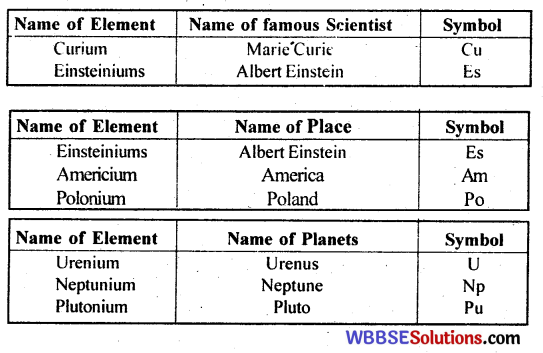
Answer:
Aedes mosquitoes spread Dengue and Chickungunia diseases. Each identifying features are —
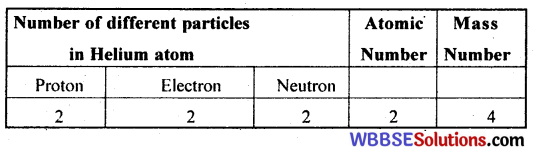
  • White and Black stripes on the abdomen and legs.
  • While taking rest sit almost parallely to the ground.
  • Make no sound while flying.
  • They come out in day time.
  • Lay eggs in clean water.

WBBSE Class 7 Science Solutions Chapter 8 Environment and Public Health

Question 7.
What are the identifying features of House Fly? Name the diseases they can spread.
Answer:
A House Fly has ……..

  • Grey-coloured thorax.
  • 4 long black stripes on the back.
  • Whole body is covered with hair.
  • They come out during day time and remain inactive at night. House Flies spread Typhoid and Diarrhoea.

Question 8.
Onchocerciasis disease is spread by a fly, name it and describe its features.
Answer:
Black Fly spreads on Onchocerciasis

  • Black Fly is black in colour.
  • Proboscis is small in size and like a toothed dagger.
  • Body is stout
  • Come out during day time in groups and are very active just before down and dusk.

Question 9.
How fly spreads diseases?
Answer:
The fly spreads diseases in three different manners.
(i) Whenever they sit on stool, urine, pus, spittle etc. then minute particles of those things get stuck to their legs and antennae. When this fly sits on food items, germs are mixed with those food stuff and infection occurs.

(ii) The fly can not take solid food. So they vomit on solid food. As a result, parts of the solid food gets liquified and the fly takes the food with the help of the proboscis. With that vomit the germs from the body of the fly get mixed with our food items and infection occurs.

(iii) House flies excrete throughout the whole day at the interval of five minutes wherever
they sit. Many germs are present in the stool of the fly. When they defecate on our food, these germs get mixed with our food.

WBBSE Class 7 Science Solutions Chapter 8 Environment and Public Health

Question 10.
Tell the difference in the ways of transmission of diseases by the flies and the mosquitoes
Answer:
WBBSE Class 7 Science Solutions Chapter 8 Environment and Public Health 3

Question 11.
Describe some resources to control mosquito.
Answer:

  • Water in reservoirs, buckets, flower vases should be changed every 2-3 days.
  • Fishes like (Guppy, Panchax, Shol, Lata, Gambusia etc.) should be allowed to grow in stagnants waters because they eat the larvae of mosquitoes.
  • Kerosene, diesel, bleaching powder should be spiaiged in the drains.
  • Mosquito killer spray or liquid water should be used inside house to keep it free from mosquitoes.

Question 12.
Why food stuff gets spoiled?
Answer:
Spoilage of various types of food is due to the microbial degradation of food by various micro organisms. These micro-organisms are generally bacteria and fungi. When the microbes present in a food grow, they degrade the food with their enzymes and absorb the simple compounds thus obtained into their cells.

Question 13.
Name some Bacteria which are beneficial.
Answer:
Lactobacillus Bacteria help to-make curd. We obtain many life saving drugs from several species of streptomyces Bacteria. Some special Bacteria residing in the stomach of cattle help them in digesting cellulose. Some intestinal Bacteria help human beings by producing the much-needed vitamin Bp.

Question 14.
What is pasteurization?
Answer:
In simple words, pasteurization is the process of destroying the pathogenic microbes along with to their spores in food, especially liquid food (mild and dairy products, fruit juice etc.) This method of making foods and beverage free from microbes was discovered by the french Louis Pasteur, so to honour him the method is named as Pasteurization.

WBBSE Class 7 Science Solutions Chapter 8 Environment and Public Health

Question 15.
What are the common symptoms of allergy from food?
Answer:

  • Rashes on skin.
  • Itching sensation all over the body.
  • Swelling of lips, throat and tongue
  • Uneasiness in throat respiratory problems.
  • Redness in eye and face,
  • Vomiting
  • Abdominal cramp
  • Diarrhoea.

Question 16.
When a food can be said to be adultered?
Answer:

  • When something is added to food that lowers its nutritional value.
  • When some cheap additive is mixed with food instead of some necessary ingredients.
  • When some harmful additive is added to the food to make the food look more attractive and to bring desirable flavour.

Question 17.
What is ‘dropsy’? How dropsy affects us?
Answer:
Argemone seeds closely resemble mustard seeds are cheaper than mustard. The oil extracted from argemone seeds is deliberately mixed with mustard oil. Long term use of such idulterated mustard oil. cause a disease called ‘dropsy’. Dropsy severely damages skin and organs like liver, lungs, kidney and heart. It can even cause failure of heart and the lungs, leading to death.

Question 18.
What is Lathyrism?
Answer:
Often Khesari daal which is very cheap (seeds of Lalhyrus Sativus) mixed with Arhar daal. Continued intake of substantial amount of Khesari daal for 2-3 months can cause progressive spastic paralysis. This is Lathyrism.

Question 19.
How fungi can be beneficial?
Answer:
We take the help of fungi to produce food items like bread, cheese and alcoholic beverages. The affinity of fungi for carbohydrate-rich food help the fungi in making those food items and beverages. For example, some antibiotics are produced from the fungus penicillium yeast is required for making bread.

WBBSE Class 7 Science Solutions Chapter 2 Time and Motion

Detailed explanations in West Bengal Board Class 7 Science Book Solutions Chapter 2 Time and Motion offer valuable context and analysis.

WBBSE Class 7 Science Chapter 2 Question Answer – Time and Motion

(Page no. 70)

Select the correct option from below and fill in the blanks:
1. Rectilinear motion.
2. Motion in a circular path.
3. Rotational motion.
4. Combination of Rotational and Rectilinear motion.
5. Curvilinear motion
Answer:

Examples of different types motion Name of the motion
1. The motion of the pencil tip while drawing a straight line with a ruler. Rectilinear motion
2. Motion of the tips of clock-hand Motion in a circular path.
3. Motion of a stone which is thrown away from the roof. Curvilinear motion.
4. Motion of merry-go-round. Motion in a circular path.
5. Motion of a spinning top at a fixed point. Combination of rotational motion and rectilinear motion.
6. Motion of a clock’s pendulum. Rectilinear motion.
7. Motion of a car along a straight road. Rectilinear motion.
8. Motion of a cycle along a straight line. Rectilinear motion.
9. Motion of a screw driver. Curvilinear motion.
10. Motion of an electric fan’s blade. Rotational motion.

Class 7 Science Chapter 2 Question Answer West Bengal Board – Time and Motion

Multiple Choice Questions & Answers : (1 mark for each question)

Question 1.
The rate of change of displacement with time is called-
i) speed
ii) retardation
iii) velocity
Answer:
iii) velocity

WBBSE Class 7 Science Solutions Chapter 2 Time and Motion

Question 2.
Distance travelled by a moving object-
i) can be zero
ii) cannot be zero
Answer:
ii) cannot be zero

Question 3
If the velocity of the body decreases with time, the motion is said to be
i) acceleration
ii) retardation
iii) displacement
is Answer:
ii) retardation

Question 4.
In SI system unit of retardation is-
i) MS2
ii) MS-1
iii) MS-2
Answer:
iii) MS-2

Question 5.
The state of motion and rest of an object is-
i) absulute
ii) relative
Answer:
ii) relative

Question 6.
The average velocity of an object-
i) could be zero
ii) could not be zero
Answer:
ii) could not be zero

WBBSE Class 7 Science Solutions Chapter 2 Time and Motion

Question 7.
A rotating fan take sometime to stop when it is suitched off due to
i) interia of motion
ii) momentum
iii) air current
Answer:
i) interia of motion

Question 8.
The distance travelled by the body in a unit time interval is called
i) velocity
ii) speed
iii) acceleration
Answer:
ii) speed

Question 9.
If force is applied from outside on a moving body then its momentum
i) decrease
ii) increase
iii) does not change
Answer:
ii) increase

Question 10.
If a rubber ball is thrown on a wall it comes back, this can be explained by Newton’s-
i) First law
ii) Second law
iii) Third law
Answer:
iii) Third law

WBBSE Class 7 Science Solutions Chapter 2 Time and Motion

Question 11.
The action and the reaction both act on-
i) two different objects
ii) same object
Answer:
i) two different objects

Question 12.
We come to know about the rate of change of momentum when force is applied, from the Newton’s-
i) first law
ii) second law
iii) third law
Answer:
ii) second law

Question 13.
We know about definition of force from Newion’s-
i) first law
ii) second law
iii) third law
Answer:
i) first law

Question 14.
In CGS unit of force is-
i) Newton
ii) gram-weight
iii) dyne
Answer:
iii) dyne

Question 15.
The property of a body to remain at rest forever is called-
i) inertia of motion
ii) inertia of rest
iii) momentum
Answer:
ii) inertia of rest

WBBSE Class 7 Science Solutions Chapter 2 Time and Motion

Question 16.
Th property of inertia of a body is-
i) fundaniental
ii) not fundamental
Answer:
i) fundamental

Fill in the blanks : (1 mark for each question)

1. The tendency of a body to keep itself at rest for ever is known as _______ of rest.
Answer:
inertia.

2. Speed is a _______ quantity.
Answer:
scalar.

3. Two vector quantities with same units are _____ and ________.
Answer:
acceleration, retardation.

4. ____ is the rate of change of velocity with time.
Answer:
Acceleration.

WBBSE Class 7 Science Solutions Chapter 2 Time and Motion

5. Dimensional formula of retardation ______.
Answer:
LT-2

6. To change the state of inertia we apply ______.
Answer:
force.

7. Dimensional formula of velocity _____.
Answer:
LT-1

8. A body which changes is position with time is called a ____ object.
Answer:
moving.

9. Force = mass × ________.
Answer:
acceleration.

10. 1 Kgf = ______.
Answer:
9.8 N (Newton).

WBBSE Class 7 Science Solutions Chapter 2 Time and Motion

11. One newton is the force which when acts on a body of mass 1 kg produces an acceleration of _____.
Answer:
1 m/ sec-2

12. Dimensional formula of momentum _______.
Answer:
MLT-1

13. In SI system the gravitational unit of force is ______.
Answer:
Newton.

14. 1 Newton = 1 kg × _________.
Answer:
1 m/sec2

15. In SI system the unit of momentum is _______.
Answer:
Kilogram-meter/second.

16. The action and the reaction both act on ______ bodies.
Answer:
two different.

WBBSE Class 7 Science Solutions Chapter 2 Time and Motion

17. The rate of change of momentum is proportional to _______.
Answer:
force.

18. Momentum is a _____ quantity.
Answer:
Vector.

State whether True or False : (1 mark for each question)

1. If a body has zero speed it can have acceleration.
2. Acceleration is a scalar quantity.
3. Velocity is a vector quantity but speed is not.
4. In speed magnitude and direction both are to be mentioned.
5. A body may have uniform speed but it may not have uniform velocity.
6. The rate of increasing velocity is called uniform velocity.
7. Motion of the tips of clock-hand is called rotation.
8. When a moving object change its place it is called displacement.
9. If an object have zero displacement, it can have distance.
10. To express velocity we have to mention both its derection and magnitude.
11. We got defination of force from Newton’s second law.
12. In SI system unit of force is Newton.
13. Measure of force is known from Newton’s third law.
14. Action and reaction cannot suppress each other.
15. If a moving bus suddenly stops the passengers moves in front ward direction.
16. If 1 Newton force works on 1 gm mass then 1cm / sce2 acceleration is produced the body.
17. Reaction remains as long as action persists.
18. If a body has less mass then it has less accleration.
19. If a vehicle suddenly starts to move it’s pas: engers lean backward direction.
20. Force applied = mass × retardation.
Answer:
1. true
2. false
3. true
4. false
5. true
6. false
7. true
8. false
9. true
10. true
11. false
12. true
13. false
14. true
15. true
16. false
17. true
18. false
19. true
20. false

WBBSE Class 7 Science Solutions Chapter 2 Time and Motion

Match the column A with column B.

Column A Column B
a) Capacity of doing work i) more work is done
b) Increase in the rate of respiration ii) was the president of Royal Society
c) Increase in the rate of heartbeat iii) to do work
d) When we spend more energy iv) is called energy
e) Energy’ is the ability v) is Newton
f) To every action there is an vi) we apply force
g) Sir Issac Newton vii) generates more heat
h) In SI system the unit of force viii) increase in the rate of respiration
i) To change the state of inertia ix) is Dyne
j) In CGS system the unit of force x) equal and opposite reaction

Answer:
a) Capacity of doing work is called energy.
b) Increase in the rate of respiration generates more heat.
c) Increase in the rate of heartbeat increase in the rate of respiration.
d) When we spend more energy more work is done.
e) Energy is the ability to do work.
f) To every action there is an equal and opposite reaction.
g) Sir Issac Newton was the president of Royal Society.
h) In SI system the unit of force is Newton.
i) To change the state of inertia we apply force.
j) In CGS system the unit of force is Dyne.

WBBSE Class 7 Science Solutions Chapter 2 Time and Motion

Short Questions & Answers : (1,2 marks for each question)

Question 1.
How many types of motion are there?
Answer:
There are two types of motion.
i) Rotation and ii) Revolution.

Question 2.
What is Revolution?
Answer:
When a moving object travels in an orbit while rotating on its own axis then the motion of that object is called revolution.

Question 3.
What type of motion is seen in a moving car?
Answer:
Moving car has mixed motion.

Question 4.
Why displacement is a vector quantiny?
Answer:
Displacement has both magnitude and direction. So it is a vector quantity.

Question 5.
What type of motion has a moving electric fan?
Answer:
It has rotational motion.

WBBSE Class 7 Science Solutions Chapter 2 Time and Motion

Question 6.
What is the unit of speed in SI system?
Answer:
In SI system the unit of speed in meter/second.

Question 7.
Is speed vector or scalar quantity?
Answer:
Speed is vector quantity.

Question 8.
Which physical quantity has unit as meter/second2 ?
Answer:
In SI system acceleration has unit as meter/second2.

Question 9.
What is the unit of velocity? Is it a scalar or vector quantity?
Answer:
In CGS system unit of velocity in centimeter/sec. and in SI system unit of velocity is meter/second. Velocity is a vector quantity.

Question 10.
A body after moving in a circular part comes back to its starting point, what is its displacement?
Answer:
If a body after travelling in a circular part comes back to its starting point, the displacement is zero.

WBBSE Class 7 Science Solutions Chapter 2 Time and Motion

Question 11.
What we come to know from Newton’s Fast law?
Answer:
From Newton’s fast law, we come to know about- (i) Inertia and (ii) force.

Question 12.
From which law of Newton we come to know about force?
Answer:
We come to know about force from Newton’s fast law.

Question 13.
What is the unit of force in CGS system?
Answer:
In CGS system the unit of force is Dyne.

Question 14.
What is the unit of force in SI system?
Answer:
In SI system the unit of force is Newton.

Question 15.
One Newton = ? Dyne.
Answer:
One Newton = 105 Dyne.

WBBSE Class 7 Science Solutions Chapter 2 Time and Motion

Question 16.
Name the types of Inertia.
Answer:
Inertia are of two types – i) Inertia of rest and ii) Inertia of motion.

Question 17.
Is force vector quantity or scalar quantity?
Answer:
Force is vector quantity.

Question 18.
What is’ the unit of momentum in SI system?
Answer:
In SI system the unit of momentum is Kilogram-meter/second.

Question 19.
1 gm. force = how much Dyne?
Answer:
lgf = 980 dyne.

Question 20.
What is the unit of work in SI system?
Answer:
A unit of work in SI system is Joule.

Question 21.
What is energy? How we get energy?
Answer:
The energy of a body is its capacity to do work.
We get energy from food. We get something from food which gives us ability for doing work.

WBBSE Class 7 Science Solutions Chapter 2 Time and Motion

Question 22.
How can we feel that energy is being spent inside our body?
Answer:
Fatigue, increase in the rate of heart beat, increase in the rate of respiration, increase in the temperature of the body etc help us to understand that energy is being spent inside our body.

Question 23.
Sometimes you may have noticed that birds glide some disatance without moving its wings. Why does the birdmove in this manner?
Answer:
A flying bird is a moving object. It tries to remain in uniform motion when there is no force on it. So, without moving its wings it goes farther distance because of inertia of motion.

Question 24.
What is inertia?
Answer:
The tendency of a body of remaining at rest or in uniform motion is known as ‘inertia’ of the body.

Question 25.
What is ‘inertia of rest’ and ‘inertia of motion’?
Answer:
The tendency of a body to keep itself at rest forever is known as ‘inertia of rest’.
The tendency of remaining in uniform motion of the body is called as ‘inertia of motion’.

Question 26.
What is force?
Answer:
What we apply to change the state of inertia is called as force.

WBBSE Class 7 Science Solutions Chapter 2 Time and Motion

Question 27.
Explain Newton’s Third law of motion?
Answer:
Newton’s third law of motion is – To every action, there is an equal and opposite reaction.

Question 28.
When we can say a work is done?
Answer:
Work is said to be done only when body move (i.e. there is a displacement of the body).

Long Questions & Answers : (3 marks for each question)

Question 1.
Explain the concept of Newtons first law of motion.
Answer:
If there is no external force acting on a body, then-
i) The body at rest will remain at rest forever,
ii) The moving body will go with constant speed in the same direction of its motion.

WBBSE Class 7 Science Solutions Chapter 2 Time and Motion

Question 2.
Explain Newton’s second law of motion.
Answer:
Newton’s second law of motion states that-
i) If we apply more force on a body of fixed mass, its change of velocity will be more in one second. If we double the force, the acceleration of the body also doubles. That is to say there is a linear relation between force and acceleration.
ii) The direction to which the froce acts, the direction of acceleration is also the same. That is the velocity of the body increases along the direction of applied force.

Question 3.
Write down the equation for the magnitude of applied force, according to Newton’s second law of motion.
Answer:
Applied force = mas of the body × change in velocity in 1 second. = mass of the body × acceleration produced (change in velocity in one second = acceleration)

F = m × a[F = force, m = mass, a = acceleration]
The unit of force in SI system is 1 Newton.
1 Newton =1 kg × 1 m / sec2

Question 4.
Who was Sir Issac Newton?
Answer:
Sir Issac Newton was an English physicist, mathematician and astronomer. He proposed the Three Laws of Motion, Spectrum of Sunlight. Universal Law of Gravitation, Binomial Theo rem. Differential calculus etc. On December, 1642. Newton was born in a peasant family of Willsthrope in England. He got BA degree from Trinity college of Cambridge University in 1669 at the age of 27 . He died in 1727.

Question 5.
Why was Sir Issac Newton famous?
Answer:
Sir Issac Newton invented laws of Motion, Spectrum of sunlight, Binomial theorem, Differential Calculus etc expanded a new era of science and mathematics. He was the president of Royal society from 1672 for next 25 years. He wrote the famous book “Principia Mathematica”.

WBBSE Class 7 Science Solutions Chapter 2 Time and Motion

Question 6.
When a bus suddenly starts moving from rest, the passengers in the bus leans in backward direction, explain why?
Answer:
When the bus is not in motion, the passenger with the bus are at rest. When the bus suddenly starts moving the situation change. The foot of the passengers starts moving with the bus. but the upper part of the body tries to remain at rest. So the legs move away in forward direction. the body leans in reverse direction.

Question 7.
Explain how we can find out the quantity of work done in physics.
Answer:
Word done = ( applied force) × displacement in the direction of the force) W = F × d[W = Work, F = Force, d = displacement]
If the displacement of the body is 1m in the direction of a force of 1N. Then the work done is I Joule or 1J.
& W = F × d
1J = 1N × 1M = 1N.m